


More news on this day
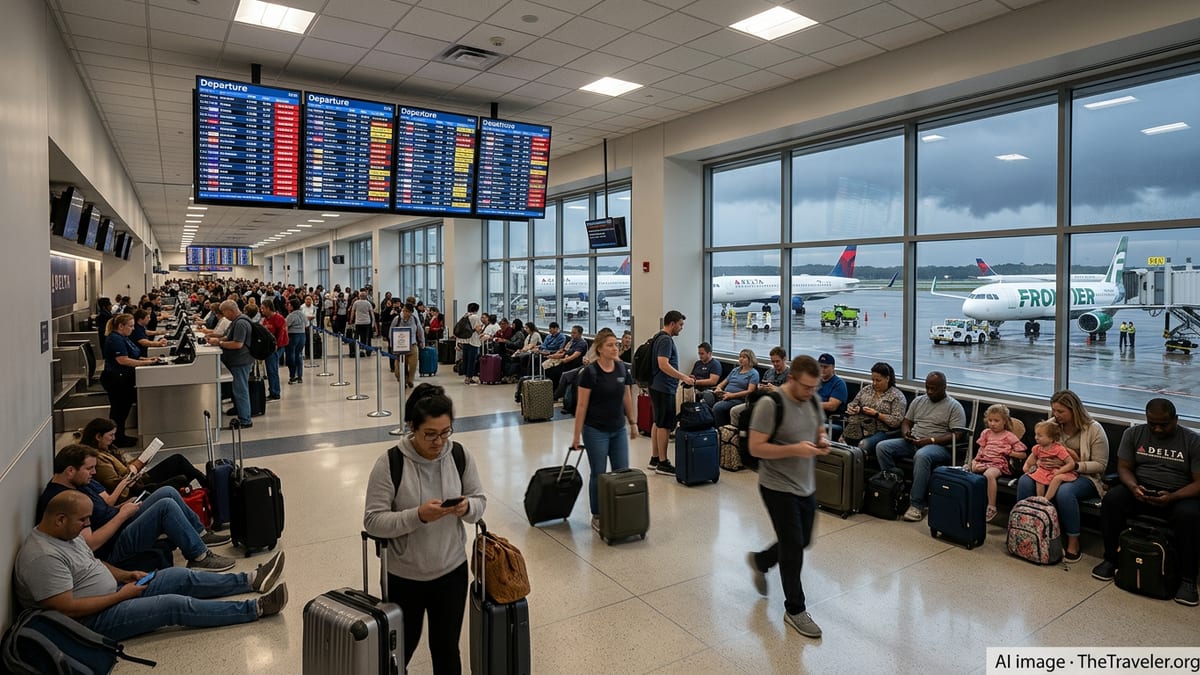
More than 5,000 flights across the United States were delayed as a sprawling severe weather system battered several regions, disrupting schedules at some of the nation’s busiest airports and stranding travelers at the start of the busy summer travel period.
Get the latest news straight to your inbox!
Storm System Triggers Nationwide Flight Disruptions
Publicly available data from flight-tracking services indicate that over 5,000 flights into, out of or within the United States were delayed in a single day as strong thunderstorms, heavy rain and high winds swept across major population centers. Hundreds of additional flights were canceled outright as airlines attempted to keep aircraft, crew and passengers out of the most dangerous storm cells.
The most significant disruptions were linked to a fast-moving system that combined damaging thunderstorms across the Midwest with volatile conditions along the East Coast. The National Weather Service highlighted threats of severe thunderstorms, possible tornadoes and localized flooding in multiple states, prompting temporary pauses in arrivals and departures at key hubs.
Airlines responded by thinning schedules and bunching departures into short operating windows between storm bands. That strategy limited outright cancellations but created long queues of delayed flights, with some departures pushed back by several hours as storms repeatedly re-formed along busy flight paths.
Industry analysts note that severe weather is now one of the leading drivers of large-scale air-traffic disruptions in the United States, particularly when storm systems stretch across multiple regions and linger for several days.
Major Hubs Bear the Brunt of the Delays
Reports based on airline and airport information show that some of the worst disruptions occurred at major hubs such as Hartsfield Jackson Atlanta International Airport, Chicago O’Hare International Airport and the trio of New York area airports at LaGuardia, John F. Kennedy and Newark Liberty. Delays at these locations can quickly ripple nationwide because they handle such a large share of connecting traffic.
In Atlanta, arrival and departure ground delays were put in place as lines of severe thunderstorms moved across Georgia, temporarily reducing the flow of aircraft that controllers could safely manage. Flight-tracking tallies showed hundreds of delayed flights into and out of the world’s busiest airport as operators attempted to work through backlogs once storms weakened.
Chicago O’Hare, a key Midwest hub, also saw extensive hold times as storms swept over the Great Lakes region. Delays there affected both domestic services and long-haul international flights that rely on tightly coordinated connection banks. New York’s LaGuardia and Newark Liberty, which are particularly vulnerable to thunderstorms and low ceilings, logged some of the highest average delay times as storm cells parked over the Northeast corridor.
Secondary hubs including Charlotte Douglas International Airport, Dallas Fort Worth International Airport, Boston Logan International Airport and Ronald Reagan Washington National Airport also reported significant numbers of delayed arrivals and departures, compounding the disruption for travelers attempting to reroute around the hardest-hit nodes in the network.
Weather Hazards Collide With a Stretched Aviation System
According to published analyses of recent disruption patterns, weather is responsible for a large share of U.S. flight cancellations and delays, and the latest episode fits that trend. Thunderstorms along key jet routes, fast-changing wind patterns and low visibility around coastal and Midwestern airports all contributed to the latest wave of disruptions.
Air-traffic management procedures can amplify the impact when severe weather emerges along heavily used corridors. To maintain safe separation between aircraft, the Federal Aviation Administration can impose ground stops, reroute planes around strong cells or slow the rate of arrivals and departures at crowded hubs. Each of these actions helps keep flights safe but reduces the system’s capacity, which quickly translates into mounting delays during peak periods.
Recent government and industry reports have also pointed to structural strains within the aviation system, including air-traffic controller staffing challenges and tight aircraft utilization schedules. When storms force a slowdown, these underlying constraints leave airlines with less flexibility to recover, turning what might once have been a localized event into a nationwide tangle of missed connections and rolling delays.
Travel analysts caution that as severe weather outbreaks become more frequent in transitional seasons, passengers can expect more days when tens of thousands of travelers are affected by a single storm system that sweeps across multiple regions.
Airlines Adjust Schedules and Offer Limited Flexibility
In response to the severe weather risk, several large U.S. carriers issued travel alerts and flexible rebooking policies covering dozens of airports. Publicly available policy summaries show that major airlines allowed affected customers to change travel dates without traditional change fees, and in some cases to reroute through alternative hubs where seats were available.
Airlines also proactively canceled some flights in advance of the worst storms to avoid leaving aircraft and crews out of position. While advance cancellations lead to immediate disruption, they can shorten the time it takes for the system to recover once the weather improves by keeping planes and staff in place at key hubs.
However, passenger advocates note that such measures only partially cushion the impact for travelers. Even when change fees are waived, rebooked flights can be days away during large-scale disruption events, and accommodation and meal costs are generally the responsibility of the traveler when delays are attributed to weather rather than airline-controlled factors.
Guidance from consumer and transportation watchdogs emphasizes the importance of checking an airline’s published delay and cancellation policies, monitoring flight status frequently and considering travel insurance or credit card protections for trips scheduled during historically stormy periods.
What Travelers Can Expect in the Coming Days
Forecasts indicate that while the most intense storms associated with the latest system will move on within a day or two, lingering showers, low clouds and gusty winds in parts of the Midwest, South and Northeast could continue to affect flight schedules. Airlines typically need several operating cycles to clear backlogs even after weather improves, meaning disruptions can linger for at least another day in the form of scattered delays and isolated cancellations.
Airports most heavily affected by the initial wave of storms are expected to remain under pressure as they process stranded passengers and reposition aircraft. Travelers connecting through large hubs such as Atlanta, Chicago, New York, Charlotte and Dallas are likely to experience longer lines at customer service counters and tighter connection windows as airlines compress rescheduled flights into already busy departure banks.
Aviation consultants say the latest severe weather episode underscores the importance of contingency planning for both airlines and passengers. Building in longer layovers on days with active storm forecasts, taking earlier departures when possible and remaining flexible about routing can help reduce the risk of being caught in the worst of the disruption when more than 5,000 flights in a day are pushed off schedule.
With the peak summer travel season approaching and weather patterns growing more volatile, industry observers expect that the intersection of powerful storms and high passenger volumes will remain a recurring challenge for U.S. air travel.