


The French Riviera is stepping into the global spotlight again, this time as a star of both prestige television and future travel trends. With The White Lotus confirmed to set its fourth season amid the energy of the Cannes Film Festival and the glamour of Saint‑Tropez, and Expedia’s 2027 set‑jetting forecast already flagging these towns as must‑visit locations, travelers are beginning to plan trips that blend cinematic fantasy with real‑world Riviera pleasures. This guide looks at how to turn that screen inspiration into a concrete itinerary, from festival‑side promenades in Cannes to yacht‑dotted bays in Saint‑Tropez.
Get the latest updates straight to your inbox!
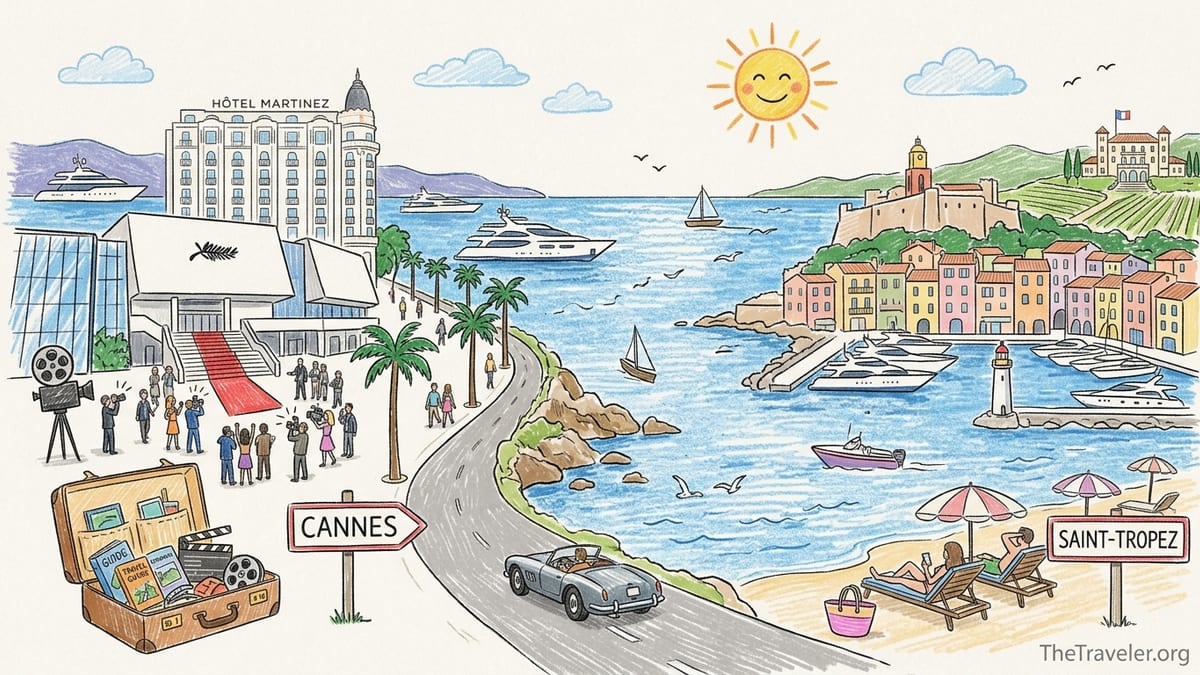
From Sicily to the Riviera: How Set Jetting Reached Cannes
Set‑jetting, or traveling to destinations seen on screen, has moved from niche behavior to a mainstream planning tool. Recent travel research cited by Expedia shows that a strong majority of younger travelers now say film and television influence where they go on holiday, and the success of The White Lotus in Hawaii and Sicily has already demonstrated how a stylish series can transform hotel bookings and local tourism. The Four Seasons properties that hosted earlier seasons reported substantial surges in demand after the show aired, reinforcing the idea that viewers want to inhabit the worlds they see on prestige television rather than just watch them.
With HBO confirming that The White Lotus season four is set in France during the Cannes Film Festival, the Riviera has effectively been pre‑cast as the next global set‑jetting magnet. Industry coverage notes that filming is centered around Cannes and Saint‑Tropez, including real hotels that will stand in for the fictional White Lotus resort. For travelers planning 2026 and 2027 trips, that advance notice is valuable. It means you can lock in stays at the properties and in the neighborhoods likely to feature on screen before demand spikes in the months after the season airs.
Although the exact episodes are still in production, reports in the trade and travel press point to a focus on the contrast between Cannes during its most high‑pressure week of the year and the slower, villa‑based luxury of Saint‑Tropez. That contrast already exists on the ground. In May, Cannes fills with film industry delegates, paparazzi, and fans clustered along the Croisette, while Saint‑Tropez, two hours down the coast, runs on a different tempo entirely, centered on private beach clubs, vineyard tastings, and late‑night marina bars. A White Lotus‑inspired trip can easily fold both moods into a single itinerary.
Key White Lotus Locations: Where Fiction Meets Reality
The White Lotus franchise has developed a clear pattern of pairing its fictional resorts with very real luxury properties. In Sicily, the show filmed at San Domenico Palace in Taormina, a Four Seasons hotel housed in a 14th‑century convent that clings to the cliffs above the Ionian Sea. Travel industry reporting later indicated that interest and room rates at that property rose sharply after the season aired, and tour operators began packaging “White Lotus in Sicily” itineraries built around Taormina, Cefalù, and Palermo. The takeaway for Riviera travelers is simple: where The White Lotus films, demand follows.
For the French season, trade coverage has identified two anchor hotels. In Cannes, the fictional “White Lotus Cannes” is expected to be based at the art‑deco Hôtel Martinez, part of Hyatt’s Unbound Collection and one of the Croisette’s most recognizable facades. The Martinez already hosts film talent and press junkets during the festival, with a private beach across the boulevard, polished white sun loungers, and a palm‑lined frontage that often appears in red‑carpet photo backdrops. A standard sea‑view room outside festival dates can often run in the region of 600 to 900 euros per night, while during the festival it typically climbs well into four figures, depending on availability and package.
In Saint‑Tropez, reports point to Château de la Messardière, operated by Airelles, as the stand‑in for a “White Lotus du Cap” style property. This hilltop palace hotel overlooks Pampelonne Bay and the village rooftops, with sprawling gardens, multiple pools, and a pastel color palette that suits the show’s visual style. In high summer, entry‑level rooms at similar Saint‑Tropez palace hotels frequently price in the 900 to 1,500 euro per night band, while shoulder‑season stays in late May or September are more accessible, often several hundred euros cheaper than peak August.
Travelers hoping to echo the series’ aesthetic without paying palace‑hotel prices have options nearby. In Cannes, mid‑range properties one or two streets back from the Croisette, around Rue d’Antibes, often list double rooms from around 170 to 250 euros per night in June, depending on the specific hotel and event calendar. In Saint‑Tropez, design‑focused guesthouses and small boutique hotels within walking distance of the port can sometimes be found in the 250 to 400 euro range in shoulder season. Availability is highly sensitive to events, so checking festival dates, regatta weeks, and major concerts before you book is essential.
Designing a White Lotus‑Inspired Cannes Stay
Cannes is built around one long, cinematic axis: Boulevard de la Croisette. This seafront boulevard runs in a graceful curve from the old harbor and Palais des Festivals to the quieter eastern end near Port Canto, and it is here that many of the scenes in the upcoming White Lotus season are expected to play out. To follow in those footsteps, consider basing yourself in one of the Croisette‑adjacent hotels, then structuring your days around seaside promenades, terrace lunches, and people‑watching outside the festival palace, even when the red carpet is rolled away.
A typical White Lotus‑style day in Cannes might start with breakfast on a hotel balcony overlooking the bay, then a stroll along the Croisette as yacht tenders shuttle guests back and forth. For a taste of festival atmosphere, visit the steps of the Palais des Festivals, where the red carpet is installed every May. Even outside the official dates, travelers pose for photos under the palm‑shaped light fixtures and alongside plaques in the pavement dedicated to actors and directors. Cafes on the square across from the Palais often charge around five to seven euros for an espresso or cappuccino, with a surcharge for prime sea‑view tables built into the menu.
Beach clubs are key to capturing the show’s resort sensibility. Private plages along the Croisette divide the shore into branded sections, each with its own restaurant, sun loungers, and music policy. In summer 2026, many clubs were advertising packages that combined a sunbed, parasol, towel, and soft drink for roughly 40 to 70 euros per person per day, with front‑row loungers priced higher. Reservations are recommended in July and August, especially on weekends. For a more low‑key, local experience, the public beach near the Palais offers the same bay views for free, albeit without waiter service or cushioned loungers.
Evenings in Cannes lend themselves to the kind of rooftop bars and moody dining rooms that feature so often in The White Lotus. Hotel rooftops near the Martinez and the neighboring luxury properties commonly serve cocktails in the 20 to 25 euro range, often with live DJs or piano music. For dinner, contemporary Mediterranean restaurants in the Carré d’Or district between Rue d’Antibes and the Croisette offer three‑course fixed menus that might start around 45 to 70 euros per person, excluding wine, depending on the restaurant’s reputation and location. Booking a table on terraces with partial sea views gives you an elevated take on the show’s signature balcony scenes without the eye‑watering room rates.
Saint‑Tropez: Channeling Riviera Excess and Hidden Calm
If Cannes represents the show’s festival‑side chaos, Saint‑Tropez stands in for the private dramas that unfold behind villa gates. Once a quiet fishing village, it became an emblem of jet‑set excess in the 1960s after Brigitte Bardot filmed here, and today its harbor is lined with superyachts, pastel townhouses, and boutiques from global luxury brands. Travelers chasing a White Lotus feel should think in two layers: the high‑gloss harbor life and the quieter countryside of vineyards and beaches just inland.
On the harborfront, breakfast at a cafe facing the yachts might cost around eight to twelve euros for a coffee and croissant combination, with an added premium if you choose the most prestigious addresses. From there, narrow streets climb toward the citadel and 17th‑century ramparts, where views stretch over the bay. Many scenes in a Saint‑Tropez‑based White Lotus season are expected to make use of these vantage points, which frame the town as an amphitheater around the water. Walking up to the citadel in the late afternoon avoids the strongest heat and catches the yacht lights flickering on at sunset.
No Saint‑Tropez itinerary is complete without a day at Pampelonne Beach, the long sandy stretch a short drive from town. Some of the Riviera’s most famous private beach clubs operate here, each with its own color scheme and clientele. A typical arrangement at an established club might involve a per‑person spend: around 60 to 100 euros for a sun lounger and umbrella in high season, with main‑course dishes in the beachfront restaurant ranging from roughly 30 to 60 euros. It is worth checking whether your hotel partners with a particular club, as some properties can arrange shuttle transfers and reserved loungers included in overnight packages.
To echo the series’ quieter interludes, consider staying just outside the town center among the vineyards of the peninsula. Several estates combine small luxury hotels with on‑site wineries, offering tastings of Côtes de Provence rosé and shaded terraces that feel far from the yacht throngs. A taxi from central Saint‑Tropez to the vineyard belt typically runs in the region of 25 to 40 euros each way, depending on distance and time of day. Renting a small car from nearby hubs such as Toulon or Nice is often more economical for multi‑day stays, especially if you plan to explore nearby hilltop villages like Ramatuelle and Gassin.
Practical Planning for 2026–2027 Set‑Jetting Trips
Because the new White Lotus season is closely tied to the Cannes Film Festival in its storyline, timing is critical. The festival usually takes place over twelve days in May. During that period, hotel availability in Cannes becomes extremely tight, many properties enforce minimum stays, and nightly rates can easily double or triple compared with March or October. Travelers who simply want to soak up the festival atmosphere without battling maximum surcharges might consider arriving just after the festival ends, when red‑carpet structures are being dismantled but the weather is already warm and many beach clubs are open for the season.
By 2027, Expedia expects set‑jetting to be firmly embedded in mainstream travel planning, particularly among travelers booking through online platforms that highlight film‑related destinations. In practical terms, that could mean that hotels like the Martinez in Cannes or Château de la Messardière in Saint‑Tropez see spikes in search interest and dynamic pricing in the months immediately after the season premieres. If your travel dates are flexible, it may be worth monitoring price calendars across several months rather than locking into peak summer weeks. Shoulder seasons in late April, early June, late September, and early October often deliver similar sea temperatures with fewer crowds and softer rates.
Flight planning is equally important. Cannes itself does not have a major commercial airport, so most international travelers arrive via Nice Côte d’Azur Airport, roughly 30 kilometers away. The regional train from Nice to Cannes can take around 30 to 40 minutes and is usually priced at less than 10 euros one way when booked at the station. Private transfers in a sedan or van can range in broad terms from 80 to 160 euros per vehicle, depending on class and time of day, with premium options favored by festival guests costing more. Saint‑Tropez is less rail‑connected, so many travelers drive from Nice, Toulon, or Marseille, budgeting at least two hours in summer to account for coastal traffic.
Travel insurance and cancellation policies deserve extra attention for set‑jetting trips. When a destination is linked to a high‑profile series, sudden surges in demand can sometimes lead to changes in booking conditions, such as stricter prepayment rules during special events. Before committing to costly stays at name‑recognition hotels, check whether your chosen rate allows date changes or refunds and whether your insurance covers event‑related disruptions such as strikes, air traffic control issues, or last‑minute schedule changes by airlines serving Nice and Marseille.
On‑Location Etiquette: Enjoying the Glamour Respectfully
One of the lessons from earlier White Lotus filming locations is that fans often seek out very specific corners of a hotel or town that appeared in memorable scenes. In Taormina, for example, travelers gravitated toward particular cloisters and terraces at San Domenico Palace, sometimes overwhelming spaces that were designed to serve current hotel guests. On the Riviera, the same dynamic may play out at the Cannes and Saint‑Tropez properties used for the series. When visiting, remember that even though you recognize a staircase or lobby from television, it remains a working hotel, not a film set or museum.
If you are not a guest at one of the filming hotels, look for ways to experience the setting that respect both the property and its clientele. Booking a table for lunch on a hotel’s beachfront terrace, reserving a spa treatment, or visiting a rooftop bar during off‑peak hours are often acceptable ways to access shared spaces. Staff are more likely to be welcoming to respectful visitors who understand that certain areas, particularly pools and guest corridors, are reserved for overnight guests. Avoid intrusive photography, particularly of people, and ask permission before photographing staff or distinctive interior design details.
In the towns themselves, filming locations can be woven into a day of normal sightseeing. A walk along Cannes’ Croisette or through the backstreets of Le Suquet, the old quarter, will pass cafes, stairways, and viewpoints likely to appear on screen, but those spaces also belong to local residents. Keep noise levels in check, especially late at night, and observe local regulations around public drinking and beach access. In Saint‑Tropez, respect for private property lines along the coastal path and at beach clubs helps prevent friction between visitors and those who live and work on the peninsula year‑round.
Travelers inspired by a satire like The White Lotus might be tempted to lean into its more outrageous behaviors. On the ground, though, French Riviera hospitality works best when guests combine a sense of play with courtesy. Tipping in France is based on service charges already included in most restaurant bills, but leaving a few extra euros for particularly attentive service is appreciated. Dressing in smart‑casual attire, especially in the evenings at higher‑end venues, aligns with local expectations and helps you blend into the background of the very world you came to observe.
Beyond the Screen: Local Culture and Day Trips
While following in the footsteps of fictional guests is part of the appeal, the Riviera’s real richness lies beyond the curated spaces that television cameras favor. In Cannes, the Îles de Lérins, a small group of islands a short boat ride from the old port, offer pine forests, quiet coves, and a monastery that feels worlds away from the Croisette. Round‑trip ferry tickets are generally priced in the tens of euros, far less than a private boat charter, and the islands are an easy way to reset between days of festival‑style nightlife and shopping.
From Cannes, day trips to neighboring Antibes and Nice provide a more grounded view of Côte d’Azur life. Antibes’ old town and its Vauban harbor offer a blend of local markets and superyacht berths, while Nice’s Promenade des Anglais and Old Town lanes deliver a deeper sense of regional food and architecture. Regional trains link these towns in under an hour, often for under 15 euros per leg, making them simple additions to a week‑long White Lotus‑inspired itinerary. You could easily imagine some of the show’s characters sneaking away to these towns for side plots, but even if they do not appear on screen, they flesh out your own narrative.
From Saint‑Tropez, nearby hilltop villages like Gassin and Ramatuelle add variety to a stay dominated by beach clubs and harbor walks. These small communities look over vineyards and the coast, with stone streets, bougainvillea climbing facades, and family‑run restaurants serving set menus that might start from around 30 to 45 euros for two or three courses. Visiting around lunchtime, when day‑trippers from the coast fill the terraces, gives a different perspective on the region compared with the nighttime energy of Saint‑Tropez’s port bars and clubs.
Engaging with local culture also means paying attention to regional events beyond the film festival. In late summer and autumn, many of the area’s wineries hold harvest festivals and tastings, while sailing regattas bring classic wooden yachts into both Cannes and Saint‑Tropez. Checking town hall or tourist office event calendars before you travel can help you decide whether to lean into those peaks, for instance by timing your visit to coincide with a regatta you wish to watch, or to avoid them in favor of quieter weeks when hotel and restaurant staff have more time for conversation.
Bringing It All Together: A Sample White Lotus Riviera Itinerary
For travelers looking to turn this inspiration into a concrete plan, a one‑week itinerary built around Cannes and Saint‑Tropez balances on‑screen glamour with real‑world pacing. You might begin with three nights in Cannes, arriving via Nice and taking the coastal train or a pre‑booked transfer into town. Base yourself either on the Croisette or within a few blocks inland, then spend your first afternoon walking the promenade, locating the Palais des Festivals, and booking a beach club sunbed for the following day. Evenings could alternate between rooftop cocktails and dinners in the pedestrian lanes behind the Croisette, where smaller bistros sit alongside glossier dining rooms.
Mid‑week, transfer to Saint‑Tropez by rental car or seasonal ferry, depending on schedules at the time of your visit. Aim for two or three nights near the port or in a vineyard hotel a short drive away. Dedicate one full day to Pampelonne Beach, booking loungers at a club whose style suits your group, and another to exploring the old town, citadel, and nearby hill villages. If budget allows, a half‑day private boat charter from the port, which can start in the low hundreds of euros for a small vessel before fuel and skipper fees, offers a viewpoint on the peninsula similar to the yacht scenes that regularly feature in Riviera‑set drama.
By the time you return to Nice for your flight home, you will have traced many of the visual and emotional beats that The White Lotus is poised to dramatize on screen, from festival steps to villa terraces. Yet your memories will be grounded in specific coffees ordered at harborfront cafes, particular ferries caught to offshore islands, and individual conversations with hotel staff and local restaurateurs. That blend of scripted inspiration and unscripted experience is ultimately what set‑jetting at its best should aim for: not just recreating scenes, but using them as a springboard into a real destination with its own complex character.
As 2027 approaches and Expedia’s forecasted set‑jetting wave builds, the French Riviera will almost certainly see growing demand from travelers following this exact impulse. Planning early, staying flexible on dates, and remaining open to exploring beyond the show’s primary backdrops will help you enjoy Cannes and Saint‑Tropez as more than just television locations. They are, first and foremost, living coastal towns, and the most rewarding White Lotus‑inspired vacation is the one that lets them reveal themselves on their own terms.