


More news on this day
British holidaymakers are being urged to review official travel advice more carefully than in previous years after updated government warnings highlighted rising security risks, extreme weather and airport disruption affecting popular destinations this summer.
Get the latest news straight to your inbox!
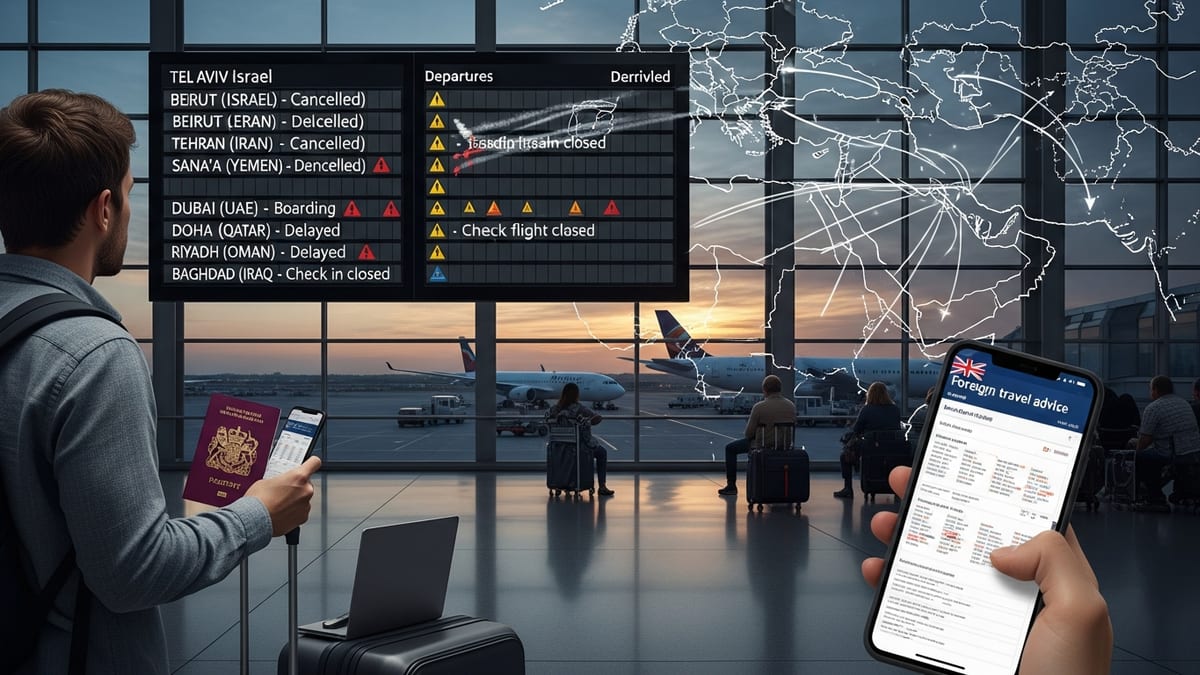
Rapidly changing Foreign Office warnings
Publicly available information shows that the UK Foreign, Commonwealth and Development Office (FCDO) has refreshed its foreign travel advice ahead of the main summer getaway, expanding “do not travel” and “only essential travel” guidance for a growing list of destinations. Recent updates emphasise that no overseas trip is entirely risk free, even to long-standing favourite holiday spots.
The latest changes, published across the FCDO’s country pages in recent weeks, reflect heightened geopolitical tensions, regional conflicts and civil unrest in parts of the Middle East, Eastern Europe, North Africa and Latin America. In several cases the guidance now advises against all travel to entire countries, while in others it warns against non-essential trips to specific provinces or border regions only.
Travel industry coverage notes that these warnings are not purely advisory in practice. Many mainstream insurers either limit cover or exclude it entirely if travellers knowingly head to a destination against FCDO advice, meaning a medical emergency or evacuation from a high-risk area could leave holidaymakers facing substantial bills.
The FCDO also continues to flag a persistent global threat from terrorism. The government’s separate domestic threat level for the UK remains high, and its overseas advice stresses that crowded places, tourist attractions, transport hubs and major events may be potential targets, with guidance urging travellers to stay aware of their surroundings and follow local security instructions.
Heatwaves, wildfires and climate-related disruption
Alongside security concerns, a growing body of official and scientific reporting indicates that extreme heat and weather-related disruption are becoming central themes in summer travel planning. Meteorological outlooks for southern Europe, North Africa and parts of North America point to a heightened risk of prolonged heatwaves, with temperatures likely to exceed recent seasonal averages.
In recent summers, record-breaking heat across the Mediterranean led to wildfires, local evacuations and temporary closure of tourist facilities in Greece, Spain, Italy and other popular destinations. Fresh guidance for 2026 highlights the possibility of similar events this season, advising British visitors to monitor local alerts, follow instructions from civil protection authorities and be prepared for itinerary changes at short notice.
Health agencies continue to warn that extreme heat can be dangerous, particularly for children, older travellers and those with underlying conditions. Recommendations include checking that accommodation has effective cooling, avoiding strenuous activity during the hottest part of the day, staying hydrated and being aware of local emergency numbers.
Travel insurers and comparison services are also drawing attention to the need for policies that explicitly cover weather-related disruption. Published advice suggests that heat-related illness, smoke inhalation, emergency accommodation and cancellations caused by wildfires or severe storms may not be covered under basic policies unless specified in the terms.
Airport queues, new border checks and paperwork pitfalls
British travellers are also being warned to expect potential disruption at airports and border crossings this summer as new entry systems and tighter checks bed in across parts of Europe and beyond. Industry reports have highlighted the risk of extended queues for non-EU passengers at some Mediterranean hubs during peak periods, especially where additional biometric procedures are being introduced.
Travel guidance from consumer bodies and aviation regulators advises passengers to allow extra time at departure and arrival airports, arrive well in advance of scheduled flights and ensure passports meet validity rules that differ from destination to destination. In the Schengen area, for example, most visitors from the UK must have at least three months' validity remaining on the date they plan to leave.
Separate from government processes, digital travel authorisations and visa-style registrations are also generating confusion and creating opportunities for fraudsters. Recent warnings highlight a rise in unofficial websites that mimic official portals and charge excessive fees for applications or sell invalid documents, particularly for electronic travel permits and e-visa schemes.
Travel experts recommend that British holidaymakers double-check all entry requirements directly against official government advice before booking, and again shortly before departure. Particular attention is being drawn to transitional arrangements for new European border systems later this decade, with travellers urged to stay alert for any phased roll-outs that may affect air or ferry travel.
Insurance gaps, scams and money risks abroad
Updated consumer research from UK financial institutions and insurers indicates that millions of Britons are still travelling without adequate medical or cancellation cover, despite repeated warnings about the financial risks of doing so. Surveys conducted ahead of the 2026 summer season suggest that cost-of-living pressures are prompting some travellers to cut back on insurance or rely on partial protection from bank accounts and credit cards.
Insurance specialists stress that overseas medical treatment, emergency repatriation and hospital stays can quickly run into tens of thousands of pounds in many destinations. Reports also highlight that some travellers mistakenly assume that European or reciprocal health arrangements will fully cover their costs, when in practice they may only provide access to basic state care and not private treatment or medical evacuation.
At the same time, banks and fraud-prevention bodies continue to report a rise in holiday-related scams. These range from fake accommodation listings and bogus package deals to cloned airline websites and social media adverts promising heavily discounted breaks. In many cases, victims only discover the fraud when they arrive at a closed hotel or find that their booking reference does not exist.
Experts advise using well-known providers or trusted agents, paying by credit card where possible, and being wary of pressure to transfer funds directly to personal bank accounts. Travellers are also encouraged to check that any accommodation or tour operator is properly licensed and to verify contact details independently rather than relying solely on links in emails or messages.
How British holidaymakers can prepare
With global demand for travel now matching or exceeding pre-pandemic levels, industry data shows that more than half of UK travellers are planning at least one overseas trip in 2026, often to new or less familiar destinations. Against that backdrop, the latest warnings emphasise preparation rather than panic, encouraging holidaymakers to build in more research and contingency planning.
Consumer organisations recommend starting with the FCDO’s online country-by-country advice as a baseline for assessing security, health and entry risks. Travellers are then urged to cross-check airline and tour operator terms, paying particular attention to cancellation, schedule change and refund policies in the event of strikes, weather disruption or geopolitical events.
Practical steps include keeping digital and paper copies of passports, insurance documents and booking confirmations, registering medical conditions with insurers and ensuring that family or friends at home have a copy of the itinerary. Holidaymakers are also encouraged to consider flexible bookings or packages that offer rebooking options if conditions deteriorate at their chosen destination.
Overall, publicly available information indicates that the central message of the latest summer warnings is to stay informed, insured and adaptable. With careful planning, officials and travel experts suggest that most Britons can still enjoy their holidays abroad while managing the higher level of uncertainty shaping international travel this year.