


More news on this day
Railroad crossings in and around Neoga, Illinois, remained closed after a freight train derailment disrupted traffic and drew a large emergency response, prompting detours and renewed attention to rail safety in the rural Cumberland County community.
Get the latest news straight to your inbox!
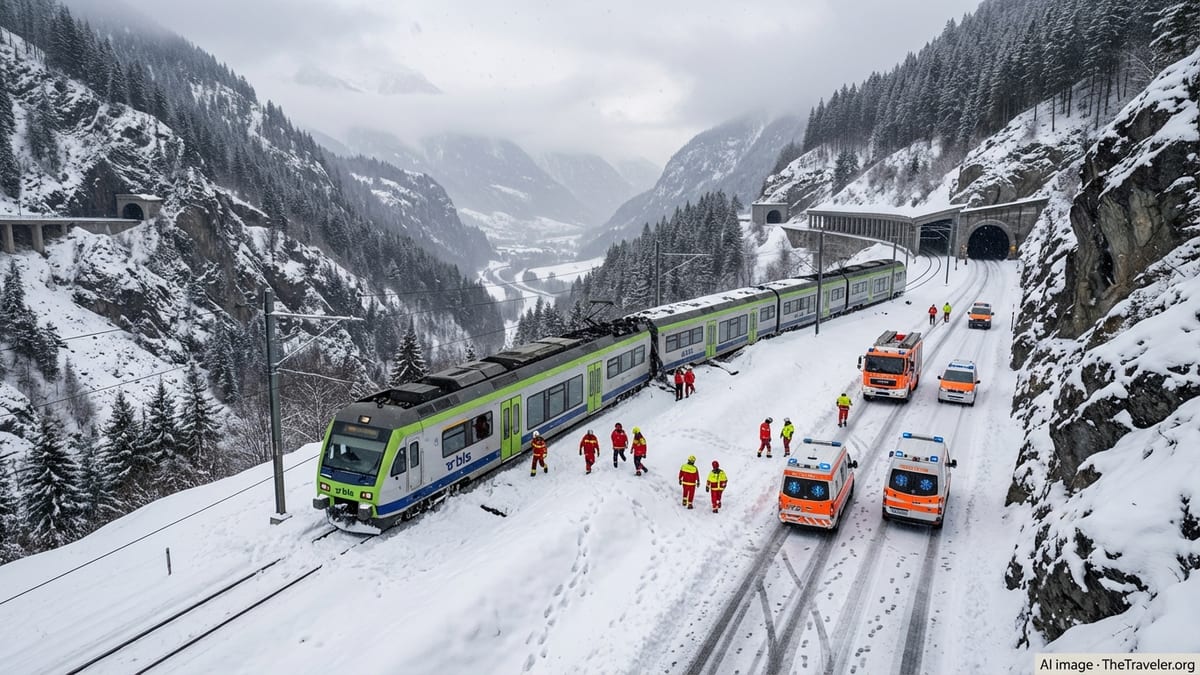
Derailment disrupts traffic near central Neoga
The derailment occurred on a freight route that runs through Neoga, a small city along Interstate 57 and U.S. Route 45 in Cumberland County. Early reports indicate that multiple railcars left the tracks near a public crossing, blocking the roadway and making it unsafe for vehicles to pass.
Publicly available information shows that the incident led to immediate road closures at one or more grade crossings, as local responders and railroad personnel moved to secure the area. Barriers and signage were put in place to prevent drivers from attempting to weave around stopped railcars or enter work zones where heavy equipment was being used.
Initial coverage has not indicated any fatalities, and early accounts suggest that any injuries were limited. There have been no widely reported releases of hazardous materials, but standard safety protocols require a careful review of train manifests and visual inspection of each derailed car before crossings can be reopened.
The disruption has been particularly felt by residents who depend on rural roads to reach farms, schools, and businesses. With crossings blocked for an extended period, some drivers are traveling several miles out of their way to reach alternate routes across the tracks.
Multiple crossings closed while cleanup continues
Reports from the scene indicate that several railroad crossings were closed simultaneously as derailed cars came to rest across the pavement and on adjacent rights of way. In addition to the primary incident site, nearby crossings remained shut while crews staged equipment, brought in replacement track components, and moved damaged cars to safer positions.
Similar derailments in the region have led to closures lasting from several hours to several days, depending on the severity of track damage and whether specialized cranes are needed to lift railcars. Recent freight incidents in other Midwestern communities have shown that even when a derailment is described as minor, crossings can remain blocked while track structure, signaling equipment, and ballast are rebuilt to meet federal and state standards.
In Neoga, road detours are affecting access to local homes and farmland. Drivers who typically rely on a nearby grade crossing may now be routed toward larger roads, adding time to commutes and slowing the movement of agricultural equipment. School buses, delivery trucks, and emergency vehicles are also adjusting their routes until the railroad reopens the line to through traffic.
Publicly available transportation updates suggest that the railroad and local agencies are coordinating to sequence the cleanup, with priority placed on safely clearing roadways before the full rail line returns to service. Once debris is removed, additional time is often required for tamping ballast, aligning rails, and testing signals before the first train is allowed back through the area.
Investigators focus on track, equipment, and operating conditions
While no official cause has been released, derailments of this type typically prompt a detailed review of track condition, equipment, and recent train operations. Federal data and recent case reports from elsewhere in Illinois show that broken rails, track geometry defects, and mechanical problems with railcars are among the most common factors in freight derailments.
According to published coverage of other recent incidents, investigators commonly examine the condition of the rail head, ties, and fasteners, along with wheel profiles, bearings, and couplers on the affected cars. Event recorder data and dispatch records are often used to reconstruct train speed, braking, and handling in the minutes leading up to the derailment.
State-level rail safety programs in Illinois outline a regular inspection regime for tracks and grade crossings, including reviews of signal systems and warning devices. The Neoga incident is expected to be incorporated into broader trend analyses that look at where and how derailments occur, and what types of corrective action may be needed along specific corridors.
Published reports on similar events in nearby communities have also drawn attention to the role of longer and heavier freight trains. As railroads consolidate traffic into fewer, bigger trains, some residents and safety advocates have raised concerns about the potential for longer blockages at crossings and more complex recoveries when derailments occur.
Community impact and rail safety concerns resurface
The Neoga derailment has revived local concerns about blocked crossings and emergency access. Rural communities often have limited alternative routes, and a single obstructed crossing can significantly slow police, fire, or medical response when minutes matter. State transportation reports note that Illinois has hundreds of locations where communities have sought upgrades or closures to high-risk crossings.
In past incidents elsewhere, extended blockages have prompted debate over how long trains should be allowed to stand at grade crossings, and how exceptions should be handled when a derailment or mechanical failure prevents cars from being moved. While the Neoga incident appears to fall under the category of an unplanned obstruction, residents are likely to press for clarity on how quickly crossings can be cleared in future emergencies.
Rail safety advocates frequently stress that drivers and pedestrians should treat all closed crossings as active danger zones, even if trains appear to be standing still. Heavy machinery, sudden train movements, and hidden hazards around derailed cars can create risks for anyone who attempts to cross the tracks on foot or in a vehicle during cleanup.
Local officials and community groups may also use the Neoga incident as a catalyst for renewed public education on railroad safety. Efforts in other Illinois communities have included school presentations, outreach to trucking companies, and distribution of information explaining how to report malfunctioning signals or blocked crossings using the identification numbers posted at each site.
Next steps for repairs and reopening
As cleanup continues near Neoga, the focus is turning toward the timetable for reopening both the rail line and the affected crossings. Based on patterns observed in comparable incidents, the sequence generally begins with clearing derailed cars from the roadway, followed by stabilizing or removing any equipment still near the travel lanes.
Once the pavement is clear, rail maintenance crews typically replace damaged sections of track, re-establish ballast support, and realign rails to meet speed and load requirements. Signal technicians may need to repair or recalibrate warning systems, including lights, bells, and gates, before allowing regular traffic to resume at the crossing.
Rail operators often conduct a series of test moves at reduced speed through rebuilt sections to confirm that the track geometry and signaling perform as expected. During this period, residents may continue to see work trains and maintenance vehicles in the area, even if regular freight schedules have not fully resumed.
For Neoga and surrounding communities, the derailment serves as a reminder of the region’s dependence on freight rail and the vulnerabilities that arise when key crossings are suddenly taken out of service. As investigators, engineers, and local leaders assess the episode, the discussion is likely to extend beyond this single incident to long term questions about infrastructure investment, emergency planning, and everyday safety at railroad crossings.