


More news on this day
British holidaymakers heading overseas this summer are being urged to carry out extra checks before they travel, after fresh warnings highlighted rising safety, documentation and insurance risks for trips abroad in 2026.
Get the latest news straight to your inbox!
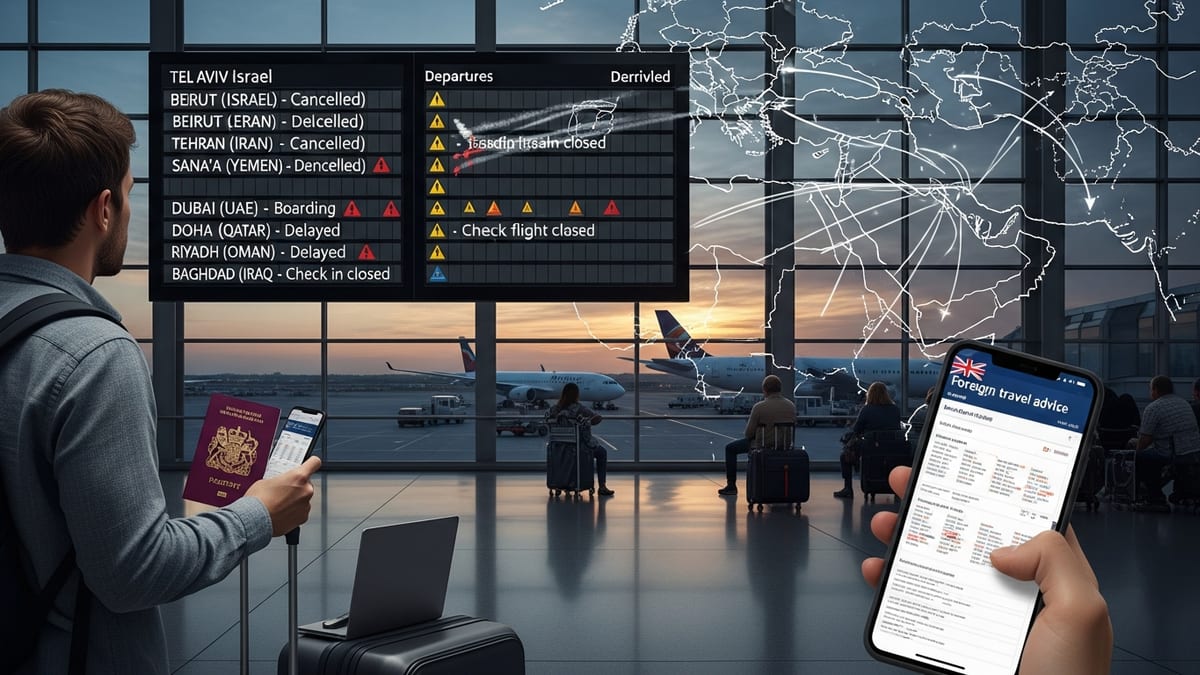
Updated FCDO warnings reshape the summer travel map
Publicly available information from the UK Foreign, Commonwealth and Development Office (FCDO) shows that the global risk picture for British travellers remains highly uneven as the main holiday season begins. Of the more than 200 destinations covered by official advice, dozens now have areas where travel is discouraged or advised against completely due to conflict, civil unrest, crime or infrastructure breakdown.
Recent updates underline how quickly the risk profile for popular regions can shift. Coverage of the latest FCDO notices points to full “do not travel” alerts in a number of countries, alongside “all but essential travel” advisories in others, including parts of the Middle East, North Africa and Latin America. For some destinations the guidance has tightened, while for others previous restrictions have been eased in the run‑up to summer.
In particular, current FCDO advice now warns against all but essential travel to Cuba, citing protests, power outages, fuel shortages and banking restrictions affecting payment cards. The guidance stresses that British visitors could struggle with basic services such as cash access and transport if conditions deteriorate further. Holidaymakers are being encouraged to check the exact status of individual regions, as advice often varies within a single country.
Travel analysts note that ignoring FCDO warnings can have serious consequences. Standard UK travel insurance policies typically exclude cover if a trip goes ahead to an area where the government advises against travel. This means that a family holiday booked to a country under a formal warning may not be insured at all, even if flights and accommodation are still operating.
Insurance and money risks rise when advice is ignored
Consumer research highlighted in recent reports from comparison sites and insurers indicates that many British travellers still fail to read the small print before flying. Studies suggest that only a minority regularly check FCDO advisories, and a significant share of holidaymakers remain unaware that travelling against this guidance can invalidate insurance.
Travel‑insurance specialists are warning that the combination of volatile geopolitics, airline disruption and extreme weather is increasing the likelihood of claims this summer. Policies often contain exclusions related to known events, government warnings or failure to follow official safety advice. If a traveller flies to a destination after the FCDO has advised against all but essential travel, any claim arising from unrest or disruption linked to that risk is likely to be rejected.
Financial risks are not limited to security concerns. Recent FCDO updates for Cuba, for example, flag restrictions on international card transactions and fuel availability. Holidaymakers who arrive without adequate cash reserves or contingency plans may find themselves unable to pay for accommodation, onward travel or even basic supplies. Similar issues can arise in countries experiencing banking problems, sanctions or currency shortages.
Industry guidance also stresses the importance of declaring pre‑existing medical conditions accurately and checking that activities such as scooter hire, watersports or hiking are covered. As airfares and hotel prices climb, more travellers are taking calculated risks to cut costs, but insurers caution that small savings upfront can translate into very large losses if something goes wrong abroad.
Passport validity, new border systems and airport disruption
In parallel with safety concerns, British travellers face a renewed warning over passport validity and new border controls. Recent coverage from UK consumer outlets highlights fears of “summer chaos” linked to the six‑month passport rule and the way some countries calculate document expiry. Several European and long‑haul destinations require that a passport is not only in date on arrival, but also valid for three or six months beyond the intended departure date.
Since the UK left the European Union, the rules have become more complex. Some Schengen countries do not recognise extra months that were added when older British passports were renewed early, leading to confusion over whether documents meet entry requirements. Travel experts recommend that holidaymakers aiming for late summer or autumn breaks treat any passport with less than nine months’ remaining validity as a potential risk and renew well in advance.
New digital border systems in Europe are also coming into effect. The EU’s Entry/Exit System, which is being phased in during 2026, will require non‑EU travellers, including Britons, to undergo additional checks and have biometric data recorded on first entry. Industry briefings suggest that this could lengthen queues at busy airports and land borders, particularly at the start of school holidays, until the process beds in.
Airlines and regulators are advising passengers to arrive early, ensure names and details match across bookings and passports, and monitor airline communications closely. The UK Civil Aviation Authority has issued seasonal reminders on topics such as compensation rights, package‑holiday protection and the importance of booking with reputable providers as carriers adjust schedules and capacity in response to global events.
Extreme heat, conflict and changing travel patterns
Summer 2026 is unfolding against a backdrop of exceptional weather and ongoing geopolitical tension. The Met Office has recently issued consecutive red warnings for extreme heat across parts of England, with temperatures forecast to exceed 36 degrees Celsius in some areas. While those alerts are domestic, climate scientists and travel specialists point out that similar or more severe conditions are increasingly common in Mediterranean and long‑haul destinations during July and August.
High temperatures overseas can trigger wildfires, water shortages and power cuts, all of which disrupt tourism infrastructure. Published coverage of previous summers shows that coastal resorts and islands have sometimes faced mass evacuations, cancelled excursions and closed attractions during heatwaves. Travellers with young children, older relatives or health conditions are being advised to weigh up the timing and location of their trips, and to consider travel insurance that covers disruption caused by extreme weather.
At the same time, conflict in several regions continues to influence flight routes, ticket prices and consumer confidence. Airlines have reconfigured schedules and flight paths to avoid certain airspaces, adding to fuel costs and journey times. Some Britons are responding by switching to cooler northern European destinations, shortening trips or opting for UK “staycations” instead of long‑haul beach breaks.
Tourism boards in countries where FCDO advice has recently been relaxed, including parts of the Gulf, are working to reassure potential visitors, while operators with programmes in higher‑risk regions are adjusting itineraries or offering flexible booking terms. However, analysts stress that advice can change rapidly, and that travellers should monitor updates right up to their departure date.
Key checks for Brits before heading abroad this summer
Against this shifting backdrop, government agencies and consumer organisations are urging British holidaymakers to treat preparation as seriously as booking the trip itself. The starting point is to review the latest FCDO travel advice for the chosen destination and any transit countries, paying close attention to sections on safety, entry requirements, health and local laws.
Next, travellers are encouraged to confirm that their passport will be valid for the required period after their planned return and that it has not effectively “expired early” under local rules because of previous renewals. Those whose documents are close to the limit are being advised to renew as soon as possible, as peak summer demand can lengthen processing times.
Insurance should be in place from the moment a holiday is booked, not just from the date of travel. Policies need to match the destination’s current advisory status and the value of the trip, and should include cover for medical treatment, repatriation, cancellation and disruption. Holidaymakers are also urged to check that their airline, accommodation and any excursions are protected under UK or EU consumer regulations in case operators fail or schedules are altered at short notice.
Finally, experts recommend building in extra time for airport formalities, keeping digital and paper copies of key documents, and having a backup plan in case flights are delayed or rerouted. With conditions changing quickly in parts of the world, the overarching message to British travellers this summer is clear: stay informed, stay flexible and verify every detail before setting off.