


More news on this day
A pre-dawn SEPTA Regional Rail derailment at a critical junction in North Philadelphia on Wednesday, July 1, has suspended multiple lines and triggered severe disruptions across the rest of the commuter network, stranding thousands of riders during the busy morning rush.
Get the latest news straight to your inbox!
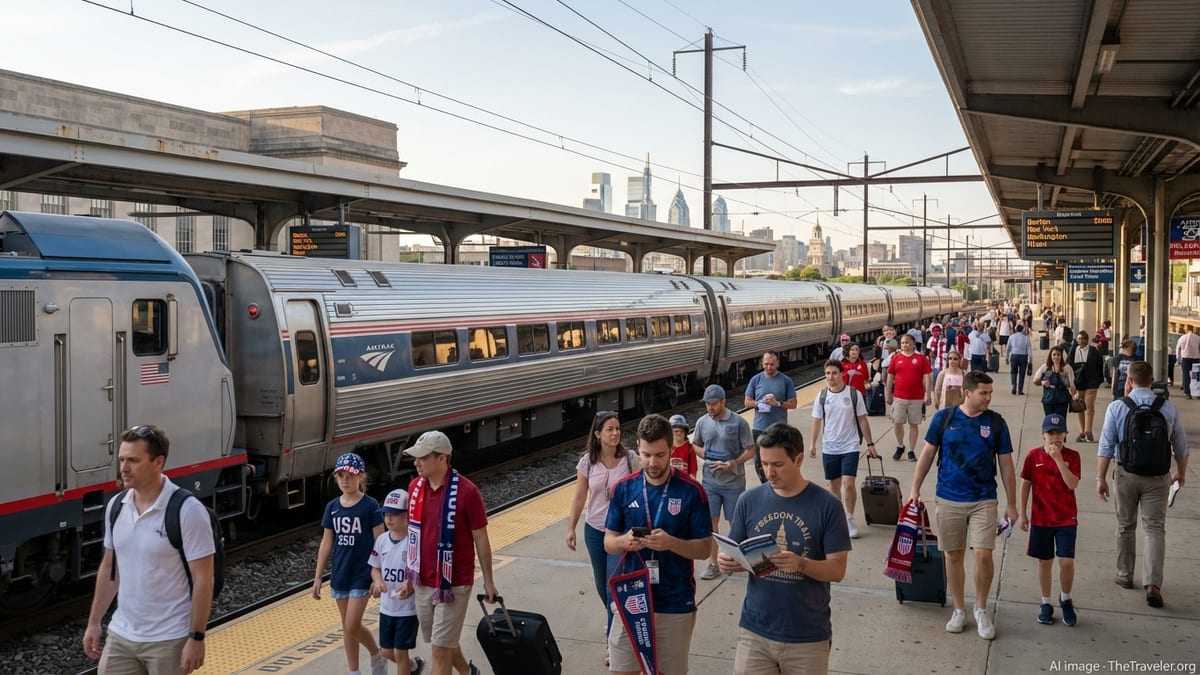
Derailment at key North Philadelphia junction
Published coverage indicates that the incident occurred shortly after midnight at a heavily used junction where several SEPTA Regional Rail routes converge on their approach to Center City. Early reports describe a train coming off the tracks in North Philadelphia, blocking multiple tracks and disabling a stretch of infrastructure that functions as a chokepoint for the entire system.
The derailment did not involve a high-speed intercity service but one of SEPTA’s own commuter trains operating on the Manayunk/Norristown corridor. Images carried by local outlets show rail cars upright but misaligned on the tracks, with work crews and inspection teams converging on the site before dawn as service updates began to roll out.
There were no immediate reports of life-threatening injuries in the publicly available information as of mid-morning. The primary impact has been to service reliability, with SEPTA’s control center forced to rapidly redraw operating patterns as the extent of the damage and the time frame for clearing the disabled train remain under assessment.
Multiple lines suspended, others truncated or delayed
According to service alerts summarized by regional media, three Regional Rail lines are fully suspended until further notice: Manayunk/Norristown, Fox Chase and Chestnut Hill East. Trains on these routes are not running in either direction, eliminating key commuter links between neighborhoods in Northwest and Northeast Philadelphia and Center City.
Other lines are operating on shortened routes to avoid the damaged junction. Reports indicate that Lansdale/Doylestown, Warminster and West Trenton trains are turning back at Fern Rock Transportation Center instead of continuing into Center City, forcing riders to transfer to the Broad Street Line subway or seek alternate options for the final leg of their trip.
Additional regional coverage notes that through-service into Jefferson Station is particularly affected. Some trains that remain in operation are being routed only to Suburban Station or Temple University, changing long-established travel patterns for thousands of daily riders and leading to confusion for infrequent users.
Even on lines that are technically running, delays are widespread. With a core junction out of service, dispatchers have fewer routing options, creating congestion on unaffected tracks and leading to knock-on delays across the network as trains wait for available paths.
Severe commuter impact across Philadelphia region
The breakdown of Regional Rail service has had an immediate effect on morning travel patterns throughout the Philadelphia metropolitan area. Riders arriving at outlying stations early Wednesday encountered suspended or truncated service, crowded platforms and announcements directing them to seek other ways into the city.
At Fern Rock Transportation Center, which has become a de facto terminal for several lines, publicly available photos and descriptions show SEPTA staff guiding passengers from Regional Rail platforms toward the Broad Street Line. The station, already an important transfer hub, has taken on a much larger role as commuters attempt to piece together alternate routes from suburb to city.
Center City stations are also feeling the pressure. With some Regional Rail trains being diverted away from Jefferson Station and consolidated at Suburban Station, riders are being told to walk farther through the downtown core or transfer to the Market Frankford Line to complete their journeys. Congestion on platforms and concourses is likely to intensify if disruptions continue into the evening rush.
The timing of the incident adds to the challenge. The derailment coincides with early summer heat and a period when some riders had been returning to transit in greater numbers following schedule changes and fleet improvements. For many commuters, the sudden loss of one-seat rides and reliable timetables is a stark reminder of the fragility of key nodes in the regional rail network.
Recovery efforts and questions around infrastructure resilience
As of late morning on July 1, published coverage suggests that SEPTA’s immediate focus is on clearing the derailed train, inspecting tracks and overhead power systems, and gradually restoring movements through the affected junction. With multiple lines converging on this location, even partial reopening will require careful testing and a phased return to normal operations.
Rail experts consulted in earlier analyses of the system have long highlighted the vulnerability of central junctions where lines share limited infrastructure. When an incident blocks one of these bottlenecks, it can quickly ripple across an entire network, as today’s disruption demonstrates. The redundancy of alternative routes into Center City is limited, making bus bridges and subway transfers the only short-term alternatives.
The derailment also unfolds against a backdrop of ongoing investment debates. Public documents and previous budget discussions have described the need for sustained funding to modernize rolling stock, signals and track on the Regional Rail system. Wednesday’s events are likely to prompt renewed scrutiny of inspection regimes, maintenance backlogs and capital priorities, even before investigators identify a specific cause.
For now, riders are being urged through public messaging and media reports to check service updates frequently, build extra time into their trips and prepare for crowding and irregular headways. Travel patterns may remain unsettled for days if the damaged junction requires extended repairs or if trains need to be repositioned around the network.
Advice for travelers and broader regional implications
For travelers planning to move into or through Philadelphia on Wednesday and potentially beyond, the derailment means treating Regional Rail as highly unpredictable. Those with time-sensitive commitments, including airport transfers via the Airport Line, may wish to consider backup modes such as intercity rail, intercity buses or rideshare connections to intact portions of the subway and trolley network.
Visitors relying on Regional Rail for access to outlying attractions, college campuses and historic towns may face cancellations or multiple transfers. Travel advisories in local coverage emphasize the importance of checking real-time schedules, confirming whether a given line is suspended or terminating early, and allowing for walking time between downtown stations that may be substituting for each other.
From a broader perspective, the derailment underscores how central SEPTA’s Regional Rail network is to the economic life of the Philadelphia region. Even a single incident can slow commutes, complicate business travel and affect tourism flows, particularly when it occurs at a junction used by many lines rather than on a remote branch.
While investigators work to determine what went wrong overnight in North Philadelphia, the incident is likely to feed into larger conversations about resilience and redundancy on metropolitan rail systems. For travelers and residents alike, Wednesday’s disruption is a vivid reminder that the reliability of a few key pieces of infrastructure can shape the experience of an entire region.