


More news on this day
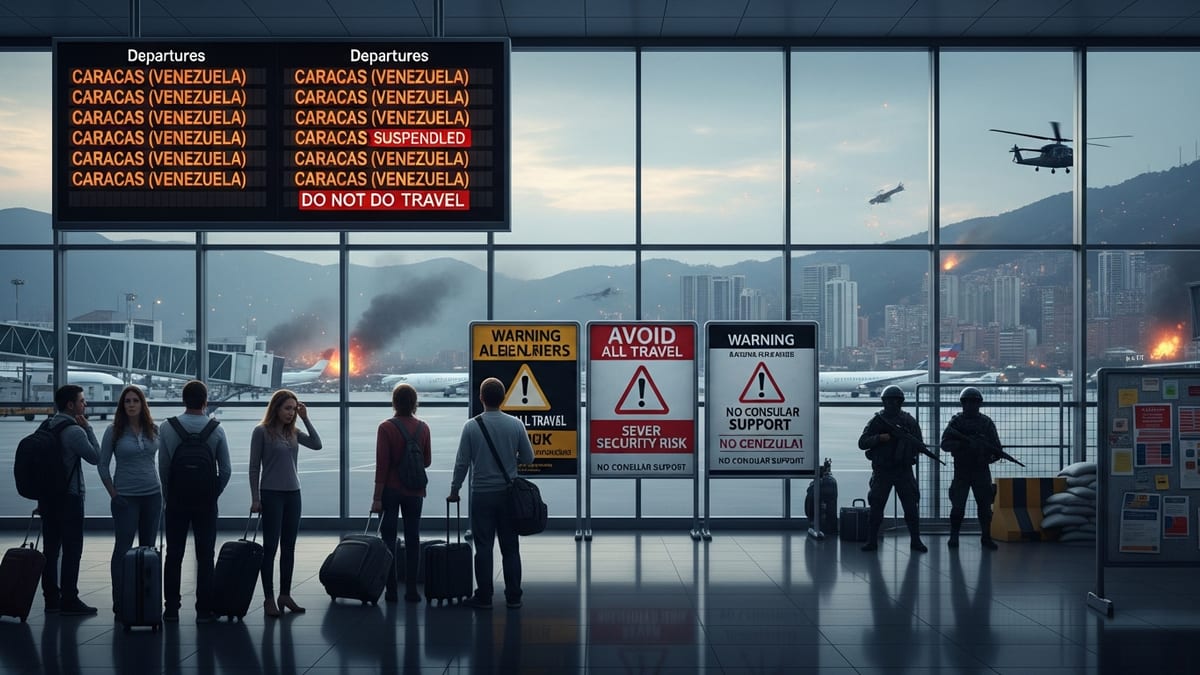
The United States has joined Canada, the United Kingdom and several other governments in hardening travel warnings for Venezuela, issuing urgent safety guidance and 24-hour helplines as catastrophic earthquakes, rising casualties and severe transport disruption leave thousands of foreign travelers struggling to get out.
Get the latest news straight to your inbox!
Escalating Advisories as Death Toll Climbs
Updated United States travel advice issued in late June urges citizens to avoid non-essential trips to Venezuela and to reconsider any planned travel, citing the impact of the June 24 double earthquakes on already fragile security, health care and transport systems. Publicly available State Department information underscores that the quakes have further limited the government’s ability to provide consular assistance in large parts of the country.
The strengthened U.S. alert follows an extraordinary seismic sequence in which magnitude 7.2 and 7.5 earthquakes struck north central Venezuela within seconds of each other on June 24, according to scientific assessments. Regional and international situation reports indicate that at least seven states, including the coastal La Guaira region near Caracas, have suffered extensive structural damage, with power, communications and water supplies repeatedly interrupted.
Official tallies from Venezuelan authorities cited in international media and humanitarian reporting show the death toll climbing sharply in recent days. By June 30, government figures shared in widely quoted coverage placed fatalities at roughly 1,943 with more than 10,500 injured, while humanitarian agencies warn that thousands remain unaccounted for and that the eventual total is likely to be significantly higher.
Humanitarian situation updates from United Nations agencies and regional health bodies describe hospitals operating beyond capacity, field clinics hastily established in sports grounds and public squares, and a growing risk of disease outbreaks among displaced families now sheltering in temporary camps along the coast and in the outskirts of Caracas.
Canada, UK and Allies Urge Travelers to Leave if Safe
Canada, the United Kingdom and several European governments have similarly tightened their advice, urging citizens to avoid all but essential travel to Venezuela and, where possible, to leave while commercial options remain. The UK’s latest guidance, updated just before July 1, highlights widespread damage, the possibility of strong aftershocks and significant disruption to basic services, and advises travelers already in the country to maintain personal emergency plans that do not rely on government-organized evacuations.
Government bulletins reviewed by TheTraveler.org recommend that visitors who are currently in relatively safe areas of Venezuela consider departing on the first available commercial flights out of the country, while acknowledging that options from Caracas and other hubs are limited due to infrastructure damage. Canada’s notices emphasize that consular staff may face constraints reaching affected zones and that assistance could be delayed or provided remotely.
Several European foreign ministries are also instructing their nationals to register their presence, keep travel documents, cash and essential medicines ready to move at short notice, and stay in close contact with airlines or tour operators. These advisories echo a broader regional concern that further major aftershocks, landslides or building collapses could compound an already severe humanitarian emergency.
Across these alerts, governments consistently stress that their capacity to stage large-scale evacuations is restricted by damaged airports, damaged roads and airspace congestion caused by the influx of humanitarian and military relief flights.
Flights Halted, Airports Damaged and Travelers Stranded
Aviation notices and logistics updates from airlines and freight operators indicate that Simón Bolívar International Airport in Maiquetía, the main gateway serving Caracas, remains closed to regular commercial traffic after suffering serious structural damage in terminal areas and access roads. Images and assessments released since June 25 show collapsed ceilings, buckled jet bridges and debris-strewn concourses that are still being assessed for safety.
Regional situation reports compiled by humanitarian agencies state that the closure of Maiquetía and the suspension of the Caracas metro have left many travelers unable to reach remaining secondary airports or bus terminals. Traffic bottlenecks on coastal roads, fuel shortages and intermittent landslides in mountain passes are further complicating overland movement toward less affected border crossings.
While some humanitarian and special charter flights have been operating in and out of Venezuela, these are largely prioritized for relief cargo and medical evacuations. Airlines in neighboring countries have announced schedule changes and contingency plans, but public information suggests that capacity for stranded tourists is limited and subject to rapid change as new damage assessments emerge.
Travel industry analysts warn that even once key runways and control towers are cleared for use, lingering infrastructure issues and ongoing aftershocks could delay the full resumption of normal air services for weeks, leaving many foreign visitors dependent on overland exits through Colombia, Brazil or the Caribbean by sea.
Safety Guidelines: From Aftershocks to Documentation
Government travel advisories and humanitarian safety briefings have converged on several core recommendations for those still in or near the affected regions of Venezuela. Visitors are urged to brace for prolonged aftershock activity, to stay away from damaged buildings and steep slopes, and to move to open spaces whenever tremors are felt. Guidance from regional health authorities highlights the importance of avoiding elevators, checking for gas leaks, and shutting off electricity in damaged accommodations where feasible.
Publicly available advice also stresses the need to conserve drinking water, use only treated or bottled supplies, and maintain good hand hygiene in crowded shelters to reduce the risk of diarrheal disease and respiratory infections. Travelers with chronic conditions are encouraged to ration essential medications, carry prescriptions in paper form and seek emergency refills as early as possible, given reported shortages in pharmacies and hospital dispensaries.
Foreign nationals are being advised to keep passports, copies of identification, proof of insurance and local contact details on their person at all times. Several consular and airline bulletins note that digital backups of documents may be inaccessible during power or network outages, making printed copies particularly valuable when crossing checkpoints or border posts.
Authorities and aid agencies also recommend that visitors identify at least two rendezvous points in case family members or travel companions are separated during an aftershock or evacuation, and that they agree on simple communication plans using text messages, which consume less bandwidth when mobile networks are congested.
24/7 Helplines and Digital Channels for Stranded Travelers
In response to the deteriorating conditions, the United States has publicized emergency contact channels for citizens in Venezuela and for families attempting to reach loved ones. State Department materials highlight a combination of 24-hour phone lines and online crisis intake forms that can be used to report missing persons, request information on local medical facilities or explore limited evacuation options from specific cities.
Canada, the United Kingdom and several European countries have similarly activated round-the-clock consular hotlines, urging their nationals to call or use secure web forms to share their location, condition and contact details. Travel notices indicate that callers should expect high demand and potential delays, but that registration helps governments track needs, relay safety information and coordinate with local partners where access is possible.
International organizations are also expanding remote support. Humanitarian agencies have rolled out messaging-based hotlines and social media channels to share practical guidance in Spanish and English on topics such as safe shelter, family tracing and mental health support, particularly for children and elderly travelers shaken by repeated tremors and scenes of destruction.
With the full scale of the disaster still emerging, officials across multiple countries are urging citizens to monitor official alerts closely, remain patient amid long waits for assistance, and avoid attempting risky journeys through heavily damaged areas without confirmed transport options or local support.