


More news on this day
British holidaymakers heading overseas this summer are being urged to check updated Foreign, Commonwealth and Development Office guidance, as fresh travel warnings highlight heightened risks, new no‑go areas and stricter expectations around insurance and health precautions.
Get the latest news straight to your inbox!
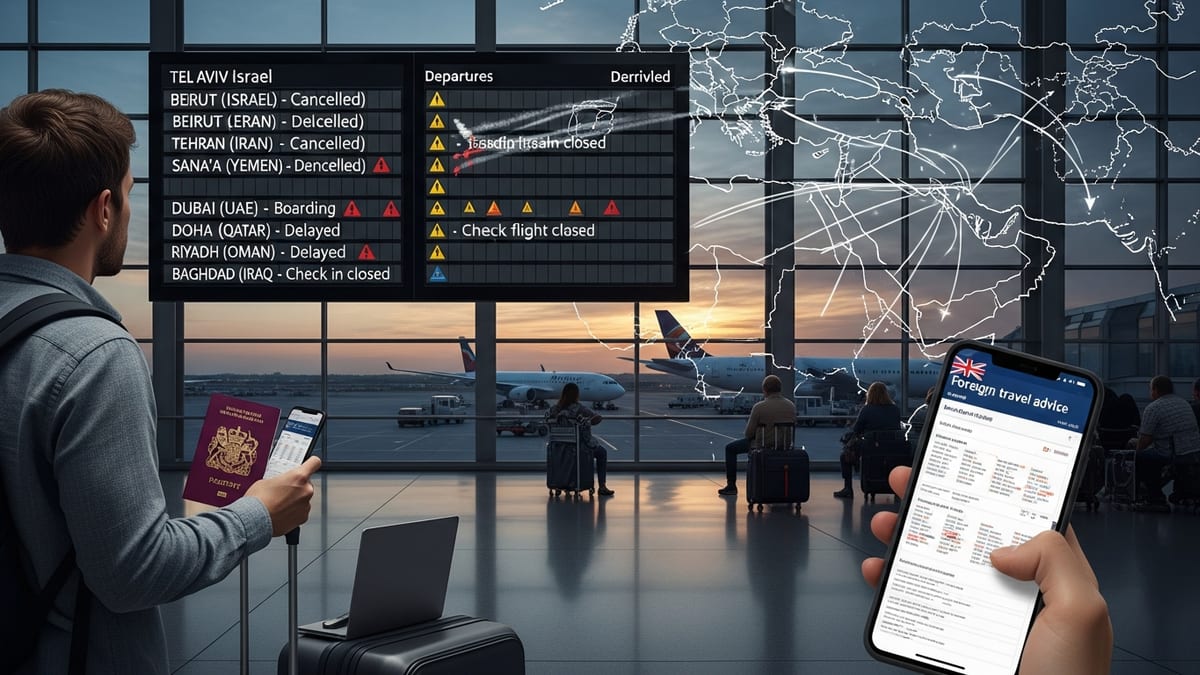
Expanded list of high-risk destinations for UK travellers
Recent updates to the UK government’s foreign travel advice show a broadening map of destinations where trips are considered higher risk for British nationals. Publicly available information indicates that the Foreign, Commonwealth and Development Office (FCDO) now advises against all or all but essential travel to dozens of countries and territories worldwide because of conflict, terrorism, civil unrest, natural disasters or serious crime concerns.
Coverage in UK-focused outlets reports that this “do not travel” and “only essential travel” list has been refreshed for the 2025–26 travel seasons, with warnings applying to parts of the Middle East, sections of North and West Africa, and areas of Asia and Eastern Europe. Some locations, such as Ukraine, remain subject to advice against travel due to ongoing hostilities and regular drone and missile strikes affecting major cities and critical infrastructure.
While some destinations have seen improvements, leading to a relaxation of earlier restrictions, the overall picture for summer remains mixed. Travellers planning beach breaks, city weekends or multi-stop itineraries are being reminded that conditions can change rapidly and that reliance on last year’s advice, or word-of-mouth recommendations, may no longer be sufficient.
British nationals are therefore being encouraged by publicly accessible guidance to review country pages in detail before booking or boarding flights, paying particular attention to maps that highlight regional exclusions, internal border areas and zones where security conditions are volatile.
Shifting advice in the Middle East and other popular regions
Separate reports this summer point to a complex situation across the Middle East and nearby regions that remain popular with British holidaymakers. While some countries have seen improvements in security assessments, leading to a lifting of previous “avoid all but essential travel” language, other nearby destinations continue to carry stronger warnings or region-specific exclusions related to tensions and the risk of spillover incidents.
Information published by specialist travel outlets notes that guidance for hubs such as the Gulf states has been adjusted more than once over recent months. In certain cases, earlier cautionary advice linked to regional hostilities has been eased, supporting a return of demand for flights and packages to resorts and city destinations. Elsewhere, however, advice remains tight around border areas, critical infrastructure and locations associated with previous attacks or demonstrations.
The changing picture underlines that there is no single rule for the region. Travellers booking multi-country itineraries that combine a beach break with a stopover, a desert tour or a pilgrimage are being urged to check each segment separately. Even when a capital city is considered low risk, the route to more remote areas, land borders, or crossings into neighbouring states might still fall under stricter guidance.
Package holiday providers and airlines are continuing to monitor the situation and may adjust schedules or refund and rebooking policies in response to new official advice. However, travellers are being reminded that checking the status of their specific destination before departure remains their own responsibility.
Insurance, medical risks and the fine print of cover
Alongside security warnings, British travellers are also being advised to pay closer attention to health-related notices and the terms of their travel insurance this summer. Travel health authorities have recently highlighted ongoing concerns about infectious diseases, including outbreaks and circulation of viruses such as polio in certain countries, which may affect vaccination recommendations and entry requirements.
Publicly available health notices stress that even destinations perceived as low risk from a security perspective can carry elevated medical risks. This can include higher rates of food and water-borne illness, vector-borne diseases such as dengue, and limited hospital capacity in remote or rural areas. Travellers are being encouraged to seek up-to-date health guidance well before departure, allowing time to complete any recommended vaccination courses.
Industry guidance issued to UK travel businesses earlier this year also reiterates the importance of prominently signposting official FCDO country advice to customers, so that holidaymakers can make informed choices and understand how warnings may affect their insurance cover. In many standard policies, travelling to areas where the FCDO advises against all or all but essential travel can invalidate sections of cover, particularly those relating to medical treatment, evacuation and personal liability.
Consumers are therefore being urged to check their policy wording carefully, confirm that their destination is covered on the dates they intend to travel, and declare any relevant pre-existing medical conditions. For those visiting higher-risk regions, enhanced or specialist policies may be required to provide adequate protection.
Practical steps for Brits heading abroad this summer
Travel commentators and consumer organisations are using the start of the peak holiday period to reiterate a series of practical steps for British travellers. The first is to consult the FCDO’s foreign travel advice for every country on an itinerary immediately before booking, and again shortly before departure, in case new incidents have led to a change in status.
Holidaymakers are also being encouraged to pay attention to sections on local laws and customs, entry requirements, and internal travel restrictions, not just headline security summaries. Curfews, bans on certain items, or limitations on domestic flights and ferry routes can all affect the feasibility of planned routes, particularly for independent travellers and backpackers.
Another key recommendation from publicly available guidance is to keep digital and printed copies of key documents, including passports, visas, insurance policies and emergency contact details. Travellers are advised to leave a copy of their itinerary and contact details with a trusted person in the UK, and to monitor local news in their destination, especially during periods of political tension or extreme weather.
Finally, those heading abroad this summer are being reminded that flexibility can be an asset. Choosing refundable or changeable tickets, checking hotel cancellation policies and allowing additional time for airport security and border checks can all reduce stress if circumstances shift suddenly. With travel conditions in some regions more unpredictable than in previous years, preparation and awareness are being framed as essential parts of any British holiday abroad.