


More news on this day
American Airlines is accelerating a multiyear overhaul of its cabins, expanding premium seating and upgrading onboard Wi-Fi as it moves to capture high-yield travelers and standardize the experience across its domestic and regional fleets.
Get the latest news straight to your inbox!
Fleet Retrofit Focused on Premium Capacity
Publicly available investor materials and fleet documentation show that American is deep into a large retrofit program on its Airbus A319 and A320 aircraft, reconfiguring cabins to add more domestic first class and extra-legroom seats. The airline is growing first class on the A319 from eight to 12 seats and on the A320 from 12 to 16 seats, while also increasing the number of extra-legroom Main Cabin seats toward the front of the aircraft.
The changes form part of a broader premiumization strategy that American has outlined in financial filings and presentations, which target a significant increase in first, business and premium economy seats by the end of the decade. Company guidance referenced in those documents indicates that premium seats are growing faster than standard economy capacity, reflecting strong demand from both corporate and high-spend leisure travelers.
Reports from aviation outlets and passenger communities indicate that several of the retrofitted A320 family jets are already in service, with updated layouts showing the expanded premium cabins. The program is expected to continue through 2026, gradually bringing the new configuration to most of the carrier’s workhorse narrowbody fleet used on domestic and short-haul international routes.
At the same time, American is reshaping galleys and cabin fixtures to accommodate the new seating mix. Industry coverage highlights smaller aft galleys and revised storage to free up space for additional rows, changes that aim to balance operational needs with the goal of increasing revenue from higher-yield seats.
Regional Jets Brought in Line With Mainline Comfort
American is also upgrading its large regional fleet to more closely match the look and feel of its mainline aircraft. According to the airline’s published announcements, dual-class regional jets are receiving refreshed interiors, new seat coverings and added power outlets, along with expanded premium cabin service intended to create a more consistent experience for connecting travelers.
The carrier already offers high-speed satellite Wi-Fi on a substantial portion of its regional aircraft and has stated that coverage will extend to the full dual-class regional fleet. Communications from the airline indicate that this rollout is scheduled to be largely complete by early 2026, positioning American as one of the most connected regional operators in the United States.
Bringing regional aircraft up to mainline standards is strategically important for American because many premium customers begin or end their trips on these shorter segments. By aligning seating, connectivity and service levels, the airline is aiming to reduce the disparity between a long-haul business-class flight and a short connecting hop on a smaller jet.
Fleet plans around its Chicago hub and other key markets also show American substituting some smaller aircraft with dual-class regional jets that feature first class, effectively expanding the number of itineraries where a premium cabin is available from origin to destination.
Wi-Fi Upgrades and the Path to Networkwide High-Speed Connectivity
American’s retrofit activity is closely tied to its connectivity strategy. The airline’s Wi-Fi and entertainment pages state that most mainline aircraft already offer in-flight internet, with a growing share equipped with high-speed satellite connections that support streaming, messaging and VPN use. The carrier is in the process of installing additional power outlets and USB ports across the fleet so that passengers can more reliably use personal devices during flight.
Recent corporate materials describe American’s objective to have satellite Wi-Fi broadly deployed across both mainline and regional aircraft, positioning connectivity as a core element of the onboard product rather than an optional extra. The company has discussed this as foundational to its premium focus, citing customer feedback that reliable internet access now ranks alongside legroom and onboard service in importance.
Program timelines published by the airline and referenced in earnings commentary suggest that widebody aircraft will also see Wi-Fi upgrades as part of separate cabin refreshes that introduce new long-haul business-class suites and an expanded premium economy section. These changes, which are tied to both new aircraft deliveries and retrofit projects, are expected to roll out progressively over the next several years.
Alongside the hardware investments, American has been experimenting with different pricing and access models, including complimentary connectivity for certain loyalty program members and subscription products for frequent flyers. These efforts are intended to encourage broader adoption of onboard Wi-Fi and reinforce the value of the AAdvantage program.
Balancing Screens, Streaming and Customer Expectations
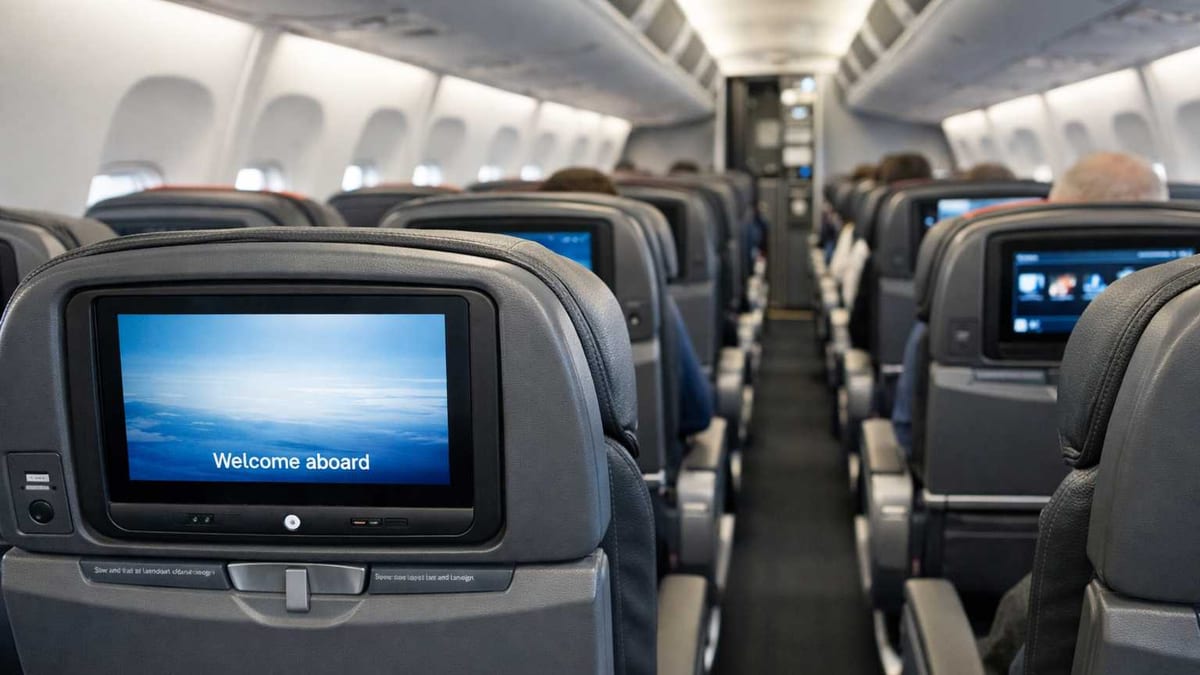
The retrofit program has prompted renewed debate among travelers over the balance between traditional seatback entertainment screens and a bring-your-own-device model supported by Wi-Fi. Aviation industry coverage in recent weeks has highlighted American’s evolving position, with reports indicating that the airline plans to install modern seatback screens on future Boeing and Airbus deliveries beginning later this decade, while also retrofitting a portion of existing aircraft.
At the same time, several retrofit plans for current A319 and A320 aircraft have removed older seatback systems in favor of streaming content over Wi-Fi, device holders and personal screens. This mixed approach reflects competing pressures: some customers strongly prefer embedded entertainment, while others are comfortable using phones and tablets if connectivity is robust and reliable.
For American, the emphasis remains on monetizing and differentiating the premium end of the cabin. Industry analysts note that larger premium cabins, enhanced connectivity and refreshed interiors create more opportunities to sell higher-priced seats and loyalty-linked upgrades, even if individual design choices such as screen placement remain contentious among frequent flyers.
How quickly American can harmonize its entertainment and connectivity offerings across a large, varied fleet will be a key factor in how travelers perceive the upgrade program. The combination of more premium seats and improved Wi-Fi is central to that effort, particularly on domestic and regional routes where competition from Delta and United is most intense.
Implications for Travelers Shopping Premium Cabins
For passengers, the most immediate impact of American’s strategy is likely to be a greater chance of finding a premium seat on domestic and short-haul flights, especially on routes operated by A319s, A320s and dual-class regional jets. As more aircraft complete retrofits, travelers should see additional first class rows and expanded extra-legroom seating available for purchase or mileage redemptions.
Loyalty members may also benefit from a larger pool of premium seats for upgrades, though program changes in recent years have tied many upgrade opportunities more closely to spending and status levels. Publicly available AAdvantage documentation indicates that complimentary and mileage upgrades are being refined alongside the aircraft changes, particularly as premium economy cabins expand on long-haul flights.
The Wi-Fi enhancements, meanwhile, could improve the reliability of inflight work and entertainment, especially as high-speed satellite coverage becomes more common on regional jets that have historically offered limited connectivity. For business travelers who value gate-to-gate productivity, this aspect of the retrofit program may prove as important as the extra rows of first class.
As the retrofit schedule progresses through 2026 and beyond, travelers can expect a patchwork of cabin experiences in the near term, depending on aircraft type and route. Over time, however, American’s investments in more premium seats and upgraded Wi-Fi are poised to reshape the onboard experience across much of its domestic network, signaling a continued shift toward higher-yield, connectivity-focused travel.