


More news on this day
American Airlines is accelerating investment in its narrowbody fleet, rolling out refurbished cabins, new aircraft orders and upgraded onboard technology as competition intensifies for high-yield domestic and short-haul travelers.
Get the latest news straight to your inbox!
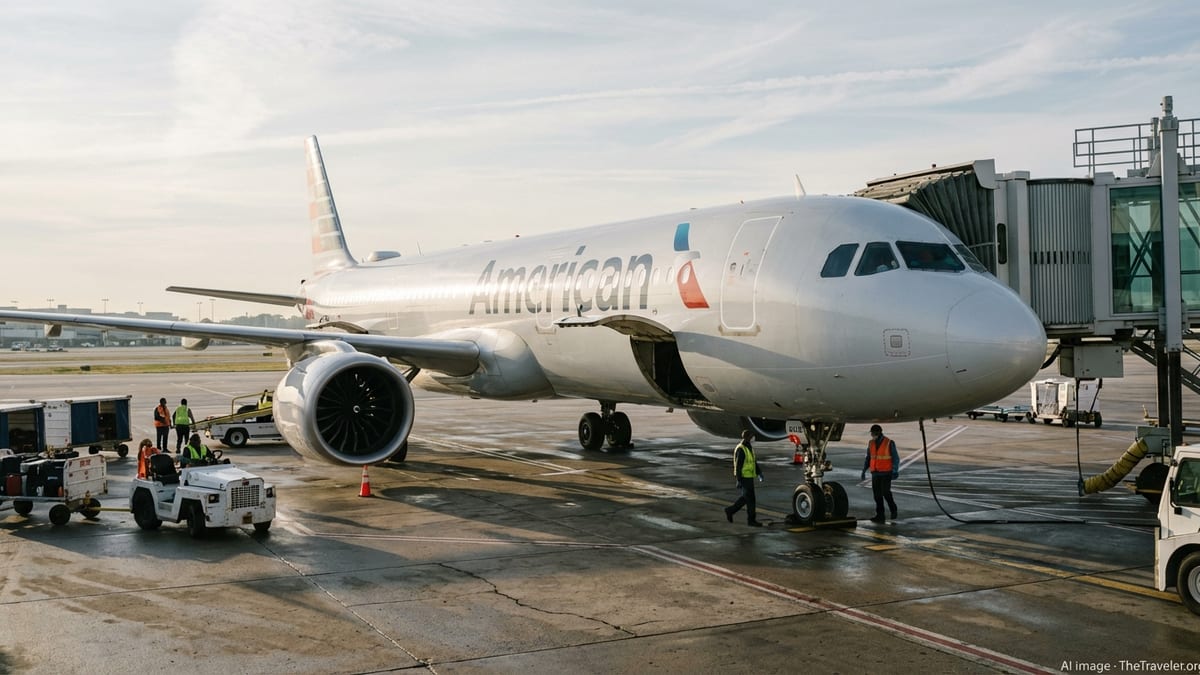
Fleet-wide retrofits put narrowbody cabins in the spotlight
Publicly available information shows that American Airlines is in the midst of a multi-year program to refresh the interiors of its existing Airbus A319 and A320 aircraft, beginning in 2025. The work focuses on expanding the number of domestic first class seats, reconfiguring main cabin layouts and installing power at every seat, alongside larger overhead bins and updated finishes. The aim is to create a more consistent look and feel across the carrier’s mainline narrowbody fleet while increasing the proportion of higher-yield seats.
Company disclosures and recent earnings materials suggest that these retrofits form a central plank of American’s strategy to grow premium capacity faster than the main cabin. The airline has indicated that premium seating is outpacing standard economy growth, reflecting strong demand from corporate travelers, loyalty program members and leisure passengers willing to pay more for extra comfort on domestic routes.
The refresh follows earlier interior projects on Boeing 737-800 aircraft and is designed to align older cabins with newer “Oasis” and “Kodiak” layouts. For travelers, the most visible differences are expected to be additional power outlets, more uniform seating, redesigned lighting and overhead storage that can accommodate more standard carry-on bags.
American’s regional narrowbody operations are also being pulled into the upgrade effort. Prior announcements indicate that dual-class regional jets are slated to receive more consistent mainline-style cabins, giving frequent flyers a more predictable experience when connecting between larger and smaller aircraft.
Large narrowbody order book extends into the next decade
Alongside retrofits, American has committed to a sizable pipeline of new narrowbody aircraft. A 2024 fleet announcement outlined firm orders for 85 Airbus A321neo, 85 Boeing 737 MAX 10 and 90 Embraer E175 jets, supplementing an existing backlog of new-generation narrowbodies. These orders are framed as a way to support long-term growth on domestic and short-haul international routes while expanding premium seating across the fleet.
Filings and investor presentations indicate that American now has hundreds of aircraft on order, stretching into the next decade. Many of these jets are configured with larger premium cabins and high-capacity layouts that can better match demand on key hub-to-hub and sunbelt routes. The airline positions this as a way to capture revenue in markets where competitors are also adding more upscale seating and amenities on single-aisle aircraft.
The mix of Airbus and Boeing narrowbodies allows American to continue operating a diversified fleet while phasing out older, less efficient models. Sustainability reports point to parallel investments in new engines, lighter components and other efficiency measures that reduce fuel burn per seat, even as the carrier increases the total number of seats offered.
For travelers, the long order book means that more flights over the next several years are likely to be operated by newer or freshly refurbished single-aisle aircraft rather than aging planes with legacy interiors. The shift is particularly pronounced on high-frequency business routes from American’s largest hubs.
Onboard technology, Wi-Fi and entertainment receive upgrades
Comfort in the narrowbody cabin increasingly depends on connectivity, and American is treating onboard technology as a core part of its investment story. Recent earnings call transcripts and annual report sections describe a rollout of complimentary high-speed Wi-Fi for loyalty program members across narrowbody and dual-class regional fleets, with the benefit extending to an ever-larger share of departures.
In parallel, the airline has outlined plans to bring next-generation satellite connectivity to more aircraft, including an agreement to begin installing a new high-speed service from 2027. The objective is to provide fast, reliable internet across domestic routes, positioning connectivity as a key differentiator in the crowded North American market.
Entertainment hardware is also being revisited. Recent coverage of American’s product plans reports that the carrier intends to install seatback screens on more than 800 aircraft as part of a broad cabin overhaul, including narrowbody jets. This represents a reversal from a previous strategy that favored personal device streaming and removed many built-in monitors. The new approach aims to combine 4K seatback displays with Bluetooth audio and a full suite of power options at each seat.
Combined with refreshed lighting, cabin finishes and redesigned galleys, these technology-focused upgrades signal that American is working to narrow the perceived gap between its narrowbody product and the experience available on newer long-haul aircraft.
Premium focus reshapes domestic and short-haul networks
American’s investments in narrowbody cabins are closely tied to evolving network and revenue strategies. Financial disclosures and analyst commentary highlight that premium revenue has been outpacing main cabin performance, and that the airline expects premium seat growth to run ahead of overall capacity through the decade. As a result, more domestic and short-haul flights are being scheduled with aircraft that offer larger first class cabins and extra-legroom seating.
The retrofit of A319 and A320 fleets to add domestic first class seats illustrates how cabin configuration decisions are being guided by demand patterns. Routes with strong business travel, high loyalty engagement or growing affluent leisure traffic are increasingly served with single-aisle aircraft that mirror many aspects of a traditional long-haul premium experience, though without lie-flat seats.
Industry observers note that this strategy also helps American manage a constrained widebody fleet. By concentrating lie-flat and flagship products on long-haul international routes and using upgraded narrowbodies on transcontinental and medium-haul sectors, the airline can focus its largest aircraft on markets where they generate the greatest return while still offering an elevated experience on shorter journeys.
For travelers, the trend means that the gap between flying on a domestic narrowbody and a widebody is narrowing, particularly at the front of the cabin. Power at every seat, improved storage, refreshed decor and enhanced connectivity are increasingly standard on flights that once relied on older, less feature-rich interiors.
What it means for travelers choosing American
For passengers weighing their options among major U.S. carriers, American’s narrowbody investments translate into a more predictable onboard product, especially from major hubs. Reports indicate that as more aircraft complete retrofits and new deliveries enter service, flyers are less likely to encounter legacy interiors with limited power access or mismatched seating.
Business travelers and frequent flyers stand to benefit most from the expanded premium seating footprint and enhanced connectivity. More domestic first class seats, additional extra-legroom rows and widespread high-speed Wi-Fi can improve upgrade chances, create clearer differentiation between fare classes and make it easier to work during flight.
Economy passengers are expected to see incremental gains in comfort rather than dramatic changes. Larger overhead bins reduce the stress of finding space for carry-on bags, power outlets support personal devices throughout the flight, and the planned return of seatback entertainment on many aircraft may be welcomed by families and long-haul economy travelers.
As the retrofit and delivery programs stretch into the late 2020s and beyond, the overall impact will be measured in gradual shifts rather than overnight transformation. However, the scale of American’s commitments suggests that the narrowbody cabin will remain at the center of its customer-experience strategy for years to come.