


More news on this day
American Airlines has announced a sweeping fleetwide upgrade centered on its narrowbody aircraft, committing to restore seatback entertainment screens, expand premium seating and build on recent investments in high-speed onboard Wi-Fi as it seeks to sharpen its competitive position in the U.S. market.
Get the latest news straight to your inbox!
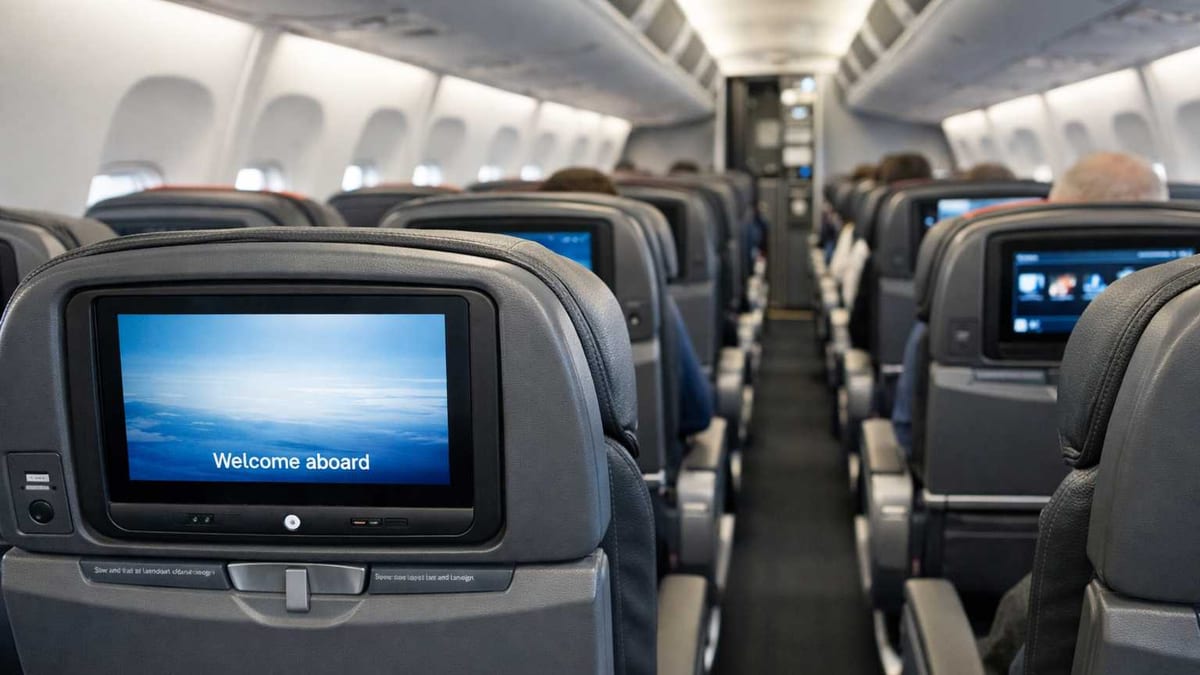
Reversing Course With Fleetwide Seatback Screens
According to recent coverage of the announcement, American plans to install individual entertainment screens at every seat across its domestic narrowbody fleet, reversing a years-long strategy of removing built-in displays in favor of streaming to passengers’ own devices. Reports indicate that the move will apply to key workhorse types such as Airbus A319, A320 and A321 jets, as well as Boeing 737 families, through a multiyear retrofit and new-delivery program.
The new screens are expected to feature 4K resolution and updated user interfaces, reflecting a broader industry trend toward more personalized in-flight entertainment. Commentaries in U.S. and international outlets note that the decision follows sustained passenger criticism of bring-your-own-device models, including concerns about drained batteries, awkward viewing angles and inconsistent connectivity.
Analysts suggest the shift represents a significant change in strategy for American, which had previously argued that most travelers preferred to watch content on personal phones and tablets. The carrier now appears to be aligning more closely with rivals that have invested heavily in embedded systems on domestic routes, positioning the upgrade as part of a comprehensive refresh of the onboard experience.
More First Class and Extra-Legroom Seats Across Narrowbodies
In parallel with the entertainment overhaul, American is undertaking a major reconfiguration of its single-aisle cabins to increase the share of higher-yield seats. Financial and aviation industry reports describe plans to add first class seats and more Main Cabin Extra seating with additional legroom on most narrowbody aircraft, both through retrofits of current jets and the delivery of new aircraft with updated layouts.
On larger models such as the Airbus A321neo and forthcoming Boeing 737 MAX variants, the number of domestic first class seats is expected to rise substantially, with cabin designs emphasizing more personal space and enhanced privacy compared to current configurations. Observers say the emphasis on premium seating mirrors strategies at other large U.S. carriers that are betting on corporate travelers and high-spend leisure customers to drive revenue growth.
The cabin refresh extends beyond seat counts. Publicly available information on the program points to redesigned seats, additional overhead storage and modernized lighting schemes intended to create a more consistent look and feel across the fleet. The airline is positioning these changes as a way to make the narrowbody experience feel closer to that of its newest widebody aircraft on longer domestic and short-haul international routes.
Wi‑Fi Investments and the Role of Starlink
The fleetwide upgrade builds on American’s recent investments in connectivity, including the rollout of complimentary high-speed satellite Wi‑Fi for AAdvantage members on much of its fleet. Company filings and program updates show that, as of early 2026, free access is being extended across single-aisle mainline aircraft, selected Boeing 787 widebodies and dual-class regional jets equipped with satellite systems.
Separate coverage in aviation media indicates that American also intends to enhance future connectivity by partnering with low-Earth-orbit providers such as Starlink on more than 500 aircraft, beginning later this decade. That initiative is expected to supplement existing satellite arrangements and is framed as a way to deliver more reliable streaming, faster browsing and improved performance on bandwidth-intensive applications.
By coupling seatback screens with higher-capacity Wi‑Fi, American is seeking to offer a more integrated digital experience on board, where passengers can choose between preloaded entertainment, live programming and their own content. Industry analysts note that improved connectivity is increasingly critical not only for leisure travelers but also for business passengers who view gate-to-gate online access as essential.
Regional Fleet and Cabin Consistency
The narrowbody announcement follows earlier plans to upgrade American’s substantial regional fleet, which feeds traffic into its major hubs. Regulatory filings and prior news releases outline a retrofit program for dual-class regional jets such as the CRJ700, CRJ900, Embraer 170 and Embraer 175, including new interiors and satellite Wi‑Fi coverage that is scheduled to extend across the entire dual-class regional fleet.
The regional upgrades are designed to mirror the aesthetics and functionality of the mainline cabins, with updated seat materials and refreshed color palettes. Observers argue that this consistency is important for a network carrier whose customers often connect between regional and mainline flights within a single journey, particularly at large hubs where regional operations account for a substantial share of departures.
Together, the mainline and regional projects point to a broader effort to standardize the onboard experience, so that passengers encounter similar entertainment options, connectivity and seating choices regardless of aircraft type. Industry commentary suggests this approach may help American differentiate its product on shorter routes, where regional jets have historically offered fewer amenities than larger aircraft.
Competitive and Financial Context
American’s fleetwide upgrade is unfolding against a highly competitive backdrop, as major U.S. airlines vie for premium travelers and seek to narrow profit gaps. Recent financial coverage notes that the carrier has been under pressure to improve unit revenues and margins relative to key rivals that have invested aggressively in premium cabins and high-end onboard amenities.
By restoring seatback screens and expanding premium seating, American is moving into closer alignment with competitors that have made such features central to their domestic strategies. Analysts observing the announcement describe the initiative as one of the most extensive cabin transformations in the airline’s recent history, with the potential to reshape customer perceptions on flagship domestic routes and high-frequency business markets.
The retrofit timeline is expected to stretch over several years, with installation work phased to minimize schedule disruption. As the program progresses, travel industry observers will be watching how quickly the upgraded cabins appear on major routes and how passengers respond to the combination of enhanced entertainment, connectivity and seating options. For travelers, the changes signal that American is prepared to make substantial, long-term investments in the onboard experience as part of its broader push for profitability and loyalty growth.