


More news on this day
British holidaymakers heading overseas this summer are being urged to reassess their plans as updated travel advisories highlight rising security risks, record-breaking heatwaves, stricter border checks and potential pitfalls around passports and insurance.
Get the latest news straight to your inbox!
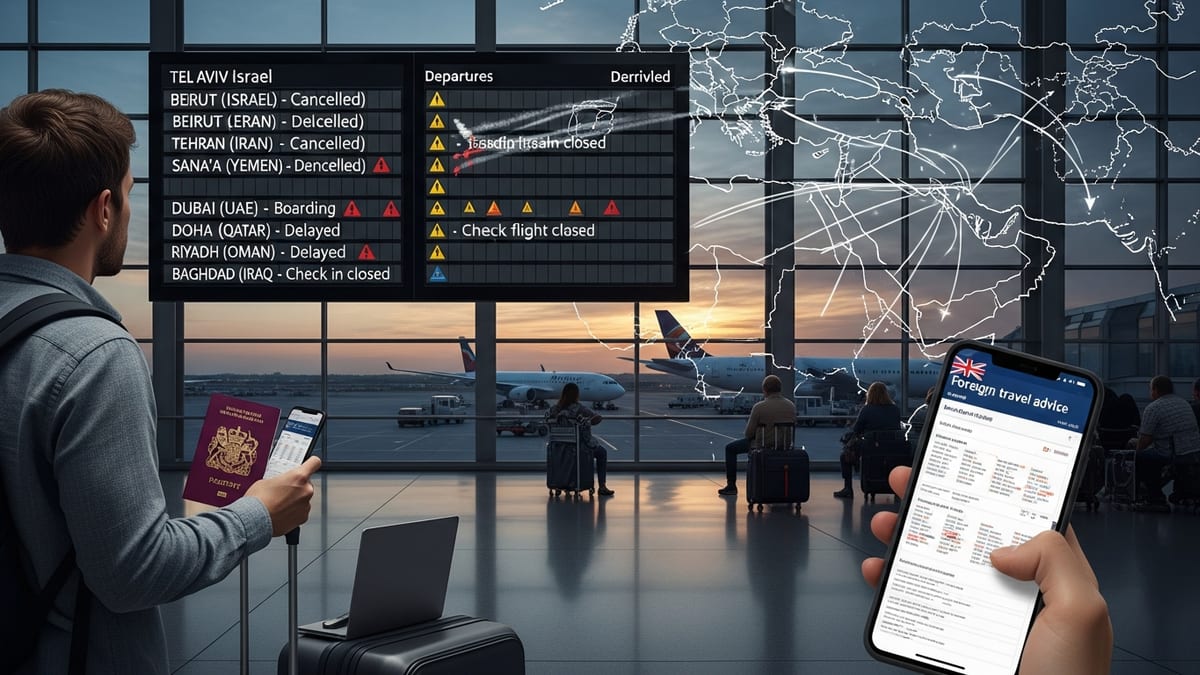
Expanded list of destinations carrying strongest UK warnings
Publicly available information from the UK Foreign, Commonwealth and Development Office shows that more countries and regions now carry advice against all travel or against all but essential travel compared with earlier in the year. Recent updates focus in particular on parts of the Middle East and surrounding regions, where armed conflict, regional tensions and the risk of terrorism or civil unrest continue to affect security conditions.
Travel advice pages for individual destinations have been revised in recent days to flag new or reinforced warnings. The entries for locations such as Palestine and Jordan point to volatile conditions and specific localised restrictions, while updated text for Bahrain and other nearby states underlines that regional flare-ups can lead to sudden airspace closures or disruption to cross-border routes.
Separate coverage of Foreign Office data indicates that a core group of countries remains subject to blanket guidance against travel, often because of ongoing conflict, widespread violence or the collapse of basic services. Holidaymakers are being reminded that visiting these destinations despite official warnings can invalidate travel insurance and make it harder to obtain consular help in an emergency.
Industry commentators note that even in popular tourist regions where travel remains possible, localised curfews, demonstrations or military activity can quickly alter risk levels. Travellers are therefore being advised to keep checking government pages up to the day of departure rather than relying on information that may be several weeks old.
Heatwaves and extreme weather reshape summer holiday risks
Meteorological briefings for Europe and the Mediterranean point to another summer of exceptional heat, with temperatures already climbing into the forties in parts of southern Europe and new national records set in late spring. The UK Met Office has issued rare red warnings for extreme heat at home, and climate agencies across the continent warn that prolonged hot spells, wildfires and poor air quality are becoming more frequent.
For British holidaymakers, this means that some traditional sun destinations now pose a greater health risk, particularly for older travellers, young children and anyone with underlying medical conditions. Health guidance stresses the danger of dehydration, heatstroke and breathing difficulties when temperatures remain very high through both day and night, especially in urban centres or during active holidays involving hiking, sightseeing or cycling.
Travel industry analysis suggests that these conditions are beginning to influence booking patterns. Reports point to stronger interest in so-called “coolcations” in northern Europe and coastal regions with milder climates, as well as a shift towards travelling in May, June or September instead of the hottest weeks of July and August. At the same time, many who keep existing bookings to hotter destinations are being urged to plan for earlier starts, longer midday breaks and flexible itineraries that can be adjusted if local authorities temporarily close attractions or outdoor areas.
Airlines and tour operators are also monitoring the effect of heat and wildfires on airports and resorts. In past seasons, flash evacuations from hotels, cancellations due to smoke and flight delays linked to extreme temperatures have caused disruption for UK travellers. Updated travel advice now routinely highlights these possibilities and encourages holidaymakers to check airline notifications and local news as departure approaches.
New focus on passport validity, border checks and documentation
Alongside security and climate concerns, British travellers are being warned to pay closer attention to passport rules and border procedures this summer. Analysis of UK passport office data, widely reported earlier this year, suggested that more than a million passports were due to expire by the end of June 2026, increasing the risk that some holidaymakers could find themselves unable to travel if they neglect renewal deadlines.
Since the UK’s departure from the European Union, many European destinations have insisted on specific passport validity periods on arrival and on the date of intended departure. Travel reports show that misunderstanding these rules remains a common cause of denied boarding at UK airports. Airlines have repeatedly reminded passengers that it is their responsibility to ensure documents meet destination requirements, and that failure to do so may result in being turned away at check in.
Border procedures inside Europe are also changing. This summer is being seen as an early test for new digital checks and tighter screening of non-EU arrivals at some major hubs, adding to the queues already familiar to UK visitors since Brexit. Travel commentators recommend allowing extra time for passport control, particularly during school holidays and on weekends at busy airports such as those in Spain, Italy and Greece.
Separate warnings relate to visas, vaccination documents and proof of financial means, which some countries require as a condition of entry. Public information points out that border officials can ask to see return tickets, hotel bookings or evidence of sufficient funds, and that travellers who cannot provide them may be refused entry even if they arrive with a valid passport.
Insurance gaps, payment problems and financial risks abroad
The latest travel alerts also place renewed emphasis on financial preparation, highlighting the risk of inadequate insurance and changing payment rules in some destinations. Updates to guidance for Cuba, for example, draw attention to new restrictions affecting the use of international bank cards and electronic payments, complicating access to money for overseas visitors.
Travel insurers and consumer groups caution that visiting destinations where the government advises against all but essential travel can void many standard policies, leaving travellers to cover medical bills, repatriation costs or cancellations themselves. Even in places without such warnings, terms and exclusions can vary significantly between providers, so British travellers are being encouraged to read policy wording carefully and check that adventure activities, car hire and pre-existing medical conditions are properly covered.
Rising travel disruption is another concern. Heatwaves, wildfires, strikes and airspace closures can all lead to last-minute flight changes or cancellations. Reports indicate that while package holiday customers usually have stronger protections if trips are significantly altered, independent travellers may be more exposed to additional costs for accommodation and onward connections, especially where local consumer laws differ from those in the UK.
Consumer advice columns also flag the importance of keeping emergency funds separate from everyday spending money, ideally using a combination of cash and cards held in different locations. This is designed to reduce the impact if one card network is interrupted, a wallet is stolen or an ATM outage leaves travellers temporarily unable to withdraw local currency.
Practical steps urged for Brits planning trips this summer
The overall message emerging from the latest updates is not that British holidaymakers should cancel trips altogether, but that careful preparation is becoming more important. Government advice services, airlines and travel organisations are all stressing the value of checking official destination pages regularly in the weeks and days before travel, rather than relying on information that may have changed since the holiday was booked.
Travellers are being encouraged to register for email alerts where available, keep contact details for local embassies to hand and share their itineraries with family or friends at home. Guidance also suggests making digital and paper copies of passports, insurance policies and booking confirmations, which can help speed up assistance if original documents are lost or stolen abroad.
Health agencies, meanwhile, recommend that British tourists build heat awareness into their planning, from choosing accommodation with adequate shade and ventilation to scheduling sightseeing for cooler parts of the day. Simple measures such as carrying refillable water bottles, packing high-factor sunscreen and checking local weather alerts are being presented as basic safeguards rather than optional extras.
With school holidays beginning and peak season departures building, these messages are likely to be repeated frequently in the coming weeks. For now, the fresh travel warning to Brits is clear: understand the risks at your chosen destination, ensure your documents and insurance are in order, and stay ready to adapt plans if conditions change while you are abroad.