


More news on this day
Birmingham Airport passengers heading to popular European holiday spots face a new wave of uncertainty as reports highlight major disruption at seven busy airports already struggling with queues and delays at the start of the summer peak.
Get the latest news straight to your inbox!
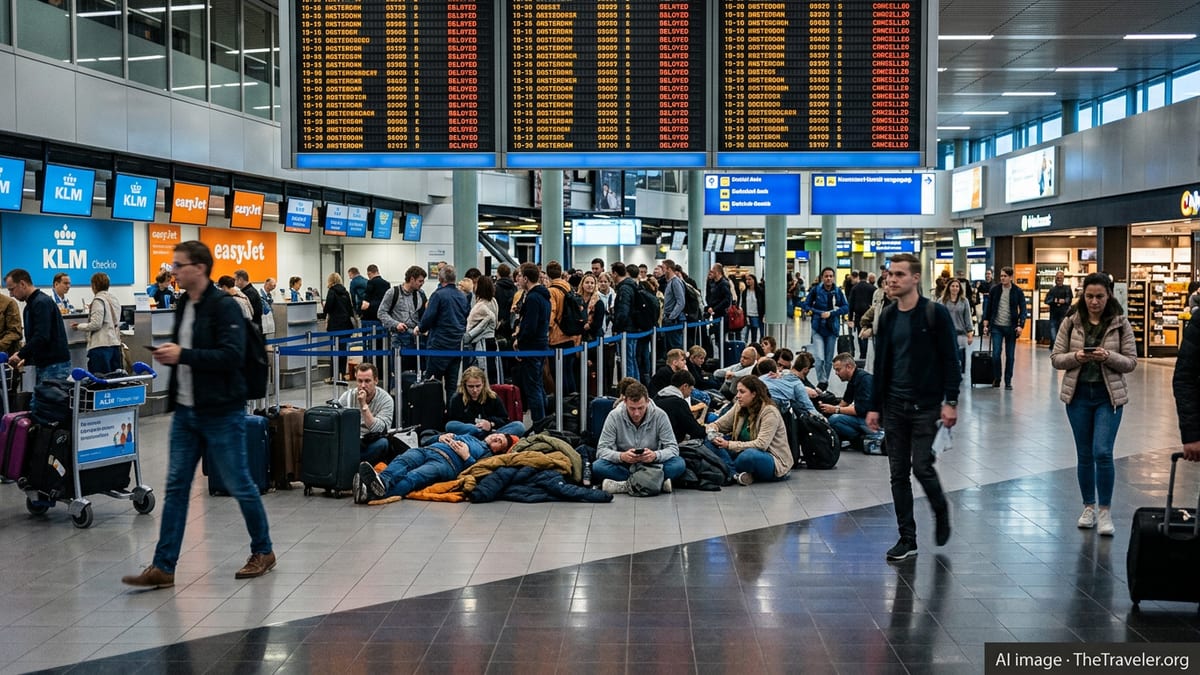
Ryanair flags ‘major disruption’ at seven European airports
Recent coverage of European aviation conditions indicates that a group of seven airports is already experiencing what one major low cost carrier describes as significant disruption. The airports are Tenerife South, Palma de Mallorca, Alicante and Málaga in Spain, Milan Bergamo in Italy, Kraków in Poland and Paris Beauvais in France. These hubs are heavily used by UK holidaymakers, including those flying from Birmingham, for short haul leisure trips during July and August.
Reports point to a combination of long queues, operational bottlenecks and infrastructure constraints as passenger numbers rise into the main school holiday period. Airlines serving these gateways have been warning publicly that terminal and border facilities are under strain, raising the risk of missed connections, extended waiting times and late evening arrivals at UK airports as schedules begin to slip.
Travel industry analysis suggests that these problems may not remain confined to individual terminals. Because airlines use tight turnarounds on short haul fleets, delays building up at busy Mediterranean and city break destinations can quickly push disruption back through the network. This dynamic is particularly relevant for Birmingham based passengers on early morning departures or late night returns, where a delayed inbound aircraft from Europe can cascade into knock on timetable changes.
New EU border checks raise risk of longer queues
The disruption warnings are closely linked to the phased introduction of the European Union’s Entry/Exit System, which requires biometric checks for many non EU travellers. According to recent reporting, some airports on the carrier’s list of seven have become early stress tests for the new regime, with fingerprinting and additional verification slowing passenger flows at peak times.
Publicly available information on the rollout suggests that airport operators and airlines have been pushing for more time to adapt facilities, citing concerns that the full system is not yet ready for the largest summer crowds. Industry groups have highlighted the risk that incomplete infrastructure and limited staff training could turn routine busy days into extended periods of congestion at border control points and departure gates.
For passengers starting their journey at Birmingham and connecting through these European hubs, the main consequence is likely to be unpredictability. While many flights are still expected to operate broadly on time, travellers may encounter uneven experiences, with relatively smooth passage one day and multi hour queues the next depending on local staffing, IT performance and aircraft arrival patterns.
How disruption in Europe feeds back to Birmingham
Operational data and recent case studies show how quickly issues at continental airports can ripple back to the UK. When aircraft are held on the ground in Spain, Italy, France or Poland because of terminal congestion or slow boarding, the same airframes often then arrive late into regional bases such as Birmingham. This in turn can delay onward departures, compress turnaround times and place extra pressure on local ground handling teams.
Birmingham Airport has already experienced its own periods of strain over the past year, including high profile episodes of long security queues and confusion over hand luggage liquid limits. Earlier travel reports described passengers facing extended waits at checkpoints as new screening systems were phased in alongside temporary reinstatement of the 100 millilitre liquid rule. Although conditions have since stabilised on most days, these incidents underline how sensitive the operation can be when external shocks coincide with local changes.
Analysts note that even when Birmingham itself is running smoothly, arriving aircraft from disrupted airports can create short bursts of congestion at immigration, baggage reclaim and onward transport links. A bank of delayed late evening flights, for example, can lead to crowded terminals and longer waits for bags and taxis, especially on busy holiday changeover days.
Weather, infrastructure and air traffic pressures add to uncertainty
The warning for Birmingham passengers comes against a broader backdrop of unsettled conditions across European aviation. In late June, severe thunderstorms over southern England led to hundreds of delays and cancellations at Heathrow, Gatwick and London City, with air traffic flow restrictions rippling across the network and affecting flights to and from the Midlands. Separate reporting highlights that power issues, radar outages and runway closures linked to storms have also caused temporary shutdowns at UK airports in recent months.
Across Europe more widely, a mixture of convective weather, volcanic activity and congestion at major hubs has contributed to sizeable numbers of delays and cancellations in early July. Industry trackers have counted well over a thousand delayed flights in a single day across key markets such as France, Spain and the Netherlands, with low cost carriers particularly exposed because of their intensive aircraft utilisation patterns.
For travellers in the Birmingham catchment area, the practical impact is a more fragile system in which relatively minor incidents can tip into wider disruption. When air traffic control units impose flow restrictions or re route traffic around storms, airlines often respond by trimming schedules, consolidating flights or re timing services. These decisions can mean short notice changes for passengers, even if Birmingham’s own runway and terminal remain fully open.
What Birmingham bound passengers can do now
Consumer organisations and travel experts are urging passengers across the UK to plan for a less predictable summer on key European routes. For those flying from Birmingham to any of the seven highlighted airports, or connecting beyond them, guidance consistently emphasises building extra time into every stage of the journey. This includes arriving at the airport earlier than usual, allowing additional buffer time for connecting flights and being prepared for queues at security, boarding and passport control.
Travel advice widely shared by airlines and passenger rights groups also underlines the importance of monitoring bookings closely in the days and hours before departure. Many carriers now offer real time updates through mobile apps, text alerts and social media channels, which can flag gate changes, retimed flights or equipment swaps linked to disruption elsewhere in the network.
Passengers are further encouraged to review the terms of their tickets and any associated travel insurance. Under European passenger rights rules and standard policy documents, entitlement to care, re routing or compensation can depend on the precise cause of a delay or cancellation and whether it was within the airline’s control. Understanding those distinctions in advance can help travellers make faster decisions if plans change at short notice.
With schools about to break up and demand for sunshine and city break destinations rising fast, the combination of stressed European hubs, evolving border controls and changeable summer weather leaves little margin for error. For Birmingham passengers, the latest warnings are a signal to stay informed, allow extra time and treat timetables as flexible rather than fixed during the peak holiday rush.