


More news on this day
Europe’s new biometric border checks are slowing passenger flows across the Schengen Area this summer, as the European Union’s long-planned Entry/Exit System beds in with a mix of operational glitches, hour-long queues and mounting concern from airlines and airports.
Get the latest news straight to your inbox!
Biometric Entry/Exit System Now Fully in Force
The European Union’s Entry/Exit System, a digital regime that records the movement of non-EU nationals at the bloc’s external borders, became fully operational at all Schengen border crossing points in April 2026 after a phased rollout that began last year. The initiative replaces the familiar ink passport stamp with an automated record combining travel dates with biometric identifiers such as fingerprints and facial images.
According to publicly available information from EU institutions, the system is designed to tighten border security, curb overstays and streamline data sharing among member states. Every time an eligible traveler enters or leaves the Schengen Area, the system logs the event and automatically calculates their remaining days under the “90 days in any 180-day period” rule that governs most short stays.
In practice, the first months of full operation have coincided with a surge in leisure and business travel, creating a stress test for passport control desks from Lisbon to Warsaw. Travelers arriving from countries such as the United States and the United Kingdom are among those facing the new procedures for the first time this northern summer, as operators race to align staffing, equipment and passenger communications with the enhanced checks.
Published analyses indicate that the initial registration of a traveler in the Entry/Exit System typically takes longer than a traditional passport inspection, because officers must capture and verify biometric data before clearing the passenger. Once this profile has been created, subsequent crossings are intended to be faster, though early experiences suggest the reality is more uneven.
Queues Stretch for Hours at Key Hubs
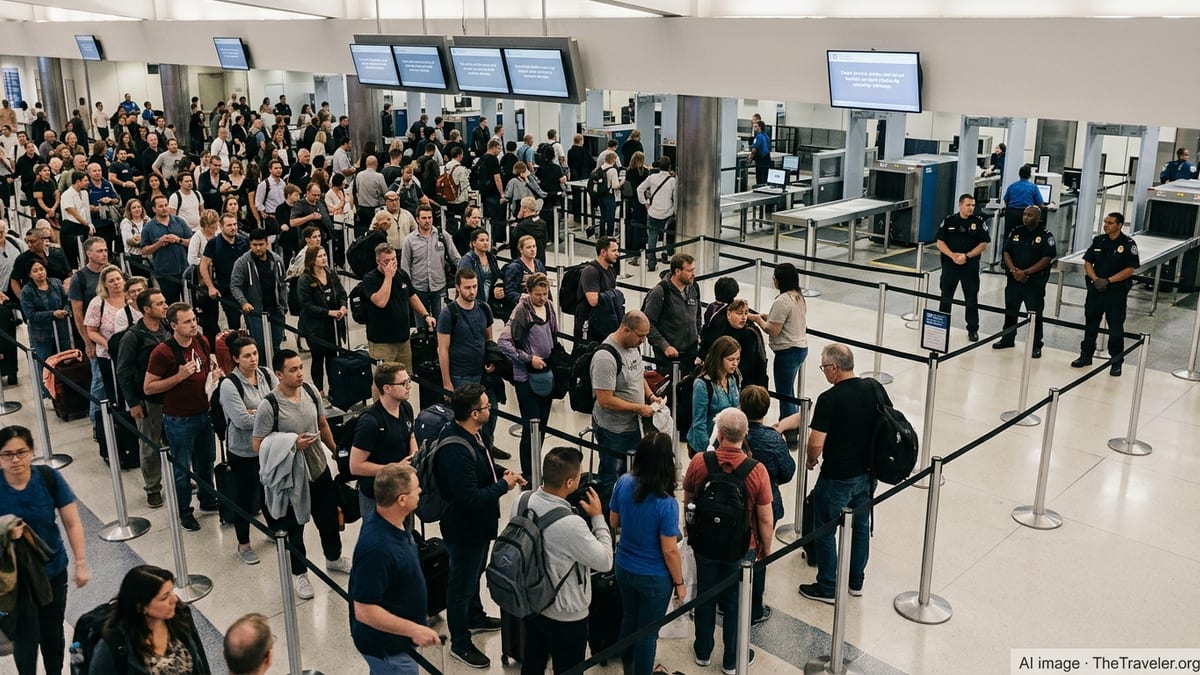
Reports from aviation advocacy groups, travel-tech firms and passenger rights organizations point to widespread disruption at a number of major Schengen airports since the system went live in full. Recent coverage highlights waits exceeding three hours at some terminals, with delays especially acute during weekend peaks and bank holidays.
In Belgium, local reporting from Brussels Airport earlier this year described non-EU passengers queuing for more than three hours at arrivals and up to two hours at departures, with hundreds of missed connections over several days as the new checks were introduced. Similar congestion has been noted at tourist-heavy gateways around the Mediterranean, including airports serving Spanish islands and Italian city-break destinations.
In Central and Eastern Europe, travel advisories for airports in Poland have cited queues of around three hours at border control, tied to a combination of biometric equipment bottlenecks and constrained terminal layouts. For travelers arriving late in the evening, the extended processing times have meant missed onward flights, disrupted rail connections and unexpected overnight stays.
Airline and airport industry associations have been vocal about the operational strain. A joint communication from European airport and airline bodies in February warned that the Entry/Exit rollout was already generating “significant delays” and signaled that waiting times of up to two hours at border checkpoints were being recorded at various locations, even before the busiest months of the year.
Contingency Measures and Calls for Flexibility
As the queues lengthen, pressure is growing on national governments and EU agencies to soften the impact without abandoning the security goals behind the reform. Publicly available guidance from European border agencies indicates that member states now have several tools they can deploy in periods of exceptional congestion.
One option allows national authorities to temporarily suspend the collection of biometric data at overwhelmed checkpoints, while still conducting standard document and visa controls. This approach is framed as a short-term contingency, intended to be used only during acute peaks, and is coupled with the possibility of requesting additional staffing from Frontex, the EU’s border support agency, to reinforce hard-hit airports.
Travel industry groups are urging a more coordinated response. European airport associations have advocated for a review of the rollout schedule and more flexible implementation timelines where infrastructure constraints are most severe. Airlines, meanwhile, are adjusting schedules, advising longer minimum connection times and encouraging passengers to arrive at airports earlier than usual for flights into Schengen destinations.
Some national transport ministries and airport operators have also launched renewed information campaigns, using social media and terminal announcements to explain the new procedures, in an effort to reduce confusion at the border gates. However, passenger accounts circulating in consumer media suggest that awareness remains patchy, with many travelers encountering the system for the first time only when they join the queue.
Implications for Summer Holidaymakers and U.S. Travelers
The timing of the system’s full activation, ahead of the peak northern summer season, means leisure travelers are bearing much of the disruption. British and other non-EU holidaymakers heading to popular sun destinations are reporting longer waits at arrival airports, occasionally stretching to several hours, especially on Saturdays and during public holiday periods.
Guides aimed at U.S. travelers now emphasize the need to build in extra time for border formalities on trips to Europe in 2026. Travel platforms and consumer publications advise passengers to book longer connection windows when flying via Schengen hubs, avoid tight self-transfer itineraries and consider direct services where possible. Many also recommend carrying basic supplies such as water and snacks in hand luggage, particularly when traveling with children or older relatives.
Travel insurance is another area of uncertainty. Specialist analysis cited in financial media indicates that many standard policies treat Entry/Exit-related delays as part of routine border processing, rather than as an insured disruption event. As a result, travelers may find that missed flights or extra accommodation costs arising from queues at passport control are not automatically covered.
Despite the frustration, demand for European city breaks and resort holidays remains high. Booking data reported by tour operators shows robust interest in destinations including Spain, Italy, Greece and France, suggesting that most travelers are opting to tolerate the inconvenience rather than cancel plans. For now, the focus is shifting to how quickly the system can stabilize and deliver the promised smoother journeys after the initial registration is completed.
How Long Will the Disruption Last?
Forecasts about the duration of the current turbulence vary. Some analyses circulating in European media suggest that it may take up to two years for the Entry/Exit System to reach a steady state, as software is refined, data issues are resolved and frontline staff become fully accustomed to the procedures. Early glitches, including instances where travelers reportedly needed to repeat biometric registration on multiple trips because their earlier records could not be retrieved, have added to the sense of uncertainty.
Airport operators are racing to expand physical capacity where possible, adding more passport control booths, repurposing nearby space for queuing lanes and installing clearer signage to separate Entry/Exit registrations from routine checks for exempt passengers. At some hubs, dedicated staff are being deployed to triage passengers with imminent departures, in an effort to prevent further missed flights.
From a policy perspective, the Entry/Exit System is viewed by EU institutions as a cornerstone for future travel reforms, including the planned European Travel Information and Authorisation System, a pre-travel clearance requirement for visa-exempt visitors expected to come into force after 2026. That link is one reason observers think the current border checks are unlikely to be rolled back, even amid criticism from the travel industry.
For travelers planning trips over the coming months, publicly available guidance from airlines, airports and travel advisers converges on a few practical steps: arrive earlier than usual at departure airports when flying into the Schengen Area, allow generous connection times through European hubs, and monitor local airport announcements in case operators introduce temporary workarounds or adjusted passenger flows. While the new checks are creating headlines today, industry watchers expect the system to gradually become another routine part of the European travel experience.