


More news on this day
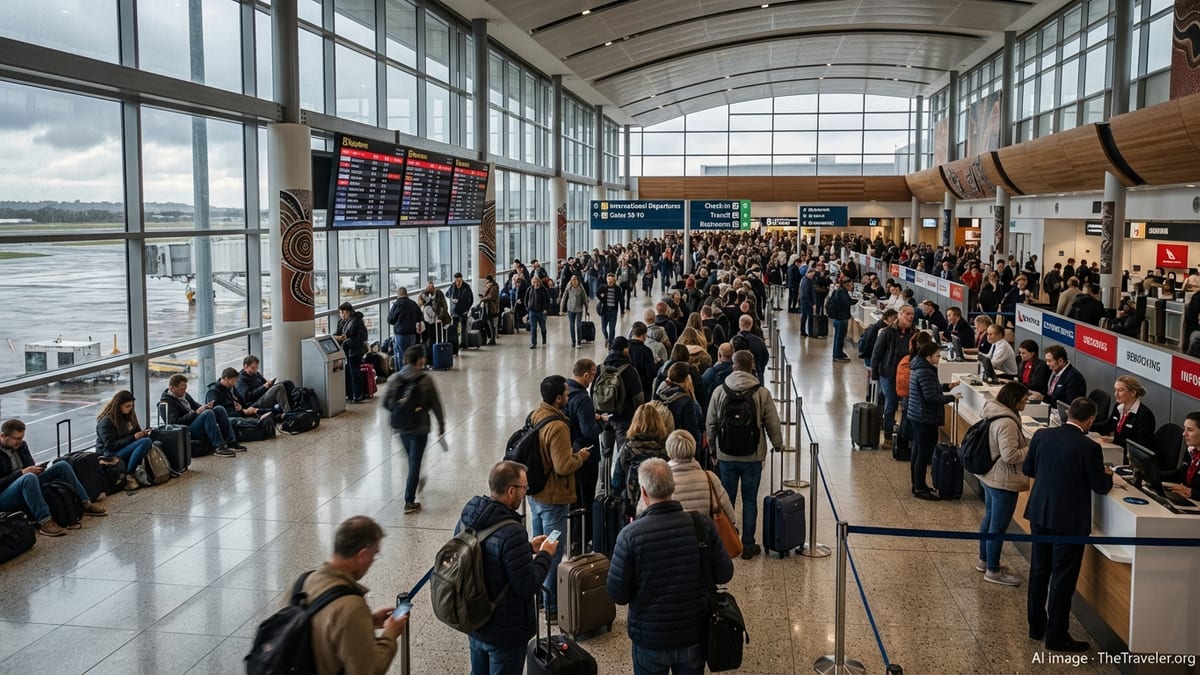
A worsening jet fuel crunch tied to conflict in the Middle East is rippling across airline networks, cutting flights, lifting fares and leaving regional gateways from Adelaide and Darwin to Nelson and New Plymouth bracing for a tough season ahead.
Get the latest news straight to your inbox!
Global Fuel Shock Pushes Airlines to Cut Capacity
Airlines across Australasia and beyond are accelerating capacity cuts as jet fuel prices soar and supply chains are squeezed by the protracted closure of key shipping lanes near the Strait of Hormuz. Industry analyses describe the current disruption as one of the most severe fuel supply shocks commercial aviation has faced, with carriers curbing schedules, redeploying aircraft and raising fares to protect already thin margins.
Recent corporate updates from major airlines in Australia and New Zealand outline the scale of the challenge. Publicly available information shows that Qantas and Virgin Australia have each moved to trim domestic capacity by around 5 percent in the current quarter, citing a combination of sharply higher fuel bills and softer discretionary travel demand. Similar patterns are emerging in Europe and Asia, where thousands of flights have been removed from peak summer timetables as operators confront volatile fuel markets.
In New Zealand, Air New Zealand has suspended its earnings guidance for the 2026 financial year and confirmed fare increases on domestic, short haul and long haul routes after what it describes as unprecedented swings in jet fuel prices. The carrier has also outlined plans to cancel around 1,100 flights between mid March and early May, with a substantial share of those affecting regional centers that rely on a limited number of daily services.
Analysts note that the fuel shock is landing on a sector still repairing balance sheets after the pandemic years. Many carriers had been rebuilding networks and adding capacity through 2025, and now face a sudden need to reverse course, particularly on thinner regional and leisure routes where higher operating costs are harder to absorb.
Adelaide: Record Throughput, Targeted Cuts and Growing Costs
Adelaide illustrates the complexity of the current moment. Airport data for February 2026 shows record passenger throughput, with just under 700,000 people moving through the terminal and traffic up on the previous year. Additional international services to Bali and renewed long haul links into Asia have underpinned the rebound, suggesting that demand for the city as a gateway remains robust even as fuel pressures build.
At the same time, the route map into and out of South Australia is starting to show stress. Qantas has confirmed that it will cease flights between Adelaide and Mount Gambier from mid May while pausing several other regional services, explicitly linking the decision to rising fuel costs and underperforming demand on thinner routes. Industry commentary highlights that such cuts often land hardest on regional communities, where alternative ground transport is limited and tourism operators depend on fast, reliable air access.
Consumer advocates point out that Australia currently has no dedicated compensation scheme for delayed or canceled flights comparable to frameworks in the European Union or United Kingdom. Public submissions to recent policy reviews argue that this leaves Australian travelers exposed when commercial decisions lead to route withdrawals or significant last minute schedule changes, especially on regional links feeding into hubs such as Adelaide and Melbourne.
For visitors, the result is a fragmented picture. Core trunk routes into Adelaide from major east coast cities remain busy and in some cases are benefiting from capacity redeployed from weaker markets. Yet travelers heading onward to smaller South Australian destinations are being warned to expect fewer daily options, potentially higher fares and tighter connections as airlines reshape schedules to cope with the fuel crunch.
Darwin and Northern Australia Feel the Pinch
In the Northern Territory, Darwin is once again on the frontline of network changes. Low cost carrier AirAsia has confirmed it will withdraw services on its Darwin to Denpasar and Darwin to Kuala Lumpur routes from late April, citing the need to redeploy aircraft to higher yielding markets. Industry schedule data indicates that the exit removes several direct weekly links between Darwin and Southeast Asia, a region that had been central to the city’s tourism recovery.
Local aviation forums and airport consultation documents suggest the broader network picture around Darwin is mixed. While AirAsia is stepping back, other operators are adding or adjusting services into Timor-Leste and Indonesia, and the airport is preparing for a busy period of military and charter traffic linked to major exercises in the Top End. Even so, the net effect for leisure travelers is a narrower choice of low cost international options and a heavier reliance on connections via larger hubs such as Adelaide, Perth and Brisbane.
Darwin’s experience mirrors a wider trend across northern Australia, where airlines are reassessing marginal routes in light of higher fuel costs and changing demand. Carriers appear more inclined to protect frequencies on capital city trunk routes while paring back seasonal and secondary services that are more sensitive to operating cost spikes.
Tourism operators warn that if elevated fuel prices persist into the peak dry season, smaller businesses that cater to international backpackers and independent travelers could face a difficult winter. Higher airfares, fewer direct flights and uncertainty around schedules may encourage some visitors to opt for more accessible destinations, at least in the short term.
New Zealand’s Regional Hubs: Nelson and New Plymouth Under Pressure
Across the Tasman, New Zealand’s regional centers are confronting similar headwinds. Air New Zealand’s decision to cancel more than a thousand flights in response to rising jet fuel prices has hit routes in and out of cities such as Nelson and New Plymouth, where the national carrier is often the primary or sole operator. Local media coverage reports that Nelson alone is expected to lose around 120 flights over a six week period on links to Auckland, Wellington and Christchurch.
Community leaders in the Top of the South have publicly warned that the reduction in services will hurt tourism-dependent businesses, disrupt corporate travel and complicate access to essential services that rely on fast connections to the main centers. Hospitality operators are particularly concerned about the shoulder season, when even small swings in visitor numbers can determine whether they remain profitable.
New Plymouth and the wider Taranaki region are watching developments closely. While detailed schedule adjustments vary by route, travelers are being advised to check bookings regularly as Air New Zealand refines its domestic timetable in response to the fuel environment. With fewer daily frequencies on some sectors, missed connections or weather disruptions could translate into longer delays before alternative seats become available.
At the same time, higher fares introduced to offset fuel costs are beginning to bite. Announced increases of around 10 New Zealand dollars on one way domestic tickets and larger rises on international sectors add to already elevated travel budgets for regional residents who rely on air links for work, education and family connections.
Melbourne, Compensation Debates and What Travelers Can Do Now
Melbourne, one of the region’s largest aviation hubs, is feeling the fuel shock more through network reshaping than outright isolation. Airlines that had been expanding capacity on trans Tasman and Southeast Asian routes through Melbourne are now weighing which services can justify their fuel bill, particularly at off peak times. Australian media reports show that some carriers are using Melbourne and Sydney as consolidation points, funnelling passengers from smaller cities into fewer long haul departures.
Beyond individual airports, the crunch is also reinvigorating debates over passenger rights. In Europe, regulators have recently clarified that carriers cancelling flights purely for commercial reasons linked to high fuel prices should still provide compensation under long standing consumer rules. Where a genuine physical shortage of fuel exists at an airport, however, the legal obligations may differ. These distinctions are now closely watched by advocacy groups in Australia and New Zealand, where formal compensation regimes remain limited.
For travelers bound for Adelaide, Melbourne, Darwin, Nelson, New Plymouth and other affected gateways in the coming months, industry guidance converges on a few practical steps. Passengers are urged to monitor airline notifications closely, confirm bookings before departure, leave extra time for tight connections and consider travel insurance that explicitly covers schedule disruption. Those heading to regional destinations may also benefit from building flexibility into itineraries, including overnight buffers in major hubs where possible.
With geopolitical tensions and fuel markets in flux, aviation analysts caution that further schedule changes are likely through the southern winter and into the Northern Hemisphere summer. While demand for travel to cities across Australia and New Zealand remains resilient, the fuel shock is forcing a rapid rethink of which routes can be sustained, at what price and with what level of reliability, leaving passengers to navigate a more unpredictable sky.