


More news on this day
What was marketed as a chance to live indefinitely at sea on the Villa Vie Odyssey ended instead with residents told to pack their lives into suitcases and walk off the ship in Sihanoukville, Cambodia, after the company behind the so‑called “cruise for life” shut down operations this week amid surging fuel costs and financial pressures.
Get the latest news straight to your inbox!
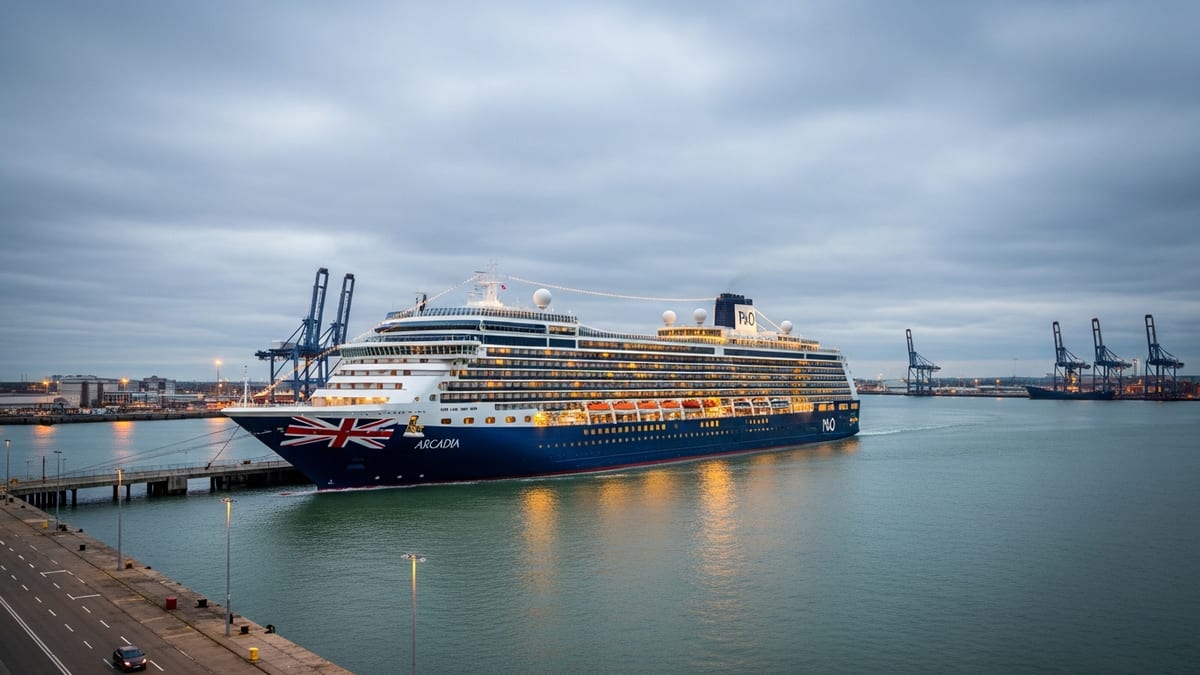
A Promise of Life at Sea That Began in Belfast
The Villa Vie Odyssey, a 1993-built cruise ship refitted for long-term living, left Belfast, Northern Ireland, in October 2024 on what was promoted as a 3½‑year continuous global voyage. Marketing materials described an “endless” journey where residents could own or lease cabins and effectively turn the vessel into a floating condominium, with some contracts guaranteeing at least 15 years of residency.
Publicly available information shows that cabins were sold on a purchase or long-lease basis, with additional monthly fees for services and operations. Reports indicate that many residents restructured their lives around the promise. Some sold properties ashore, others left jobs or retired early, and a subset treated the ship as a full-time home rather than a vacation cruise.
The ship’s early months were not without difficulty. Court filings, trade publications and passenger blogs describe protracted delays around the launch period and technical work in Belfast, as well as itinerary changes once the voyage began. Even so, by late 2024 and 2025, Villa Vie Residences continued to market the Odyssey as an intimate, community-style alternative to conventional cruising, emphasizing long port stays and the freedom to live at sea indefinitely.
Over time, residents formed a small, tight-knit society on board. Accounts on cruise forums and social media depict routines of language classes, long stays in port cities and shared events, but also recurring complaints about maintenance, noise from added amenities and tension between enthusiastic supporters of the project and passengers frustrated by missed ports or shipboard issues.
Financial Strains and a Model Exposed
By 2026, the business model behind the Villa Vie Odyssey was under growing pressure. In public statements and interviews cited in news coverage, company representatives linked the ship’s financial troubles to a sharp rise in fuel prices. Reports indicate that fuel, which the operator said had cost in the range of about 1,800 dollars per month during 2024 and 2025 on a budgeted basis, climbed several-fold in 2026 as global shipping routes were disrupted and key chokepoints tightened.
Travel and business outlets report that Villa Vie Residences framed the Odyssey as a relatively lean operation, with long-term residents providing predictable income through purchase prices and monthly charges. But as operating costs rose, the company’s earlier projections appear to have been overtaken by increases in marine fuel and higher overall expenses, including crew and technical upkeep on a three-decade-old vessel.
Publicly available information from industry and financial reporting suggests the company sought ways to bridge the gap. Coverage describes new surcharges and proposed additional monthly fees introduced in 2026, along with efforts to keep occupancy high and attract new residents while the ship continued its multi-year itinerary across several continents.
For residents, these financial adjustments translated into higher ongoing costs on top of sunk investments in cabins. Some accounts shared on passenger blogs and forums before the shutdown describe anxiety about long-term viability, comparisons to a previously canceled three-year “Life at Sea” voyage run by a different company, and concern that another ambitious residential-cruise concept might be at risk if expenses continued to climb.
The Sudden Order to Disembark in Cambodia
The tipping point came in late October 2026, when Villa Vie Residences announced it was suspending operations and ending the global voyage early while the Odyssey was docked at Sihanoukville, on Cambodia’s southern coast. Multiple news outlets report that more than 200 passengers and over 150 crew members were on board at the time, with capacity for hundreds more.
A written notice circulated to residents, shared by passengers on blogs and social platforms and cited in media coverage, instructed that all residents had to disembark with their belongings by a set afternoon deadline on the day of the announcement. Accounts describe a narrow window of only a few hours between receiving the directive and the cut-off time, leaving residents scrambling to pack not just suitcases but the contents of what, for many, amounted to full apartments at sea.
Passengers’ descriptions suggest a chaotic final day. Public posts refer to hallways crowded with luggage, improvised packing stations and residents trying to prioritize essential items, from medication to important documents and electronics. Some accounts mention uncertainty over what could be left on board, what might go into temporary storage and how, or whether, larger personal furnishings would ever be returned.
Reports indicate that the company arranged hotel rooms locally and covered some ground transport for residents away from the port but did not fund onward international travel. That left many people facing immediate decisions about booking flights at short notice from Cambodia, securing visas or transit permissions and arranging temporary housing after having given up their primary residences on land months or years earlier.
Life Upended for Residents Who Planned to Stay Forever
For those on board, the abrupt ending was more than an interrupted vacation. Residents quoted in international coverage and described in passenger accounts had framed the Odyssey as a long-term, sometimes permanent, lifestyle choice. Some had sold homes, others had placed possessions in storage or relocated to be closer to embarkation ports, and many had woven their social lives and routines entirely around the ship.
As a result, the order to leave in Sihanoukville did not just strand passengers geographically; it also left them between lives. Travel and business reports relay that some residents now face returning to housing markets after several years away, while others must work out how to resume employment or secure long-term visas elsewhere. For retirees, the challenge is often financial, as they assess whether cabin investments or prepaid fees can be recovered.
The emotional jolt has been another recurring theme in public accounts. Residents’ blogs and interviews shared in the media describe a sense of grief at losing a close-knit community overnight, along with frustration over communication from the operator leading up to the shutdown. Online discussions among passengers also reflect divisions between those who defended the company’s efforts under difficult economic conditions and those who had raised concerns about the project’s sustainability months earlier.
The situation has revived scrutiny of extended and residential cruises more broadly. Analysts quoted in coverage of the incident have noted that while multi-year itineraries attract attention and deposits, they also tie operators and passengers to a long shared financial horizon that can be quickly undermined by volatile fuel prices, geopolitical shocks or technical problems with an aging vessel.
From Cruise-of-a-Lifetime to Cautionary Tale
The abrupt end of the Villa Vie Odyssey’s voyage follows an earlier, separate episode in the niche market for long-duration cruises. In 2023, a Turkish operator announced a three-year “Life at Sea” cruise scheduled to begin that November, only to cancel the voyage less than two weeks before departure. Prospective passengers who had reorganized their lives for that sailing later pursued refunds and raised complaints when the plan collapsed without a ship in place.
For travelers and would-be full-time cruisers, the Odyssey’s shutdown and the earlier Life at Sea cancellation highlight similar vulnerabilities. Both ventures depended on complex financing, long-range fuel and operating assumptions, and the willingness of passengers to commit substantial savings to a single company and vessel over many years. When any of those elements failed, those who had planned to live at sea were left scrambling on land instead.
Industry reporting suggests that extended and residential cruises will not disappear. Concepts involving multi-month or multi-year itineraries and shipboard ownership continue to appear in marketing materials from several operators, and there remains a core group of travelers drawn to the idea of combining permanent travel with a simplified, all-inclusive lifestyle.
However, the experience of Villa Vie Odyssey residents arriving unexpectedly in Sihanoukville with no shipboard future and only hastily packed luggage is likely to shape how future customers approach similar offers. Analysts and passenger advocates quoted in public coverage have pointed to the importance of scrutinizing contracts, understanding refund provisions and contingency plans, and considering the age and financial backing of the vessel and operator before treating any cruise, however ambitious, as a forever home.