


More news on this day
Passengers using Manchester Airport today, 9 June 2026, are facing a patchwork of cancellations and delays, with disruption concentrated on a series of early departures and a smaller wave of affected flights later in the day.
Get the latest news straight to your inbox!
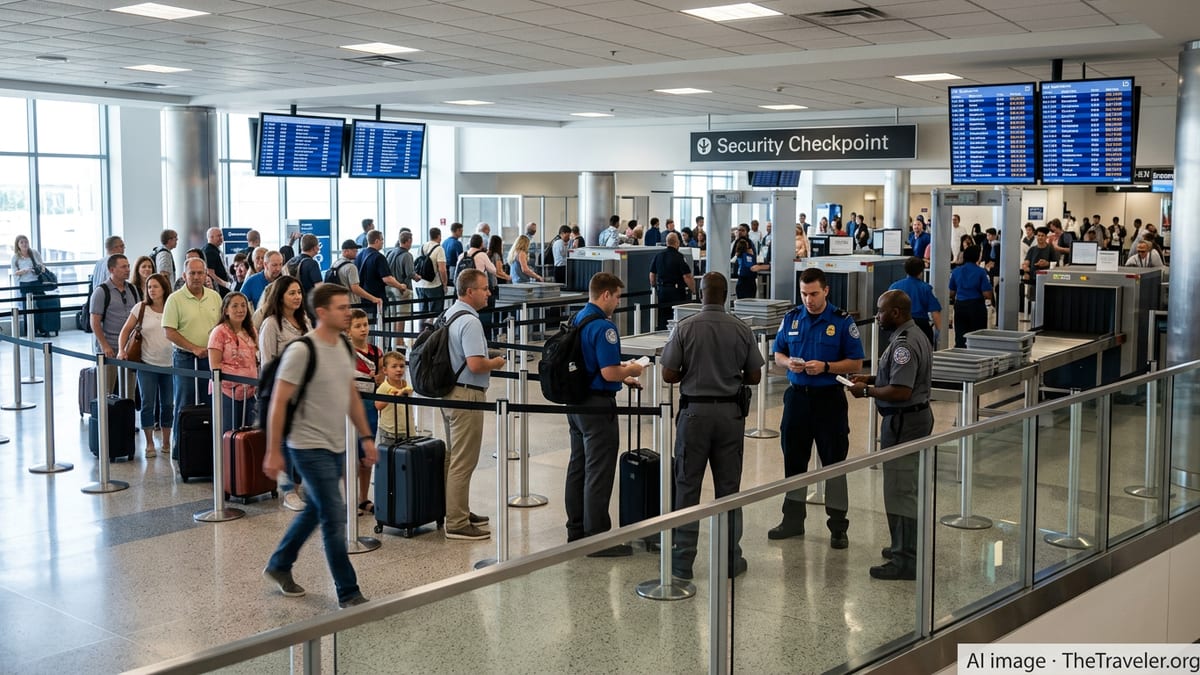
Snapshot of today’s disruption
Live departure and arrival boards for Manchester Airport on Tuesday show that operations are generally stable, but punctuated by a clear set of cancellations and extended delays. The picture that emerges is one of targeted disruption rather than a full-scale breakdown of the schedule.
Publicly available flight trackers indicate that the heaviest impact has fallen on morning departures between roughly 06:00 and 10:00, when a number of services were cancelled outright and others ran significantly late. Several short haul European flights, along with a handful of domestic services to London and other UK cities, have been removed from the boards or re-timed well beyond their original slots.
Later in the day, most mid-afternoon flights are shown as operating close to schedule, but the boards also display a second cluster of affected services in the early evening period. These include selected leisure routes to Mediterranean destinations and some inbound services that are arriving late and, in turn, pushing back their onward departures.
Despite this, the majority of flights listed at both terminals are currently shown as on time or subject to only minor delays of less than 30 minutes, underscoring that the disruption, while noticeable, is not universal.
Full list of cancelled flights at Manchester Airport today
Based on live airport information and commercial flight-tracking services, today’s cancellations at Manchester Airport are focused on a limited number of routes and time bands. The morning period shows the highest concentration, including several departures that were scheduled to leave before 09:00 and never took off.
Among the flights removed from today’s schedule are a small group of domestic and near-European services, particularly to hubs in the UK and Ireland and popular short break destinations. Some of these cancellations appear as paired entries on the boards, with both an outbound and its corresponding inbound leg listed as cancelled.
Additional cancellations appear scattered through the early afternoon and evening. These include isolated services to European city-break destinations and at least one flight to a sun destination that was due to depart from the airport’s expanded Terminal 2. In several cases, the live boards show replacement flights later in the day or on Wednesday, indicating that airlines are consolidating passengers onto alternative services.
The total number of cancelled flights remains modest relative to the day’s overall schedule, but travellers booked on the affected services are being advised through airline channels to review their options, including rebooking on later flights or accepting refunds where these are offered.
Major delays and the most affected routes
Alongside the outright cancellations, Manchester Airport’s live data highlights a series of significant delays, particularly among early outbound flights. Some departures that were originally due to leave before 08:00 are now shown as having left more than an hour late, reflecting knock-on effects from aircraft arriving behind schedule or requiring additional ground time.
Short haul European routes bear much of the brunt, with delays commonly affecting services to major holiday gateways and regional hubs. In several instances, the estimated departure times have moved repeatedly over the course of the morning, suggesting continuing operational pressures on turnaround times and aircraft availability.
On the arrivals side, a smaller but still notable group of inbound flights is also running substantially late. These include services from southern Europe and a handful of domestic flights from Scottish and Irish airports. Where inbound services are delayed, the same aircraft is often scheduled to operate a later outbound sector, creating further risk of subsequent delays for passengers departing from Manchester.
Despite these issues, many mid- and late-afternoon flights are showing only minor schedule changes, with typical delays confined to 10 to 20 minutes. That pattern suggests that airlines and ground handlers have, in many cases, been able to absorb the morning disruption and gradually bring operations closer to plan as the day has progressed.
Terminal operations and what passengers should expect
Today’s disruption is playing out against the backdrop of Manchester Airport’s ongoing transition to a simplified two-terminal operation. Terminal 2 now handles the majority of passenger traffic following a long-running transformation programme, while remaining services are split across the reconfigured Terminal 3. This consolidation means that issues affecting one part of the operation can have a more visible impact across a larger share of flights than in previous years.
Reports from recent weeks suggest that security queues and check-in times can fluctuate, particularly at peak morning departure waves. While there are no widespread reports today of extreme waiting times, passengers booked on flights that are still scheduled are being urged via airline communications and published guidance to arrive in good time, as late-running inbound aircraft or crew changes can lead to last-minute gate or timing adjustments.
Travellers transferring at Manchester should be particularly attentive to connection times if their inbound flight is among those delayed. Even where minimum connection windows are technically maintained, longer walks between gates, busy border controls and additional security checks for some transfers mean that tight connections can quickly become challenging when the schedule is under pressure.
For those collecting arriving passengers, the pattern of delays means that actual arrival times may differ considerably from original tickets. Monitoring the latest estimated arrival time is essential to avoid unnecessary waiting in car parks or drop-off zones, where time limits and fees can add to the cost of disruption.
How to check your flight and plan around disruption
With cancellations and delays still evolving throughout the day, the most detailed and up-to-date information for passengers remains the live departure and arrival boards, along with airline notifications. These channels reflect real-time changes to boarding times, gate numbers and any further cancellations that may arise as the evening schedule approaches.
Airlines operating from Manchester are continuing to update customers through apps, email and text alerts, particularly where rebooking is required or where flights have been significantly re-timed. Travellers are being encouraged in published guidance to ensure contact details are correct in their bookings so they receive any last-minute updates.
For those yet to travel to the airport, checking flight status before setting out can help avoid unnecessary journeys in cases where a flight has been cancelled or delayed by several hours. Where disruption is confirmed, passengers may have the option to move to a later service, switch to a different routing on the same carrier, or in some cases choose alternative forms of transport for shorter domestic journeys.
Given the pattern of disruption today, industry observers note that similar clusters of delays and cancellations can recur during busy travel periods. Passengers planning future trips through Manchester Airport are therefore advised to build in extra time, consider earlier flights where possible and remain flexible in case schedules change at short notice.