


More news on this day
Indonesia’s busiest air gateway, Jakarta’s Soekarno-Hatta International Airport, has reported a fresh bout of operational turbulence, with publicly available data indicating 15 flight cancellations and 46 delays in a single trading day of operations, placing renewed scrutiny on home carrier Batik Air while several foreign airlines quietly adjust their Jakarta schedules.
Get the latest news straight to your inbox!
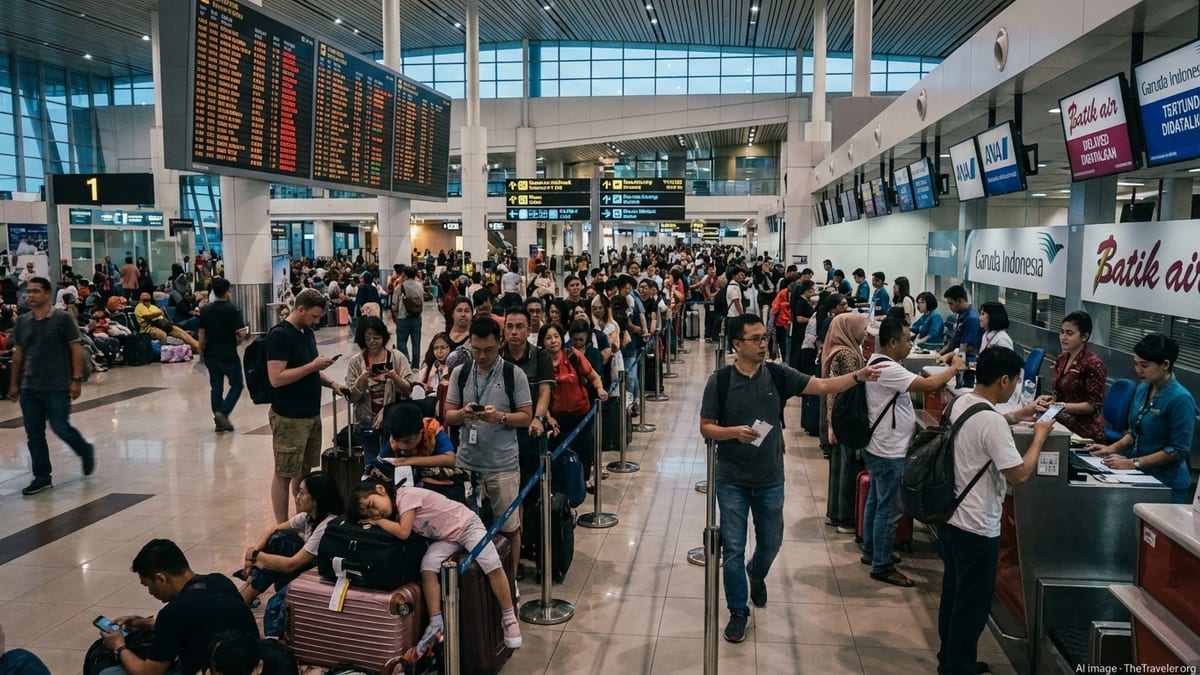
Operational Strain at Indonesia’s Primary Hub
The latest disruption figures highlight the vulnerability of Soekarno-Hatta International Airport at a time when passenger traffic through the Tangerang-based hub is climbing toward pre-pandemic volumes. Recent traffic tallies during peak holiday periods have shown well over one million passenger movements within days, underscoring the sheer scale of activity concentrated at the airport.
Based on aggregated flight-tracking data and recent airport operations summaries, at least 15 scheduled departures or arrivals were canceled and a further 46 services experienced notable delays within a recent 24-hour operational window. While such numbers represent a fraction of the airport’s total daily movements, they are significant enough to cause visible congestion at terminals and pressure on airline schedules.
The disruptions come as airport operator InJourney Airports and its Soekarno-Hatta branch continue to promote the hub as a critical connector between Southeast Asia, the Middle East and long-haul markets. Earlier reports on peak-season performance at the airport noted steadily rising traffic through all three terminals, pointing to a robust recovery in domestic and regional travel.
Travel industry observers note that irregular operations at a hub of this scale tend to ripple through the wider network, leading to missed connections, crew re-rostering challenges and aircraft positioned out of sequence. As Jakarta remains the primary transfer point for much of Indonesia, even a limited number of cancellations can be disproportionately disruptive for passengers connecting to secondary cities.
Batik Air’s Role in the Day’s Cancellations and Delays
Within the latest disruption profile, Batik Air emerges as the single most affected airline. Publicly available departure and arrival boards, as well as data compiled by independent tracking platforms, indicate that a notable share of the 15 cancellations and dozens of delays involved services either operated by Batik Air or marketed under its code.
Batik Air, a full-service carrier within the Lion Air Group, is headquartered at Soekarno-Hatta and has concentrated a large part of its operation at Terminal 2. The airline operates dense domestic schedules to cities such as Surabaya, Makassar and Pekanbaru, while also serving regional destinations including Kuala Lumpur. This high-frequency model magnifies the impact of any individual aircraft or crew disruption, often cascading into subsequent rotations.
Recent schedule data show Batik-operated flights shuttling between Jakarta and regional centers across Indonesia alongside international sectors to neighboring countries. Even minor maintenance-related groundings, crew duty-time limits or weather constraints can quickly translate into late departures from Jakarta and delayed arrivals back into the hub, limiting recovery options during busy periods.
While the precise causes of the most recent cancellations and delays vary from flight to flight, the concentration of irregular operations around a single carrier has revived questions within the travel community about scheduling resilience and contingency planning at Indonesia’s largest network airline groups.
Foreign Carriers Trim and Tweak Jakarta Routes
Alongside the domestic operational challenges, several international airlines appear to be fine-tuning their Jakarta offerings. Publicly accessible booking engines and timetable notices indicate that carriers such as Malaysia Airlines, Scoot, EVA Air, XiamenAir and Shandong Airlines have adjusted certain Jakarta-linked routes or frequencies in recent months.
These adjustments range from seasonal capacity reductions to timetable retimings and, in some cases, the quiet suspension of specific rotations. Industry analysts point to a mixture of commercial and operational factors, including yield pressures on some city pairs, competition from nearby hubs and evolving fleet deployment plans as widebody aircraft are reassigned to other long-haul markets.
Route changes by these foreign airlines do not necessarily translate into fewer options overall for travelers, as other carriers can step in with added capacity or alternative connections via Singapore, Kuala Lumpur, Bangkok or Guangzhou. However, the shifts do underline how sensitive Jakarta’s long-haul and regional connectivity is to airline-level decisions about aircraft allocation and network priorities.
For Soekarno-Hatta, even small reductions in direct services from key markets can influence its status in corporate travel policies and among global transit passengers weighing whether to connect through Jakarta or other regional hubs.
Capacity Growth Meets Infrastructure and Weather Constraints
The latest day of cancellations and delays also reflects broader structural pressures at Soekarno-Hatta. The airport handles a complex mix of domestic, regional and long-haul flying, with concentrated early-morning and late-evening departure waves. Published information from earlier disruption events at the airport has highlighted how dense scheduling can magnify the effects of any single incident on the runway, in the terminal or on access routes to the airport.
Weather remains a key variable. Seasonal heavy rain and low visibility in the Jakarta area can slow runway movements and lengthen separation between arrivals and departures. When combined with high traffic volumes and limited slack in airline timetables, even short-lived weather disruptions can trigger longer queues on the tarmac and knock-on delays across multiple carriers.
Infrastructure upgrades are continuing across the Soekarno-Hatta complex, from terminal refurbishments to airside improvements and enhanced ground transport links. While these projects are designed to boost capacity and efficiency, they can also introduce temporary bottlenecks as construction and reconfiguration works proceed alongside live operations.
Airlines and airport managers are increasingly reliant on real-time data tools to sequence departures, allocate stands and manage passenger flows. The latest pattern of delays at Soekarno-Hatta suggests that these measures are being tested by a combination of rapid traffic recovery, evolving airline networks and localized constraints on the ground and in the air.
Implications for Travelers and Indonesia’s Aviation Outlook
For passengers, the immediate effect of 15 cancellations and 46 delays in a single day is felt in missed appointments, disrupted holiday plans and the need for last-minute rebooking. Online travel forums and social media posts show that travelers frequently single out Batik Air for schedule reliability concerns, although irregular operations at Soekarno-Hatta clearly extend beyond a single brand.
Travel advisors generally recommend that passengers connecting through Jakarta build in longer minimum connecting times, particularly during peak domestic travel periods or the rainy season. Flexible tickets, travel insurance and the use of airlines with multiple daily frequencies on a given route can also provide more options if disruption occurs.
From a broader aviation perspective, the latest operational turbulence is unfolding against a backdrop of strengthening demand. Passenger numbers across Indonesia continue to climb, supported by a growing middle class and the country’s geographic reliance on air travel. Carriers are adding new domestic points and restoring or reshaping international routes, while foreign airlines keep a close eye on Jakarta’s performance as both an origin and connecting market.
How quickly Soekarno-Hatta and its resident airlines can stabilize day-to-day reliability will influence perceptions of Indonesia’s aviation sector among business travelers, tourists and global airline planners. The current mix of localized disruptions, airline-specific challenges and network reshaping suggests that passengers using Jakarta’s main gateway should continue to monitor flight status closely and prepare for occasional turbulence on the ground as the hub navigates its latest growth phase.