


More news on this day
From a backyard pool completely claimed by a gaggle of geese to a freight train derailment that sent cars into a river and disrupted rail travel, this week’s travel-adjacent stories span the spectrum from lighthearted to deeply consequential.
Get the latest news straight to your inbox!
Backyard Geese Turn Private Pool Into Their Personal Resort
Images and video circulating on social platforms this week show domestic and Canada geese taking full advantage of backyard pools, inflatable tubs and improvised ponds as summer temperatures climb. In one widely shared clip, an entire flock appears to have taken over a family pool, paddling in formation and treating the small space as a full-scale resort.
Comments from goose owners highlight how quickly waterfowl can transform a standard backyard feature into a dedicated habitat. Observers describe so-called “goose zoomies,” with birds racing around the pool’s perimeter and diving beneath the surface before popping up like “bird submarines.” Many owners note that once geese discover a reliable water source, they return daily and often refuse to share the space.
The online conversation around these pools has also focused on maintenance and animal welfare. Pool owners discuss balancing water quality with bird safety, favoring bird-safe algaecides and frequent cleaning over harsh chemicals. Others emphasize that while the scenes may look whimsical, geese produce significant waste, meaning that a pool taken over by a flock can become unusable for human swimmers in a matter of hours.
Wildlife guidance available from several state agencies underscores that geese have adapted well to human-made landscapes, including golf course ponds, stormwater basins and ornamental pools. As a result, playful viral clips are also sparking reminders about local regulations on feeding, relocating or otherwise managing nuisance geese in residential and park settings.
Freight Train Derailment Sends Cars Into River, Causes Cascading Rail Delays
On the more serious end of the travel spectrum, a recent freight train derailment in downtown Richmond, Virginia, sent railcars into the James River and triggered service disruptions across multiple passenger routes. Images and eyewitness accounts shared online show several cars partially submerged near a busy rail corridor that also carries Amtrak services through the city.
According to publicly available information, the derailment occurred along a freight line that runs parallel to the riverfront, forcing temporary suspensions and reroutes for both freight and passenger trains. Travelers posting on rail discussion forums reported cancellations and delays on nearby intercity services, with some passengers being directed to alternative transportation or told to rebook on later departures.
The incident comes amid a broader summer of strain on North American rail networks. Reports tracking on-time performance for Canada’s national passenger operator, for example, describe July as a month marked by wildfires, heat-related speed restrictions and a separate freight derailment that shut down parts of rural Quebec routes. In the United States, travelers have shared similar accounts of freight-related delays affecting long-distance and regional trains.
Investigations into causes of freight derailments generally take months and involve multiple agencies and companies. While technical findings are still pending in the Richmond case, rail advocates are once again highlighting the knock-on effect that freight incidents can have on passenger service when the two share infrastructure, especially along constrained riverfront and mountain corridors.
Heat, Wildfires and Aging Infrastructure Disrupt Summer Rail Travel
Across North America and parts of Europe, travelers are encountering a patchwork of delays and cancellations tied to heat, wildfires and long-planned infrastructure projects. From the U.S. Pacific Northwest to the Canadian Prairies, rail passengers report slower-than-normal journeys as operators impose speed restrictions on tracks distorted by sustained high temperatures.
On popular long-distance routes, publicly shared advisories have warned of “significant delays of multiple hours” when heat waves coincide with wildfire seasons. In western Canada, online trip reports describe repeated bus-bridging of segments of flagship tourist trains due to smoke, fire risk or damaged track, dramatically altering the experience for travelers who booked scenic rail journeys across the Rockies and northern plains.
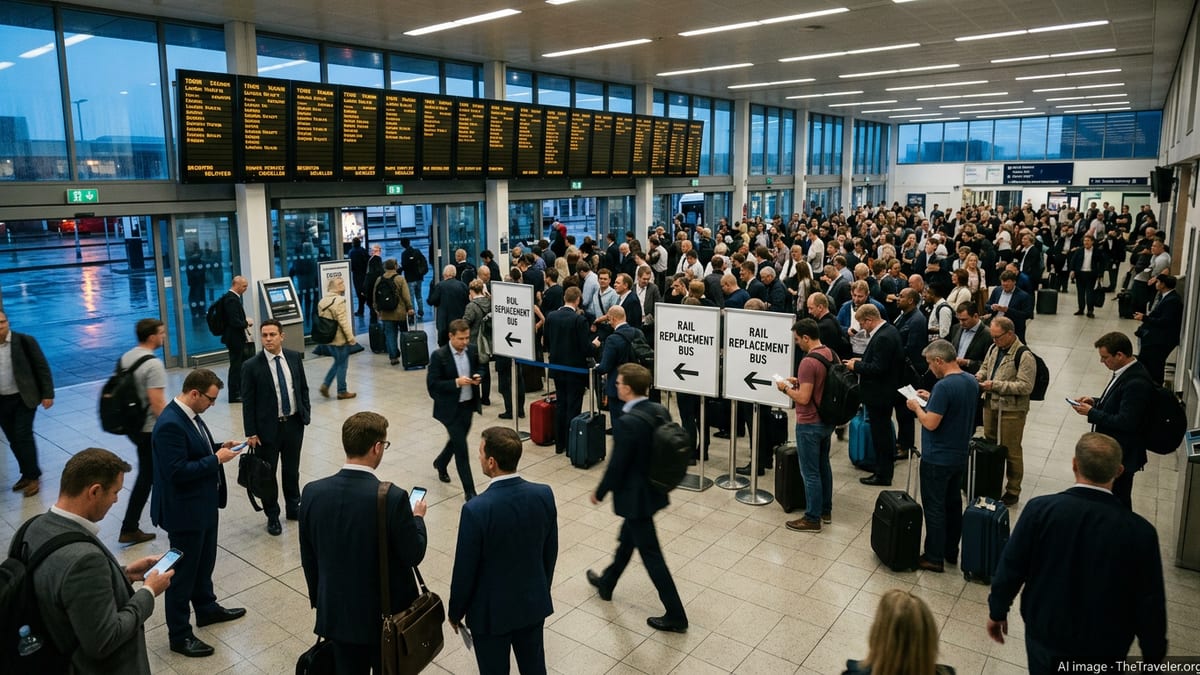
In Europe, a dense calendar of engineering works is also affecting summer travel. Notices from regional transport associations in Germany outline corridor-wide renovations along busy Rhine rail lines, limiting capacity through December. In Switzerland and Italy, the Simplon tunnel, a key transalpine rail link, is undergoing phased closures to allow structural upgrades, with long-distance trains being replaced by buses on certain days.
Passenger advocates note that while planned works and climate-related constraints can be disruptive in the short term, they are often framed as necessary investments in reliability and safety. Still, the stacking of weather events, infrastructure projects and isolated incidents such as derailments is creating a sense of unpredictability for travelers attempting to plan cross-border or long-distance trips this summer.
Urban Bridges, Airports and Events Add to Regional Travel Complexity
Beyond the rails, several urban infrastructure and event-related changes are reshaping how visitors move through key cities in the coming weeks. In Bonn, Germany, a full closure of the Friedrich-Ebert Bridge, one of the city’s major Rhine crossings, is redirecting traffic and affecting bus routes through at least the end of August. Regional transport bulletins warn of longer travel times and encourage passengers to factor in detours when planning commutes or excursions along the river.
In Ireland, a major coastal air show scheduled for early August is prompting temporary road closures and public transport diversions around Bray, south of Dublin. Travel advisories encourage attendees to arrive early and note that certain bus stops near the train station will be suspended during display hours, requiring short walks to alternative pick-up points.
Travelers heading to international meetings and sporting events elsewhere in Europe are seeing similar messages. Police and transport agencies in several host cities are coordinating temporary restrictions around event venues, often maintaining airport and intercity rail operations while adjusting surface connections and advising longer lead times for transfers.
Such localized measures may not register as national headlines, but they can significantly affect the experience of visitors who are unfamiliar with a city’s layout. Tourism offices and local media are encouraging travelers to check for street closures, bridge works and altered bus or tram routes before departure, particularly during festival weekends or large-scale public gatherings.
Managing Wildlife in Shared Recreational Spaces
The viral images of geese commandeering pools have renewed attention on how cities and homeowners manage wildlife in shared recreational spaces. In many regions, resident Canada goose populations have expanded in recent decades, benefiting from manicured lawns, artificial ponds and limited natural predators in suburban and urban environments.
Public documents from wildlife agencies describe a range of management tools, from oiling eggs and altering landscaping to organized “roundups” in parks where goose numbers and droppings have become a public health concern. Some municipalities have experimented with deterrents such as trained dogs, fencing around sensitive areas and modified shoreline plantings that make open grass less appealing for grazing birds.
These strategies are often contentious, sparking debates about animal welfare, park access and competing uses of waterfronts, pools and reflective basins. Online discussions show residents divided between those who view geese as a charming part of the local landscape and others who see them as aggressive, messy and potentially hazardous around playgrounds and swimming areas.
For travelers, the issue surfaces in more subtle ways. Popular lakeside promenades, outdoor pools and urban memorials may implement temporary fencing, signage or seasonal restrictions to balance wildlife protection with visitor safety and cleanliness. The lighthearted spectacle of geese in a backyard pool, in other words, connects to a broader conversation about how human-designed spaces adapt when wildlife decides to move in and stay.