


More news on this day
Travellers flying through Germany in mid July 2026 are facing mounting delays, as severe summer storms intersect with longer processing times at border checkpoints introduced under the European Union’s new Entry/Exit System.
Get the latest news straight to your inbox!
Storms Temporarily Halt Operations at Major Hubs
Strong thunderstorms across southern Germany at the start of July led to temporary suspensions of ground handling and departures at key airports, adding strain to an already busy summer season. In Munich, reporting from German media described a brief halt in check in and boarding procedures after forecasters issued warnings of intense storms in the wider region, affecting afternoon and evening schedules on some of the peak travel days.
Weather related interruptions have a knock on effect across airline networks, particularly at hubs such as Frankfurt and Munich that serve as key transfer points for long haul routes. When ground operations pause for safety reasons during lightning or high winds, arriving aircraft may be held, gates can become unavailable and crews may quickly reach their duty time limits. Publicly available information on recent operations indicates that some flights have been cancelled or significantly delayed even after storms passed, as schedules were reset and aircraft repositioned.
Travel discussion forums over the past two weeks have carried multiple accounts of passengers facing missed connections and overnight stays after flights to or from Germany were cancelled when severe thunderstorms moved across central Europe. While not every disruption can be directly attributed to the same weather system, the reports underline how vulnerable tightly timed summer schedules can be when storms stall over major aviation corridors.
The timing is particularly challenging for carriers serving Germany, which are already managing high seasonal demand and a dense timetable of European and intercontinental services. Industry statements in recent months have highlighted that even modest operational disturbances can ripple across the network, leaving aircraft out of position and reducing the margin for recovery during the day.
New EU Border Controls Slow Passport Processing
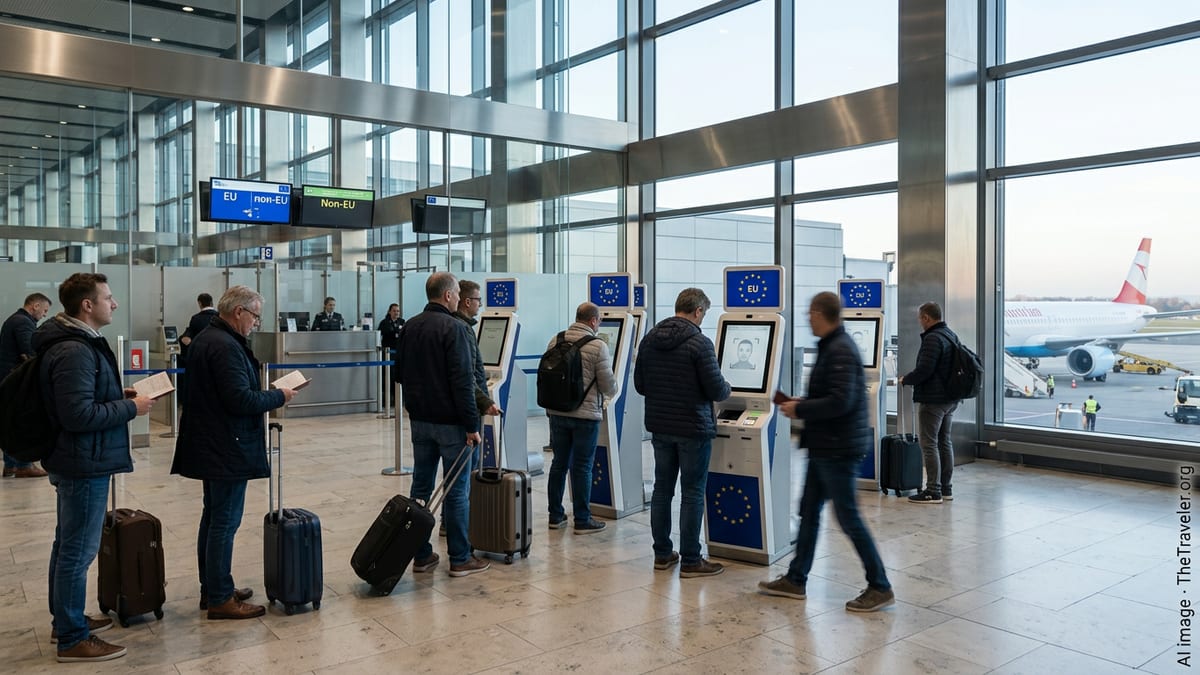
At the same time, longer queues at border checkpoints are emerging as a second major source of delay for passengers using German airports. On 10 April 2026, the European Union’s new Entry/Exit System became fully operational at external Schengen borders. The digital scheme replaces traditional passport stamping for non EU nationals with biometric registration of fingerprints and facial images during their first entry, followed by electronic verification on subsequent trips.
Travel and aviation industry groups across Europe have warned in recent weeks that the system, while intended to modernize border management, is contributing to extended waiting times at many airports as staff and passengers adapt. According to published coverage of a joint open letter from airport and airline associations, operators have reported queues of several hours at some border posts and have urged European institutions to allow a more flexible use of the new checks during the peak summer period.
Media reports from early July point to concerns that these delays are particularly acute at busy hubs and gateways handling large numbers of long haul arrivals from outside the Schengen area. In Germany, official information on automated border control programs such as EasyPASS has emphasized that participants can still benefit from faster processing, but non registered travellers may face longer manual checks as biometric data is collected and verified.
While the European Commission has indicated that border authorities can temporarily suspend biometric collection during July and August when queues become excessive, industry commentary suggests that implementation varies between airports. This variability means that travellers entering or leaving the Schengen zone through Germany can encounter very different experiences depending on the time of day, staffing levels and passenger volumes at each checkpoint.
Internal Border Controls Add Friction to Schengen Travel
Compounding the pressure from the new external border procedures, several Schengen states, including Germany, have maintained temporary internal border controls within the passport free area. Recent European Commission documents and national announcements outline that Germany continues to carry out targeted checks on selected land borders and at some internal air routes, citing ongoing concerns about irregular migration and cross border crime.
Although these measures are typically described as risk based and not systematic checks of every traveller, they nonetheless introduce additional steps into journeys that many passengers previously experienced as frictionless. Travellers arriving at German airports from neighbouring Schengen countries can be subject to identity checks by the federal police, particularly around weekends and peak travel periods, which may increase the time needed to move between gates or exit the terminal.
Publicly available reports from border authorities in July describe intensified controls during specific focus weekends, including inspections aimed at enforcing entry regulations and identifying wanted individuals. While these operations are not primarily directed at holidaymakers, the visible presence of officers and spot checks can slow passenger flows and add unpredictability for those with tight connections.
For airports, the coexistence of internal controls and the Entry/Exit System for external borders creates a complex operational environment. Gate and staffing plans must account for potential bottlenecks at multiple points in the passenger journey, from arrival at the terminal through to boarding, making it more difficult to guarantee minimum connection times during busy hours.
Passenger Experience: Longer Queues and Missed Connections
The combined effect of storm related disruptions, new border technology and temporary internal checks is being felt most directly by passengers. Travel media and social platforms over the past fortnight have documented scenes of long lines at passport control and security areas in several European airports, with some accounts and photographs highlighting crowded halls and families waiting for hours with luggage and small children.
Reports focusing on the broader European situation note that some aircraft have departed with empty seats because passengers were still queuing at border checkpoints when boarding closed. Similar patterns have been observed in anecdotal accounts from travellers connecting through German hubs, where a late arriving flight, followed by a lengthy wait at passport control, has made it difficult to reach onward gates in time, particularly for those entering from non Schengen destinations.
German airport operators have issued general guidance encouraging passengers to arrive early, especially non EU travellers who may need to complete biometric enrolment under the Entry/Exit System for the first time. Public information from Frankfurt’s operator, Fraport, ahead of the summer holidays highlighted expectations of record passenger numbers and warned of longer waiting times at border checks for third country nationals, even as airports work with federal police to optimize staffing.
Despite efforts to streamline flows by expanding automated gates and reorganizing queuing areas, the peak morning and evening arrival waves remain challenging. For many travellers, the experience of air travel through Germany this summer includes both longer on the ground and higher levels of uncertainty, as flight status apps and departure boards change repeatedly in response to weather and congestion.
What Travellers Can Expect in the Coming Weeks
Looking ahead through the rest of July and August, publicly available assessments from industry bodies suggest that pressure on German airports is likely to continue. Peak holiday traffic in multiple German states, persistent risks of severe summer thunderstorms and the settling in period for the Entry/Exit System mean that both operational and border related delays may remain frequent, even if individual days run smoothly.
Travel organizations and consumer advocates are advising passengers to build in additional buffer time for journeys involving transfers in Frankfurt, Munich or other major German hubs, particularly when arriving from outside the European Union. Recommendations commonly include allowing longer minimum connection times, choosing earlier flights where possible and ensuring that any critical events, such as cruises or tours, are not scheduled immediately after arrival.
For their part, airlines and airports are adjusting as they gather more data on bottlenecks. Industry statements indicate that operators are revising schedules, reallocating staff and working with border authorities to make greater use of available flexibilities in the Entry/Exit rules when queues grow too long. Over the medium term, as more frequent travellers complete their initial biometric registration and as procedures are refined, observers expect that processing times will gradually improve.
In the short term, however, the intersection of volatile weather and evolving border systems means that passengers flying through Germany should be prepared for a travel environment where plans may change at short notice. Real time monitoring of flight status, generous connection windows and a willingness to adjust itineraries remain key tools for navigating a summer in which German airports are under unusual strain from both the skies above and the checkpoints within.