


Germany’s so‑called freelancer visa is one of the country’s key residence options for non EU remote workers who wish to live in Germany while working independently for clients worldwide. Although there is no visa formally labeled as a digital nomad permit, the residence permit for freelance activity under Section 21 of the German Residence Act functions in practice as Germany’s core pathway for remote freelancers. Understanding how this framework works in 2025 and what it demands in terms of income, documentation, and professional profile is essential for anyone assessing a relocation based on remote freelance work.
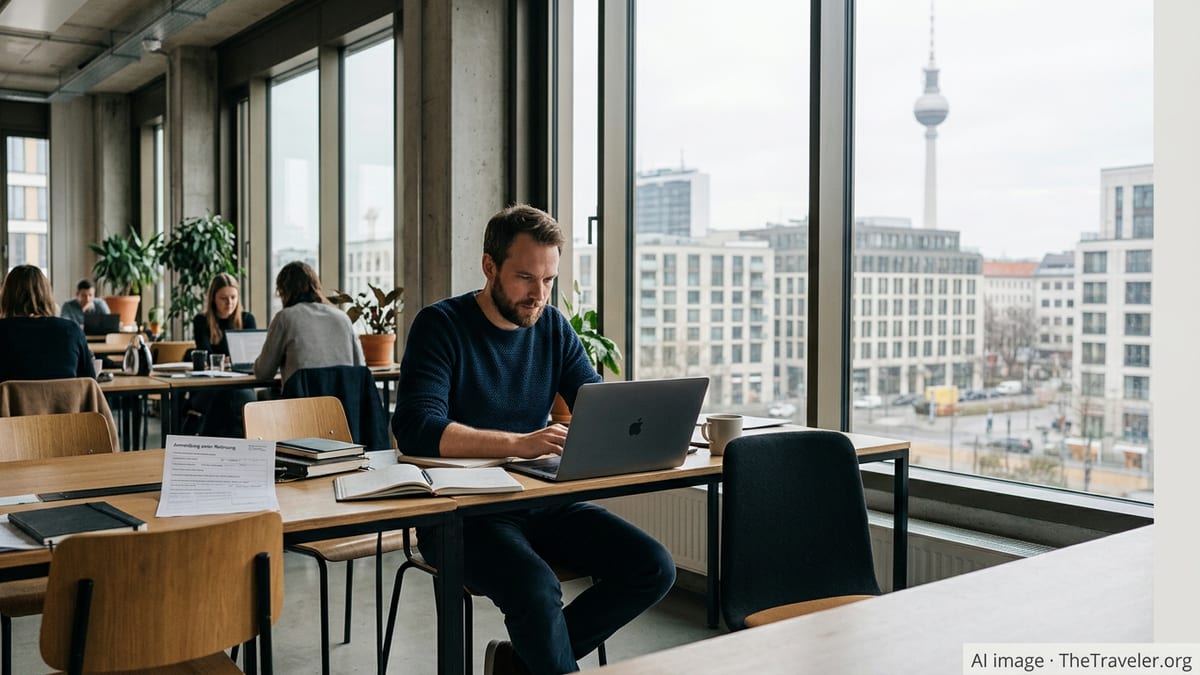
What the German Freelancer Visa Is – And What It Is Not
Germany does not currently offer a visa officially titled “digital nomad visa.” Instead, non EU nationals who want to live in Germany while working remotely on a self employed basis rely on residence permits for freelance or other self employment under Section 21 of the Residence Act (AufenthG). In consular and advisory practice this is commonly referred to as the freelance or Freiberufler visa and is treated by many remote workers as the country’s de facto digital nomad route.
The key concept is that the permit is grounded in German self employment law rather than in a special category for location independent workers. Applicants must therefore demonstrate a viable freelance business that benefits the German economy, not simply a desire to live in Germany while employed by a foreign company. For many remote professionals this is achievable, but it means the process is closer to a business immigration assessment than to a lifestyle visa.
The framework also distinguishes between liberal professions classified as freelancing and commercial self employment that requires business registration. Most remote workers in knowledge based services such as consulting, design, software development or writing are typically evaluated as freelancers if their activity falls within or is similar to the liberal professions listed in German tax law. Where authorities consider an activity to be commercial, a different self employment track may apply with additional municipal business registration requirements.
This structure has two practical consequences for relocation planning. First, approval is discretionary: immigration officers assess the economic interest, sustainability and local integration of the freelance activity. Second, the permit is tied to the specific self employed activity described in the application. Remote workers must be prepared for closer scrutiny of their business model, client base and income than under many lighter digital nomad schemes in other European jurisdictions.
Eligibility Profile for Remote Freelancers
Typical eligibility criteria focus on professional profile, economic viability and legal compliance rather than on a fixed global salary threshold. German missions and immigration offices expect applicants to be genuinely self employed, with qualifications and experience matching the proposed freelance activity and a realistic plan for generating income in or linked to Germany.
Professionally, liberal or knowledge based service roles are more straightforward. Official guidance and consular practice highlight professions such as engineers, architects, journalists, translators, designers, IT specialists, consultants, educators and comparable independent experts as suitable freelance categories. Remote workers whose activities resemble salaried employment with a single foreign employer may be redirected to employment based residence categories instead of the freelance track.
Economic viability is assessed using several indicators rather than one formal benchmark. Authorities typically look for proof of sufficient funds to cover living and business costs for at least the initial months, evidence of existing or prospective clients, and income projections that at least match or exceed local cost of living on a sustainable basis. Some missions reference income levels near or above the general statutory thresholds used for other residence types, but these figures are applied flexibly and case by case.
In addition, applicants who are 45 or older face specific retirement provision requirements when applying for self employment residence. Recent immigration office guidance indicates that, from mid 2024, officers assess whether the individual is on track for a sufficient pension or equivalent assets at the standard retirement age, using reference values for minimum monthly pension income or capital assets. Remote workers in this age group must therefore document private pensions, savings, investments or other retirement provisions alongside their freelance income plan.
Documents and Financial Evidence Commonly Required
Document requirements vary by consulate and local immigration office, but for remote freelancers several categories of evidence are consistently requested. The documentation package is extensive compared with typical tourist or short term work visas, reflecting the long term residence intent and the discretion involved in assessing business viability.
Standard identity and compliance documents include a valid passport, biometric photographs, a completed national visa application form, and a detailed curriculum vitae. Applicants must also typically present a cover letter explaining their freelance business model, why it is based in Germany, and how it is financially sustainable. Where the freelance activity requires a specific professional license or registration in Germany, proof of that authorization is expected.
Financial and business evidence is central for remote workers. Authorities commonly request a combination of recent bank statements, profit and loss summaries, previous tax assessments where available, letters of intent or contracts from at least two prospective or existing clients, and a structured business or freelance plan outlining services, target markets, pricing, and three to twelve month income projections. Health insurance valid in Germany is mandatory, and for applicants above the pension age threshold, detailed proof of retirement arrangements must be provided.
Accommodation documentation is also required even for remote workers who may not need physical office space. A rental agreement or other proof of housing in Germany is typically needed at the residence permit stage, along with evidence of the monthly housing costs. Some consulates ask for indicative accommodation plans at the visa application stage, while the binding proof is submitted after arrival when applying for the electronic residence permit.
Application Pathway and Processing Stages
The freelancer pathway usually involves two main stages: obtaining a national long stay visa at a German mission abroad and then converting this to a residence permit after arrival in Germany. Some nationalities with visa free entry for long stays may apply directly at their local immigration office after entering Germany, but even in these cases the substantive documentation and scrutiny are similar.
At the consular stage, remote workers apply for a national visa in the self employment or freelancer category, referencing the relevant provision of the Residence Act for freelance activity. Appointments must often be booked months in advance, and processing times can range from several weeks to several months depending on workload and whether the application is referred to local authorities in Germany for prior approval. The visa, once granted, usually allows entry and residence for several months specifically for the purpose of establishing the freelance activity.
After arrival, applicants must register their address with the local registration office and then apply at the immigrant office responsible for their city or district for a residence permit for freelance employment. At this stage officers review updated financial evidence, contracts and registration documents to ensure that the planned freelance activity is actually underway or imminently launching. Processing for the electronic residence permit typically takes at least several weeks, and the card issued is valid for a limited period that can range from one to three years depending on the assessment of stability.
Extensions require a similar but usually shorter documentation exercise. Immigration offices assess whether the freelance business has generated sufficient income to cover living costs and whether the activity remains economically relevant. In practice, remote workers who can show regular client invoices, tax returns, and continued health insurance have good prospects for renewal. Over multiple years of stable self employment, it can become possible to transition to longer term settlement status, subject to separate residence and integration conditions.
Duration, Work Scope and Restrictions for Remote Workers
Initial residence permits issued under the freelancer category for remote workers tend to be relatively short term, often between one and two years. The precise duration is at the discretion of the immigration office and depends on the perceived stability of the freelance plan, the diversity and reliability of clients, and the individual’s overall integration prospects. Extensions can push total freelance residence to several years, and the legal framework provides routes to permanent settlement after a sustained period of successful self employment.
In terms of scope of work, the permit is normally tied to the specific type of freelance activity described in the application. Remote workers are expected to operate within that professional field and may need to notify or seek approval from the immigration office before making substantial changes, such as shifting from one industry to another or from freelancing to running a commercial business with employees. Minor diversification within the same broad professional area is typically tolerated, especially where it supports economic stability.
Germany does not generally distinguish between domestic and foreign clients in this context, provided that the activity remains self employed and lawful. A remote freelancer can usually work for clients worldwide and invoice from Germany, but must comply with German registration and tax rules associated with their self employment. Some municipalities and tax offices may require a local tax number, registration as a freelancer with the tax authority or, if the activity is treated as commercial, business registration at the trade office.
There are practical limitations relevant for remote workers considering a highly mobile lifestyle. The residence permit presupposes Germany as the primary place of residence, and extended absences can jeopardize renewal or, in some cases, cause the permit to lapse. Individuals intending to regularly leave Germany for long periods to work from multiple countries may therefore find the freelancer permit less flexible than formal digital nomad visas in states that explicitly accommodate continuous travel.
How the Freelancer Route Compares to Digital Nomad Visas Elsewhere
For relocation decisions, it is important to recognize that Germany’s freelancer visa operates within a classic immigration and labor framework rather than in a promotional regime designed to attract short term digital nomads. Compared with digital nomad visas in some neighboring countries, the German route generally involves more complex documentation, closer scrutiny of business viability, and stronger expectations of long term residence and integration.
Many European digital nomad visas specify a clear minimum monthly income threshold and treat the applicant’s foreign employment or freelancing as sufficient economic justification. The German system instead emphasizes how the individual’s freelance work benefits the German economy, even if part or most of the client base is abroad. Letters from German or EU based clients, local collaborations, and indications of spending and professional engagement in Germany can therefore strengthen a remote worker’s case.
On the positive side, the freelancer permit is embedded in Germany’s broader residence and settlement rules. Successful remote workers who build a stable, tax compliant freelance career in Germany can convert this into longer term residence perspectives, including settlement permits and, subject to wider conditions, eventual citizenship. For those seeking a base rather than a short term digital nomad stay, this structure can be strategically attractive, although it demands sustained commitment to operating as a self employed professional within the German legal and fiscal environment.
The trade off for remote workers is between administrative complexity and long term security. Germany’s freelancer visa is less accessible as a low documentation relocation option but offers potentially more durable residence outcomes for those who meet its professional and financial expectations. Evaluating whether this route is practical therefore depends heavily on the applicant’s existing freelance business maturity and readiness to integrate into German regulatory and tax systems.
The Takeaway
For non EU remote workers, Germany’s freelancer visa framework provides a viable but demanding path to residence based on self employed knowledge work. It is not a lightweight digital nomad scheme but a structured residence permit requiring a convincing freelance business model, robust documentation, and a clear intention to base professional life in Germany rather than merely pass through.
Professionals with an established portfolio of clients, demonstrable qualifications, and sufficient financial reserves are best positioned to succeed. They must, however, prepare for detailed scrutiny by consulates and immigration offices, including evidence of income stability, letters from clients, and comprehensive health and retirement coverage where age thresholds apply. The pathway rewards those who can show that their freelance work contributes meaningfully to Germany’s economy and that they intend to maintain Germany as their main center of life.
When viewed against simpler digital nomad visas elsewhere, the German freelance route stands out as more stringent but also more structurally integrated into long term residence possibilities. Remote workers assessing relocation to Germany should weigh not only the appeal of living in the country but also their capacity to run a compliant and sustainable freelance business within its legal framework, as this is the core determinant of whether the freelancer visa will be a practical solution.
FAQ
Q1. Does Germany have a dedicated digital nomad visa for remote workers?
Germany does not have a visa formally labeled as a digital nomad visa. Remote workers typically rely on the residence permit for freelance or other self employment, which functions as the main route for non EU freelancers.
Q2. Can I work fully remotely for foreign clients on the German freelancer visa?
In many cases yes, provided the activity is genuinely self employed and complies with German registration and tax rules. Authorities focus on the viability and legality of the freelance business rather than the exact location of clients.
Q3. Is there a fixed minimum income requirement for the German freelancer visa?
There is no universally codified single income threshold. Instead, consulates and immigration offices assess whether projected or existing freelance income is sufficient to cover living and business costs in Germany on a sustainable basis.
Q4. Which professions are most suitable for the freelancer route?
Liberal and knowledge based professions such as consultants, designers, engineers, IT specialists, journalists, translators, educators and similar independent experts are typically considered suitable freelance categories.
Q5. How long is the initial freelancer residence permit usually valid?
Initial permits are commonly issued for one to two years, though the exact duration is discretionary. Extensions may be granted where the freelance business shows stable income and compliance with local requirements.
Q6. Do I need clients in Germany to qualify?
Having German or EU based clients is not always mandatory but can significantly strengthen the application by demonstrating local economic benefit. Remote workers with only distant foreign clients may face closer scrutiny.
Q7. Can I frequently travel outside Germany while holding a freelancer permit?
Short trips are usually acceptable, but the permit presupposes that Germany is the primary place of residence. Extended absences or a highly itinerant lifestyle may negatively affect renewals or risk the permit lapsing.
Q8. What happens if my freelance income drops after I move?
At renewal, immigration authorities review whether income has been sufficient to cover living costs. Significant or prolonged income drops without a credible recovery plan can jeopardize extensions.
Q9. Is health insurance mandatory for freelancer visa holders?
Yes. Applicants must show comprehensive health insurance valid in Germany, either through statutory or private coverage that meets local standards, both at initial application and for renewals.
Q10. Can the freelancer route lead to permanent residence in Germany?
Yes, long term successful self employment can count toward eligibility for settlement permits, provided additional residence duration, integration, and financial stability conditions prescribed by German law are met.