


Germany’s immigration enforcement regime has tightened noticeably since 2023, with rising deportation numbers, expanded border controls and new legal powers aimed at speeding removals. For individuals and employers considering relocation to Germany, understanding these enforcement trends is essential to assessing practical risks, compliance expectations and the overall stability of immigration status once in the country.
Overview of Recent Immigration Enforcement Trends
Since around 2023 Germany has shifted from primarily managing high inflows of protection seekers toward more assertive enforcement against people without a right to remain. Deportations have increased, border checks have expanded, and the legal framework has been adjusted to facilitate removals and crack down on irregular stay and work. This change reflects both domestic political pressure and broader European debates on migration management.
Available figures indicate a steady rise in completed deportations. Around 13,000 removals were reported in 2022, increasing to roughly 16,000 to 16,500 in 2023 and around 20,000 in 2024, an increase of about 20 to 25 percent in a single year. Preliminary data for 2025 suggest Germany is on track for another record, with more than 6,000 deportations recorded in the first quarter alone and public statements referencing a further year‑on‑year increase of about 14 percent.
These numerical trends are accompanied by political messaging that emphasizes strengthening returns of people whose asylum applications have failed or who have lost their residence status. At the same time, Germany continues to receive and integrate large numbers of legally resident foreign nationals and recognized refugees, so enforcement measures are targeted at specific categories rather than the foreign population as a whole.
For potential relocators, the key implication is that the environment is increasingly rules‑driven. Lawful residence and employment remain viable and broadly supported, but tolerance for status gaps, informal work or unresolved asylum cases is diminishing.
Deportation Volumes, Patterns and Outcomes
The rise in deportation activity is one of the clearest indicators of changing enforcement priorities. Between January and November 2024 more than 18,000 people were deported, compared with about 16,400 in all of 2023, and later year‑end figures place the 2024 total around 20,000. In 2025 the first quarter alone saw approximately 6,150 removals, up more than a quarter compared with the same period a year earlier.
Despite this growth, deportations still affect a relatively small share of people under removal orders. Estimates for 2023 and 2024 suggest that roughly 60 percent of planned deportations could not be carried out, for reasons ranging from missing travel documents and medical concerns to last‑minute legal challenges or the person being untraceable on the departure date. In parallel, around 220,000 people at the end of 2024 were classified as required to leave but physically present in Germany, of whom roughly 180,000 held a formal “tolerated stay” status and about 40,000 had neither a residence permit nor toleration.
Destination patterns show concentration on neighboring and regional states. Turkey has been one of the main countries of return, receiving several hundred people in early 2025 alone, with other significant destination countries including Western Balkan states and EU partners under responsibility‑sharing rules. Deportations to sensitive destinations such as Afghanistan resumed under strict criteria focused on individuals with criminal convictions or security concerns, reflecting a willingness to use enforcement even in complex political contexts.
The practical takeaway is that while absolute deportation risk for legally resident individuals remains low, Germany is increasingly acting on removal decisions once legal avenues are exhausted. For anyone whose status depends on conditions such as employment, study or ongoing asylum procedures, lapses that previously might have led only to extended limbo are now more likely to result in active removal efforts.
Return Improvement Act and Expanded Legal Powers
A major legal milestone in this shift was the Act to Improve the Return of Foreigners, often called the Return Improvement Act, which entered into force on 27 February 2024. This law amended core legislation such as the Residence Act and Asylum Act to give authorities broader operational tools to locate, detain and remove people without a right to remain.
Key elements include longer permissible detention periods ahead of deportation in certain circumstances and wider possibilities for authorities to enter shared accommodation to pick up individuals scheduled for removal. The law also simplified information sharing between agencies to identify people under removal orders and limited some procedural delays that previously made deportations difficult to execute.
The Return Improvement Act also clarified obligations for individuals who are required to leave. Noncompliance with reporting duties, providing false identity information or obstructing deportation can carry sharper consequences, including criminal penalties in serious cases. These changes aim to reduce the large proportion of planned removals that currently fail at the last minute.
For potential relocators this framework has two main implications. First, individuals must assume that removal orders, once final, are now more likely to be enforced within shorter timeframes. Second, even those holding lawful status should expect stricter scrutiny regarding identity documents, address registration and compliance with residence conditions, because the same enforcement infrastructure is used across categories.
Border Controls, Internal Checks and EU Cooperation
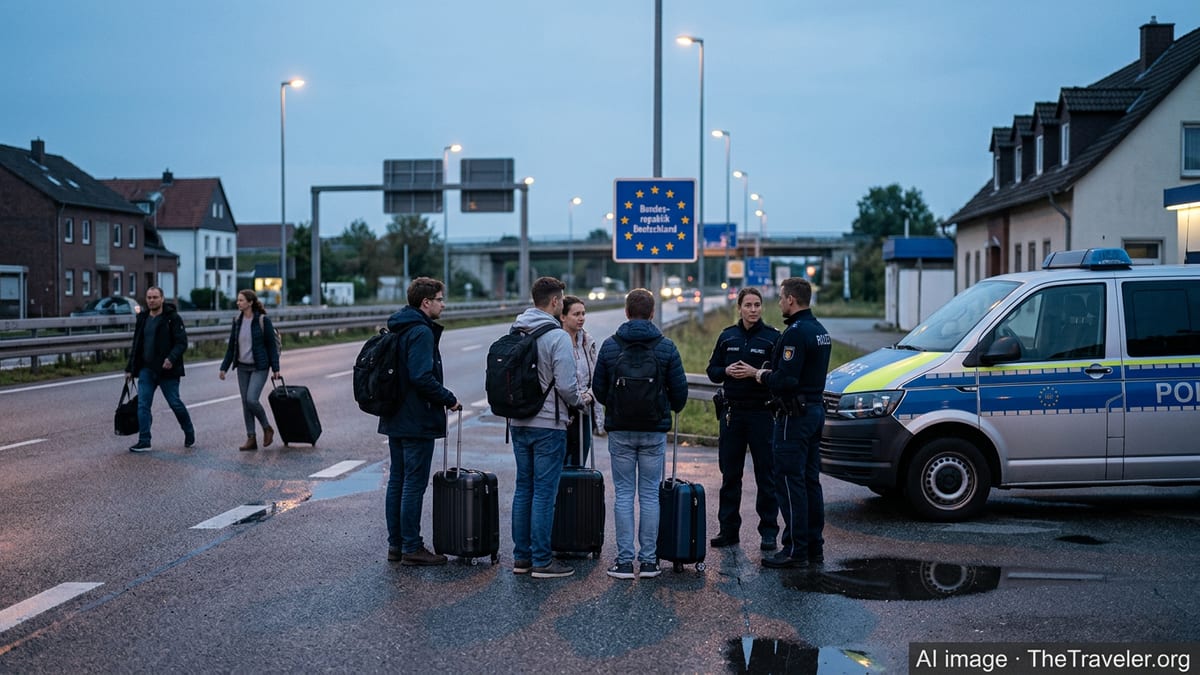
Germany has complemented legal changes with more intensive border and internal controls. Initially introduced on selected frontiers from 2023 in response to irregular crossings, border checks were progressively extended in 2024 to cover all national borders with neighboring states. These controls are officially temporary and regularly renewed, but in practice they create a semi‑permanent enforcement presence at many entry routes.
In parallel, federal and state police have increased checks on long‑distance trains, highways and regional transport corridors commonly used by people entering irregularly. Between October 2023 and September 2024, roughly 50,000 people were reportedly refused entry at Germany’s borders. Germany has also returned thousands of people to neighboring countries such as Poland under bilateral arrangements and EU rules, reflecting a more assertive use of “first country of entry” responsibilities within the Schengen area.
Germany’s participation in the European Union’s evolving migration and asylum framework further shapes enforcement. The emphasis is shifting toward faster processing at external borders, streamlined transfers to the responsible member state and expanded use of accelerated procedures for people from countries considered generally safe. Germany has been among the member states pushing for high numbers of Dublin transfers, with tens of thousands of requests annually and a growing number of successful transfers in 2024 and 2025.
For relocators arriving through regular channels, these developments mainly affect the predictability of travel documents and entry checks. Travelers can expect more frequent identity verifications at borders and within border regions. For those whose journey involves movement through other EU countries before Germany, responsibility rules can have decisive effects on where an asylum claim or protection request will be examined.
Workplace Enforcement and Controls on Irregular Employment
Another key facet of Germany’s immigration enforcement strategy is the focus on irregular employment and misuse of legal migration channels. The customs authority’s financial control unit for illegal employment plays a central role in inspecting companies and sectors at risk of under‑the‑table work by foreign nationals without appropriate authorization.
Construction, hospitality, logistics, cleaning and personal care services are typical focus areas, but checks also take place in manufacturing and agriculture. These inspections combine labour law enforcement with immigration status checks. Employers can face substantial fines and, in serious cases, criminal liability if they knowingly hire people without permission to work. Workers discovered without the required status may receive removal orders, be placed into detention or face re‑entry bans, depending on the circumstances.
The policy trend is toward more targeted, intelligence‑led inspections rather than only random sweeps. Data matching between social security systems, tax authorities and immigration records is increasingly used to identify anomalies such as contributions with expired residence permits or inconsistencies between reported work hours and allowed student or seasonal‑worker limits.
Prospective relocators who intend to work in Germany should therefore plan on strict document compliance from the outset. Employers, especially small firms unused to cross‑border hiring, are under pressure to verify residence and work authorization carefully. Any employment arrangement that relies on “cash only” payment, undeclared hours or unclear contractual status carries rising immigration enforcement risk.
Public Security Incidents and Political Drivers of Enforcement
Enforcement trends in Germany since 2023 have been strongly influenced by high‑profile criminal and security incidents involving non‑nationals. Cases where serious offences were committed by individuals whose deportations had previously failed or whose legal status was unclear created public and political pressure for more decisive action. Incidents such as knife attacks and other violent crimes have been widely debated, with particular criticism when suspects had prior convictions or pending removal orders.
In this context, political leaders from across the spectrum have called for “consistent deportations” of foreign nationals convicted of serious crimes and, in some cases, people considered security threats. Statements by senior officials have emphasized that those who abuse hospitality or reject the constitutional order should leave Germany. This rhetoric has provided the backdrop for legislative and practical enforcement measures, including faster removals for criminal offenders and closer cooperation between police, courts and immigration offices.
At the same time, far‑right proposals for mass “remigration,” including deportation of naturalized citizens or long‑term residents, have triggered large public protests and been explicitly rejected by most mainstream parties. The prevailing policy line combines support for legal labor migration and integration with tougher action against irregular stay and criminality, rather than a blanket rollback of immigration.
For potential relocators the main message is that criminal conduct or persistent legal noncompliance now carries more direct immigration consequences than in the past. Lawful residents who respect legal obligations remain broadly supported, while the enforcement spotlight is focused on a narrower but more intensively targeted group.
Impact on Asylum, Tolerated Status and Overall Risk Climate
Germany remains one of Europe’s main destinations for asylum seekers, yet the enforcement environment has contributed to noticeable changes in application numbers and outcomes. Asylum applications in 2025 fell to less than half the previous year’s level, following tighter external border measures and return agreements that reduced arrivals. Earlier, in the first half of 2024, applications had already dropped around one fifth compared with 2023, a larger decline than in many other EU states.
Approval rates vary significantly by country of origin, with very high recognition for some conflict‑affected states and low recognition for others. At the same time, even among rejected cases only a minority are ultimately removed in any given year, due in part to legal barriers and practical obstacles. This gap between negative decisions and executed removals has long been a structural feature of Germany’s system and continues despite rising deportation numbers.
The stock of people in “tolerated stay” status has started to decline as some obtain regularized residence through new integration‑focused pathways while others are removed. The figure of roughly 180,000 people holding toleration at the end of 2024 was lower than earlier peaks, but still represents a substantial group living in an uncertain enforcement climate.
For relocators who may interact with these systems, the message is twofold. Asylum and protection routes are subject to tighter screening and faster enforcement against unfounded claims, reducing the viability of speculative applications. Conversely, those who qualify for regular residence through work, study or family links can still rely on a relatively stable framework, provided all conditions are met and maintained.
The Takeaway
Germany’s immigration enforcement posture between 2023 and 2025 has clearly hardened in several dimensions: deportations are rising from a relatively low baseline, legal powers to execute returns have expanded, border and internal controls are more visible, and irregular employment faces enhanced scrutiny. Political narratives linking security and migration have reinforced this trend, especially in cases involving criminality and failed removals.
At the same time, the system continues to distinguish sharply between those with secure residence and those without. Legally resident workers, students and family members who comply with conditions face limited direct enforcement risk, although they may encounter more frequent document checks and tighter procedural timelines. The sharpest consequences fall on people with final removal orders, unresolved identity issues or repeated noncompliance.
For individuals and employers evaluating relocation to Germany, decision‑grade conclusions include the following: secure legal pathways remain open and operational; enforcement is targeted but more consistent once a case reaches the removal stage; and tolerance for grey‑area arrangements has narrowed. Planning for fully compliant residence and employment status, supported by accurate documentation and timely renewals, is increasingly essential to minimize exposure to enforcement actions in this evolving landscape.
FAQ
Q1. Is Germany currently increasing deportations of foreign nationals?
Yes. Deportations have risen from roughly the low‑ten‑thousand range in 2022 to about 20,000 in 2024, with early 2025 figures suggesting a further double‑digit percentage increase.
Q2. Who is most likely to be targeted by German immigration enforcement?
Enforcement is primarily focused on people with final removal orders, rejected asylum seekers without other residence rights, individuals with unclear identity documents, and foreign nationals convicted of certain criminal offences.
Q3. How do Germany’s border controls affect lawful travelers and relocators?
Lawful travelers may experience more frequent identity checks at borders and on transport routes, but those with valid passports, visas or residence permits are generally allowed to proceed without major issues.
Q4. What is the Return Improvement Act and why does it matter?
The Return Improvement Act, in force since February 2024, expanded authorities’ powers to locate, detain and remove people without a right to remain, aiming to reduce failed deportations and speed up returns.
Q5. Are people with tolerated status in Germany at higher risk of deportation now?
Yes. While many still remain for extended periods, rising deportation numbers and stronger enforcement tools mean that tolerated status increasingly involves a more tangible risk of eventual removal.
Q6. Does irregular employment increase the chance of immigration enforcement?
Yes. Workplace inspections and data checks target undeclared or unauthorized work, and being found working without permission can trigger sanctions, loss of status and possible deportation.
Q7. How do criminal convictions affect immigration status in Germany?
Serious or repeated criminal convictions can lead to expulsion orders, shortened protection against removal and prioritized deportation, especially where public security concerns are cited.
Q8. Are asylum seekers more likely to be deported if their claims are rejected?
Rejected asylum seekers face a higher likelihood of removal than in the past as authorities seek to close the gap between negative decisions and executed returns, although not all can be deported in practice.
Q9. What does the enforcement climate mean for compliant long‑term residents?
Compliant long‑term residents with secure residence rights are generally not the focus of enforcement, but they should expect stricter adherence to documentation rules, registrations and renewal deadlines.
Q10. How should potential relocators factor these enforcement trends into their plans?
Relocators should plan on using fully legal entry and residence channels, maintain impeccable documentation, avoid any informal work or status gaps, and assume that noncompliance is more likely than before to result in active enforcement.