


Germany has moved from a cautious immigration country to an actively recruiting destination for skilled workers, while simultaneously tightening controls on irregular migration and asylum. For globally mobile professionals and the employers relocating them, this dual track creates a complex risk landscape. Understanding how current and emerging immigration policy trends could affect entry, status stability and long term residence is essential for relocation decisions involving Germany in 2026 and beyond.
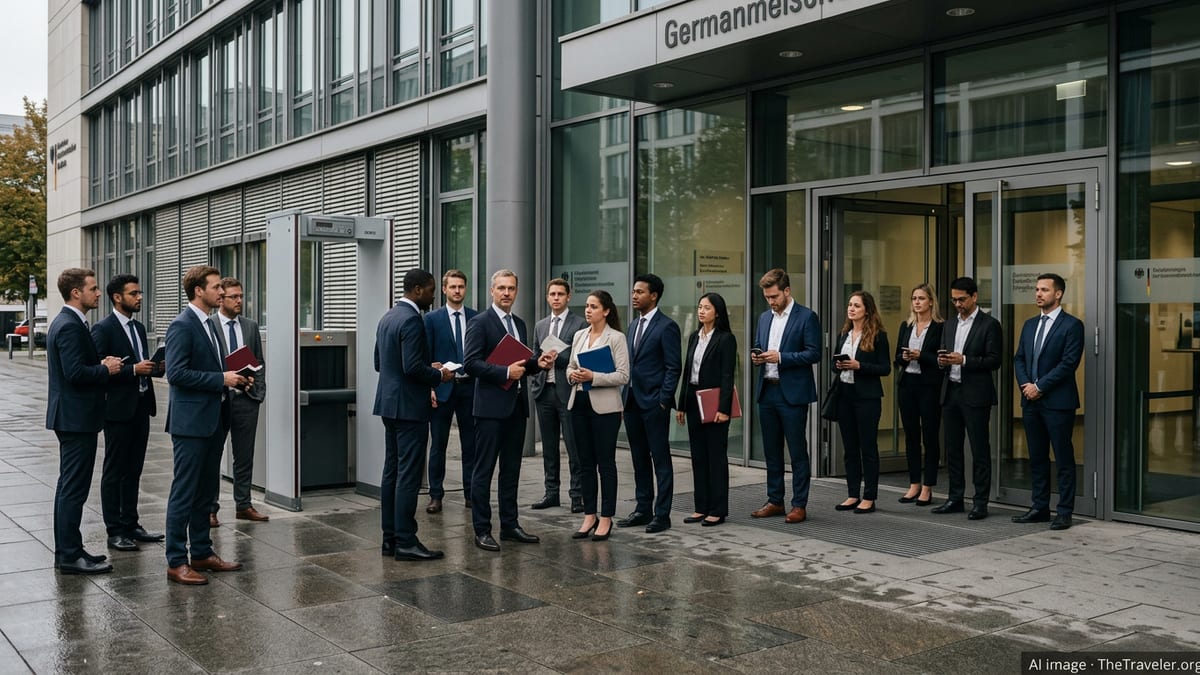
Structural Volatility in Germany’s Immigration Policy Mix
Germany’s immigration framework is currently shaped by two opposing policy objectives: attracting skilled workers and reducing irregular migration. The reformed Skilled Immigration Act, fully in force since 2024, has liberalized routes for qualified professionals, including broader access to residence permits and new pathways such as the Opportunity Card. At the same time, political pressure to curb irregular entries and accelerate returns has intensified, and Germany is embedded in a European Union system that is itself undergoing restrictive reform. This tension is the core macro risk expats and sponsoring employers must factor into planning.
For skilled professionals, the immediate environment is broadly favorable, but not static. Rules on recognition of foreign qualifications, salary thresholds, and new digital structures such as the planned Work and Stay Agency are still being implemented and fine tuned. The direction of change can be positive for some categories and more restrictive for others. Relocation decisions that assume today’s rules will hold unchanged over a five to ten year horizon carry policy risk, particularly for professionals whose profiles sit closer to minimum thresholds.
Another structural risk is the fragmentation of responsibility between federal ministries, foreign missions, state-level immigration offices and professional recognition bodies. Germany is working toward more centralization and digitalization, but until this is fully established, shifts in political priorities, resource allocations or administrative guidance can translate into real differences in processing times and evidentiary expectations between regions and years.
For expats, this means that immigration policy risk in Germany is less about a single dramatic legal change and more about cumulative, incremental adjustments that can affect processing predictability, documentary burden and long term status planning.
Implementation Risks Under the Reformed Skilled Immigration Act
The Skilled Immigration Act introduced a three pillar model: classic skilled workers with recognized qualifications, candidates whose experience substitutes for formal recognition, and individuals entering on potential based routes such as the Opportunity Card. While this broadens access, it also introduces significant implementation risk, especially in how local authorities interpret criteria and interact with employers.
For example, the law expands possibilities for employment based on professional experience, and lengthens permissible residence for qualification measures from roughly 18 months to up to three years in some cases. However, these benefits depend on recognition bodies and immigration offices accepting foreign documentation, assessing work histories consistently and coordinating decisions in a timely manner. Early evidence from government agencies indicates that complex procedures, divided responsibilities and limited digital interfaces continue to slow case handling despite formal liberalization.
New categories such as the Opportunity Card and recognition partnerships are still in an early operational phase. Case volumes remain modest compared with classic work permits, and guidance continues to evolve. This creates a policy risk for expats whose relocation plans hinge on newer pathways: documentary requirements, admissible activities during job search periods, or thresholds for extension could tighten as authorities respond to abuse concerns or capacity constraints.
In addition, the Skilled Immigration Act reduces salary thresholds for some residence routes, including the EU Blue Card, by tying eligibility to a percentage of the pension insurance assessment ceiling. This mechanism makes the thresholds technically predictable but also means that any future political decision to re raise these percentages or adjust the underlying ceiling could quickly alter eligibility for borderline salary offers.
Naturalization, Dual Citizenship and Long Term Status Uncertainty
Germany’s 2024 reform of the citizenship law significantly reshaped long term planning assumptions. Naturalization was shortened in most standard cases from eight to five years of residence, and access to dual citizenship was widened so that many naturalizing expats no longer have to renounce their original nationality. For relocation candidates with an eye on long term settlement, these changes are highly attractive.
However, subsequent political developments have already shown that elements of liberalization can be rolled back. Legislation passed in October 2025 removed a fast track naturalization option that would have allowed some residents to obtain citizenship after three years. While the core five year pathway and general acceptance of dual citizenship remain in place, the reversal illustrates the medium term risk that especially generous provisions may become politically contentious and subject to revision.
Processing capacity is another policy risk. German authorities anticipated a surge in naturalization applications as shorter qualifying periods and dual citizenship were introduced. Delays in expanding staff and digital systems mean that actual timelines to obtain citizenship can stretch significantly beyond formal legal minimums. For expats relying on timely acquisition of citizenship to secure long term mobility or to reduce exposure to future immigration changes, congested processing pipelines present a material planning risk.
Finally, because naturalization rules interact with residence stability, any tightening in enforcement of residence continuity, integration criteria or language standards can indirectly impact long term prospects. Expats following geographically mobile careers or frequent international assignments should be aware that extended absences from Germany can affect both residence status and later citizenship eligibility under evolving guidance.
Evolving EU Asylum and Border Policies and Their Indirect Effects
While skilled workers are generally distinct from asylum seekers in law and practice, Germany’s role within the European Union’s migration and asylum system has important indirect implications for overall policy risk. Recent EU level agreements on a new Pact on Migration and Asylum, scheduled for full implementation by June 2026, are designed to accelerate border procedures, expand use of fast track processes for nationals of countries deemed safe and facilitate transfers to third countries considered safe.
Critics argue that these reforms increase the likelihood of human rights concerns and create more complex, and at times restrictive, operational expectations for member states, including Germany. Political debates around solidarity mechanisms, relocation quotas and returns influence public perceptions of migration more broadly. Periods of heightened irregular arrivals or high profile security incidents have historically triggered calls in Germany for tougher measures, which can spill over into stricter interpretations of existing rules, more intensive document checks and longer security screening for all non EU nationals.
Furthermore, discussions at European level about increasing deportations, designating additional safe countries of origin and expanding safe third country concepts point toward a medium term environment in which return and enforcement policies are more assertive. For legally resident expats this does not translate into immediate deportation risk, but it does signal that loss of lawful status through job loss, noncompliance or documentation lapses could be treated more severely and resolved less flexibly than in earlier years.
Expats should therefore view EU asylum and border reforms less as a direct threat to work based migration and more as a context factor shaping the risk of abrupt shifts in political tone and administrative practice. When public debate is dominated by irregular migration control, political willingness to further liberalize or protect expat friendly provisions can weaken.
Administrative Capacity, Digitalization and Procedural Uncertainty
One of the most consistent practical risks in German immigration policy is the gap between legislation and administrative capacity. Even as laws have become more welcoming for skilled workers, government statements acknowledge that multiple authorities, limited digitalization and non uniform processes across federal states still make immigration procedures complex and slow. This implementation lag is itself a form of policy risk, because the predictability of outcomes depends as much on local administration as on federal statutes.
Germany has begun to respond to these challenges through initiatives such as the Work and Stay Agency, approved in 2025 and planned as a centralized, digital authority consolidating various functions, and through broader commitments to digitize visa issuance and recognition workflows. However, these reforms are being phased in through 2026 and beyond, and early stages of major system changes tend to produce temporary instability, inconsistent adoption between offices and evolving documentation standards.
For expats, this environment translates into several concrete risks: longer than expected processing times, unpredictable appointment availability at consulates and local immigration offices, and shifting expectations regarding translations, apostilles and recognition of foreign qualifications. Company internal lead times for recruitment and relocation that are based on out of date assumptions can easily understate the real time to mobilize staff.
Because immigration administration is shared between federal and state levels, regional disparities are likely to persist. Some local authorities may adopt digital tools and central guidance quickly, while others move slowly. Two identical applications filed in different German states can therefore experience materially different timelines and procedural hurdles, a reality that expats and employers must factor into project planning, especially for assignments with strict start dates.
Political Climate and the Risk of Future Tightening
Germany’s political landscape has become more fragmented, with growing support for parties that favor significantly tighter migration controls. While coalition politics have so far preserved a broadly pro skilled migration stance, shifts in electoral outcomes at federal or state level could alter the balance between liberalization and restriction in future legislative cycles.
Areas of particular vulnerability include routes that are perceived as relatively easy to access, such as potential based residence titles, family reunification where integration outcomes are questioned, and fast track options for permanent residence or citizenship. The rollback of the three year naturalization option is a practical illustration of how quickly an initially generous provision can be politically re evaluated and removed.
In addition, external shocks can catalyze policy tightening. Sudden surges in irregular arrivals, major security incidents involving foreign nationals or economic downturns affecting employment can prompt rapid adjustments, including temporary suspensions of certain admission categories, stricter labor market tests or enhanced security screening. While Germany typically introduces changes through standard legislative and administrative processes, the speed of change in response to crises has increased.
Relocation planning that assumes current rules are fixed over the full duration of a multi year assignment or a long term migration pathway therefore carries material risk. Expats and employers should monitor not only formal legal changes but also coalition negotiations, state level elections and public opinion trends that could foreshadow policy adjustments in specific immigration categories.
The Takeaway
Germany remains one of the more open large economies for skilled migration, with a legal framework that has become more welcoming in several key respects. However, the overall risk profile for expats is not low. It is characterized by a dynamic interaction between liberal skilled worker provisions, tightening asylum and border policies, administrative capacity constraints and a volatile political climate.
For globally mobile professionals and their employers, the primary immigration policy risks to watch are incremental rather than dramatic: evolving interpretations of new categories under the Skilled Immigration Act, adjustments to salary and qualification thresholds, capacity related backlogs in residence and citizenship processing, and selective rollbacks of especially generous naturalization or family provisions. These can cumulatively affect the predictability of relocation timelines, the security of long term status and the feasibility of eventual naturalization.
Effective risk mitigation in this context relies on conservative planning assumptions, close monitoring of legislative and administrative developments and flexibility in assignment structures. Germany is likely to remain a major destination for international talent, but successful relocation will increasingly require treating immigration rules as a moving framework rather than a fixed baseline.
FAQ
Q1. Is Germany currently becoming more open or more restrictive for skilled workers?
Germany is formally more open for skilled workers than a few years ago, with broader access under the Skilled Immigration Act and more flexible qualification rules, but practical risks remain due to administrative delays, evolving guidance and political pressure to tighten other parts of the migration system.
Q2. How stable are Germany’s immigration rules over a five to ten year horizon?
Core principles, such as the need for qualified employment and integration, are relatively stable, but specific provisions can and do change within a few years, as shown by adjustments to naturalization timelines and the layering of new categories like the Opportunity Card.
Q3. What is the main risk associated with the new potential based routes such as the Opportunity Card?
The main risk is implementation uncertainty: authorities are still building experience with these categories, and requirements or acceptable practices may tighten if volumes increase, fraud concerns arise or political attitudes shift.
Q4. Could Germany reverse its acceptance of dual citizenship for new citizens?
While a complete reversal appears unlikely in the short term given broad political support for modernizing citizenship law, elements of the reform have already been modified, so there is a medium term risk that conditions, processing or specific advantages linked to dual citizenship could change.
Q5. How do EU asylum and border reforms affect expats entering on work routes?
They do not directly alter skilled worker criteria, but they shape the wider political and administrative context, potentially leading to stricter security screening, more intensive document checks and reduced political appetite for further liberalization of work related migration.
Q6. Are processing times for German residence permits likely to improve soon?
Germany is investing in digitalization and centralization, which should reduce delays over time, but during the transition, backlogs and uneven implementation across regions mean that processing times are likely to remain volatile in the near term.
Q7. How risky is it to rely on future German citizenship as part of a relocation plan?
Relying on citizenship as a fixed outcome involves risk, because both eligibility rules and processing capacity can change; expats should treat naturalization timelines as approximate and ensure their residence status remains secure independently of citizenship plans.
Q8. What happens if an expat on a German work permit loses their job?
Typically a limited grace period is granted to find new employment, but the length of this period and the flexibility of local authorities can vary, and wider political moves to tighten return practices could reduce tolerance for extended periods without qualifying employment.
Q9. Do regional differences within Germany matter for immigration risk?
Yes, because state level immigration offices differ in resources, digitalization and experience, identical applications can face different appointment wait times, document expectations and overall processing durations depending on location.
Q10. How should employers and expats monitor and mitigate Germany immigration policy risk?
They should follow legislative developments, pay attention to coalition politics and administrative announcements, build longer lead times into recruitment and relocation planning and consider alternative scenarios if specific routes or timelines change unexpectedly.