


The United Arab Emirates continues to refine its residency framework to attract investment and talent while tightening compliance and enforcement. For prospective and current expatriates, the direction of policy change is as important as the rules in force today. Understanding how residency regulations, grace periods, long-term visas, and administrative dependencies are evolving is critical to assessing relocation risk and long-term planning feasibility.
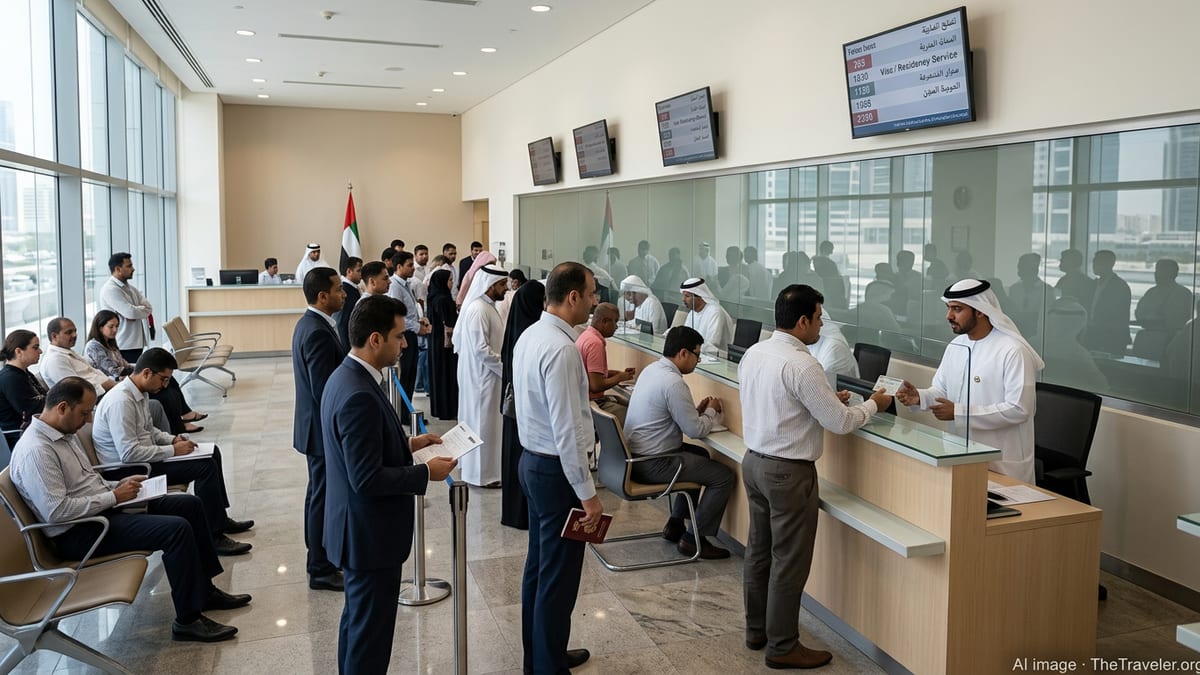
Direction of Change in UAE Residency Policy
Recent regulatory developments indicate a dual trend: the UAE is expanding long-term residency options while simultaneously standardizing penalties and tightening enforcement around status violations. This creates a more rules-based, digitized system that can be attractive for compliant residents, but less forgiving of administrative errors or delayed action.
Cabinet-level executive regulations implemented from 2022 onward modernized the federal residency framework and gave authorities broad discretion to impose daily fines for irregular stay, up to a statutory ceiling per day. Subsequent administrative practice has coalesced around a unified overstay fine of roughly AED 50 per day for most visa types, simplifying previous differentiated structures but raising the stakes for non-compliance as fines accumulate quickly over time.
Parallel reforms expanded categories such as Golden Visa and Green Visa, introduced more granular residence categories, streamlined online processing, and encouraged investment-based and skills-based residence. These changes have increased access for some profiles while simultaneously introducing more specific eligibility criteria, documentation requirements, and cross-checks that can affect both new applicants and renewals.
For relocating professionals, the headline risk is not that residency is becoming inherently more difficult, but that the margin for administrative error is shrinking and the consequences of misunderstanding evolving rules can be financially and legally significant.
Overstay Fines and Grace Period Policy Risks
The most consequential recent change for residency risk management is the effective unification of overstay fines for most visa types. Public-facing guidance and advisory materials in 2025 and early 2026 describe a standardized fine of approximately AED 50 per day after the end of any applicable grace period for visit, tourist, and residence visas. This replaces a previous framework where residence overstay fines were often lower per day than visit overstays.
For residents, common practice now provides around a 30-day grace period after residence visa cancellation or expiry, during which an individual may either leave the UAE, obtain a new sponsor, or complete a status change without incurring overstay fines. After this period, the AED 50 per day rate generally applies. One month of inattention or delayed decision-making can therefore result in fines in the range of AED 1,500, and three months could exceed AED 4,500, excluding any administrative or exit permit fees.
Policy guidance from 2025 to early 2026 also highlights the gradual removal of certain informal or previously assumed grace buffers, such as the automatic 10-day extension that many short-term visitors once relied upon. While some sources still reference short grace windows for specific visa types, the overall direction is toward strict counting from the date of expiry or cancellation recorded in federal systems, rather than discretionary leniency at exit.
The relocation risk for expatriates is clear: reliance on outdated assumptions about “automatic” grace periods, verbal assurances, or previous practice can lead directly to overstay status and escalating fines. The system is now highly automated, and fines accrue daily whether or not the individual receives proactive notifications.
Residency Cancellation, Status Change and Deportation Exposure
Another critical risk area is the interaction between residency cancellation, grace periods, and potential deportation orders. Federal regulations allow the authorities to impose deportation and re-entry bans in cases of prolonged irregular stay or repeated violations. While such measures are typically reserved for serious or extended non-compliance, their availability significantly raises the stakes for those who allow residency issues to drift.
Current executive regulations give immigration authorities discretion to levy up to roughly AED 100 per day in fines for unlawful stay, within an overall regulatory framework that also permits deportation in certain circumstances. In practice, most advisory guidance indicates the unified AED 50 per day schedule is used, but the higher statutory ceiling indicates that harsher financial penalties remain legally possible in aggravated cases.
The practical risk for expats arises from delays in resolving cancelled or expired status, especially where employment termination, business failure, or family sponsorship changes occur. Once a residence permit is cancelled, the individual typically has a defined grace period. If no new status is secured and the individual remains in the country beyond that period, they will usually be considered overstayers. Prolonged overstay combined with unpaid fines or additional violations can lead authorities to consider deportation or blacklisting, which has long-term implications for future entry to the UAE and sometimes the wider Gulf region.
For relocating professionals, this underlines the importance of contingency planning around job loss, employer business risk, marital breakdown, or sponsor default. Individuals should assume that once a cancellation is processed in the system, the clock is running, and any resolution must be timely and well documented to avoid an escalation toward removal proceedings.
Long-Term Residency Categories and Policy Volatility
The UAE has positioned long-term residency products such as the 10-year Golden Visa and 5-year Green Visa as anchors of its talent and investment strategy. These categories can significantly reduce renewal frequency risk and tie residency more to personal qualifications or investments than to a single employer. However, they are also subject to evolving eligibility rules and administrative reinterpretation, which introduces a distinct set of policy change risks.
In the Golden Visa space, authorities have periodically adjusted thresholds and procedural details. For property-linked Golden Visas, policy updates in recent years scrapped certain minimum cash down payment requirements and accepted property valuations from official evaluators, provided overall property value meets a defined multi-million-dirham threshold. Subsequent updates have refined criteria for executives and specialists, including requirements for minimum salary levels and demonstrable tenure with the current employer.
The risk is that expats basing their long-term relocation decision on a specific eligibility combination may find that criteria tighten or documentation requirements change before or during application. For example, a professional counted as an “Executive” under prior rules could be required in later years to demonstrate a longer minimum period of employment with the same UAE company or meet higher earnings thresholds. Similarly, property market movements or valuation rule changes could affect whether an investment remains sufficient to sustain a Golden Visa at renewal.
Although there is currently no evidence of arbitrary cancellation of valid long-term visas solely because of changing thresholds, applicants should recognize that these categories are policy tools. Their terms can be adjusted as the government refines its talent mix priorities, potentially creating a moving target for future applicants and renewals.
Compliance Dependencies: Traffic Fines, Administrative Records and Free Zones
Recent residency policy changes increasingly link immigration compliance to other regulatory and administrative systems. In particular, Dubai has introduced a policy that requires settlement or approved installment plans for traffic fines before individuals can renew or obtain residence permits. This means outstanding traffic penalties are no longer a separate issue; they can directly delay or block residency transactions.
From mid-2025 in Dubai, residents must ensure that traffic fines are either fully paid or enrolled in an official payment plan before residency renewals can be processed. For mobile professionals who rent vehicles frequently or commute long distances, even a modest backlog of automated fines can become a bottleneck. Employers sponsoring staff also face operational risk if multiple employees are unable to renew residence because of individual traffic compliance issues.
Within free zones, residency management has become more rule-driven, with published violation codes that impose penalties on companies when sponsored employees overstay beyond grace periods after visa cancellation. Penalties can reach approximately AED 1,500 per employee, in addition to whatever federal immigration fines the individual faces. This creates a strong incentive for employers to actively track the status of departing staff and process cancellations promptly.
These developments mean expats are increasingly embedded in a compliance ecosystem where immigration status is tied to traffic records, employer reporting, and free zone administrative enforcement. For relocation decision-making, the key risk is that small unresolved issues in one domain can unexpectedly impact residency rights or renewal timelines in another.
System Errors, Digitalization and Practical Compliance Risks
The UAE has significantly digitized its residency management processes, with most applications, renewals, and fines handled through centralized online platforms. This improves transparency for those who actively monitor their files but also introduces new categories of risk around data mismatches, parallel files, and system interpretation of status changes.
Instances have been reported where individuals who converted from visit status to residence inside the country continued to see overstay fines accruing against their old visa file numbers, despite their Emirates ID and unified file indicating “converted to resident.” In such cases, the federal system may treat the historical file as still counting days in-country even though the person holds valid residency under a separate record.
Resolving these discrepancies often requires in-person visits to immigration counters or airport immigration offices, with supporting documents such as cancellation letters, status change approvals, and current Emirates ID. Until corrected, automated fine calculation tools may continue to show significant liabilities, which can create uncertainty around travel, exit, or future renewals.
For relocating expats, the operational risk lies less in the intention of policy and more in how complex life histories (multiple visas, intra-UAE moves, changes of sponsor, and long absences) are represented in the digital system. Individuals with layered immigration histories should plan for additional lead time before renewal, exit, or long-term category upgrades to verify that all legacy files have been correctly closed or converted.
The Takeaway
From a relocation risk perspective, the UAE residency regime is converging toward greater predictability for those who are proactive and detail-oriented, while becoming more punitive for passive or poorly informed residents. Unified overstay fines, clearly defined grace periods, and tighter cross-linking with traffic and free zone systems reduce room for negotiation once a breach has occurred.
At the same time, long-term products such as Golden and Green Visas provide more stable options for qualifying investors and professionals, though with eligibility criteria that are subject to periodic adjustment. Professionals considering a move to the UAE should build into their planning clear internal controls around visa expiry monitoring, documentation of any cancellations or status changes, and budgetary buffers for potential fines or policy-driven eligibility shifts.
Ultimately, the sustainability of a UAE relocation depends less on headline friendliness of residency categories and more on an individual or employer’s capacity to navigate an evolving, digitized compliance ecosystem. Those who treat residency as an ongoing regulatory obligation rather than an administrative formality are best placed to benefit from the opportunities the system offers while minimizing exposure to policy change risk.
FAQ
Q1. How high can UAE residency overstay fines realistically reach for expats?
Overstay fines typically accrue at about AED 50 per day after the grace period, so several months of overstay can easily result in liabilities of several thousand dirhams, excluding any additional administrative penalties or employer-side fines in free zones.
Q2. Is there always a 30-day grace period after residence visa cancellation in the UAE?
Many recent guidelines reference a 30-day grace period for most cancelled or expired residence visas, but expats should verify their specific conditions through official channels, as the applicable grace period can vary by visa category and administrative practice.
Q3. Can prolonged residency overstay lead to deportation from the UAE?
Yes. While short accidental overstays are usually resolved through fines, longer or repeated violations, especially when combined with unpaid penalties or other infractions, can result in deportation orders and re-entry bans.
Q4. How do recent policy changes affect Golden Visa eligibility risk?
Golden Visa criteria have been refined over time, with adjustments to salary thresholds, employment tenure, and property valuation rules. This means eligibility that appears clear today could change before application or renewal, and applicants should anticipate possible tightening.
Q5. Do traffic fines now affect residency renewals in the UAE?
In Dubai, residency renewals and new residence permits are now linked to the settlement or installment arrangement of traffic fines. Outstanding penalties can delay or block visa processing until resolved.
Q6. Are UAE residence visas at risk if an employer in a free zone mishandles cancellations?
Free zones can levy financial penalties on companies when sponsored employees remain in the country beyond grace periods after cancellation, and unresolved cases can complicate an individual’s future visa applications, making timely and documented cancellations essential.
Q7. How risky is it to rely on old informal grace period practices when planning a UAE exit?
Relying on historical practices such as assumed 10-day automatic grace periods is risky, as current enforcement is increasingly automated and based on the exact expiry or cancellation dates recorded in official systems.
Q8. Can data errors in UAE immigration systems create unexpected overstay liabilities?
Yes. Cases where old visit visas or parallel files are not correctly closed after status changes can result in automated systems continuing to count days and calculate fines, requiring proactive correction at immigration offices.
Q9. Are long absences from the UAE a residency risk under newer policies?
Some long-term residency categories include conditions on how long a holder can remain outside the UAE without jeopardizing status, so extended absences should always be checked against the specific rules of the visa type held.
Q10. What is the most important step expats can take to manage UAE residency policy change risk?
The most important step is to monitor residency validity, cancellation events, and long-term visa criteria regularly, and to document every change or renewal thoroughly so any discrepancies with official records can be resolved quickly.