


More news on this day
Across Europe, tourism bodies are accelerating efforts to spotlight lesser known canal cities and lake districts, as destinations in Germany and beyond move to capture travelers seeking waterbound experiences that go far beyond Venice.
Get the latest news straight to your inbox!
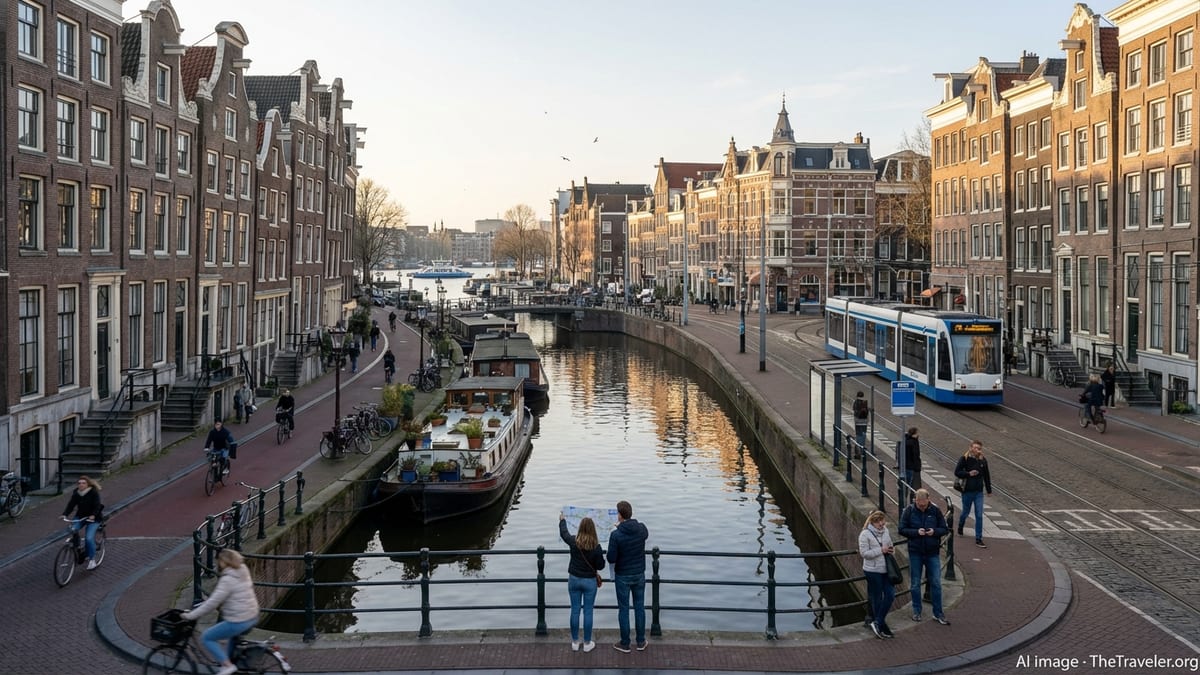
Germany Pivots to Water Tourism and Hidden Urban Canals
Germany’s tourism strategy for 2026 places growing emphasis on waterways, smaller historic cities and lesser known canal districts, aligning with broader European efforts to diversify travel away from a few overburdened hotspots. Recent campaign material from the German National Tourist Board highlights cityscapes threaded with rivers and canals, alongside new cross border itineraries built around inland waterways.
Among the locations drawing new attention are German towns long described in local travel coverage as “little Venices” for their dense canal networks and medieval cores. Cities such as Bamberg in Bavaria, Lübeck on the Baltic and Lübeck’s Hanseatic peers along the north coast are being promoted for their combination of waterways, merchant houses and walkable old towns that can absorb additional visitor numbers more easily than Venice’s compact historic center.
National campaigns are pairing these romantic images of bridges and quaysides with messaging focused on sustainable, slower travel. Promotional materials encourage visitors to explore on foot, by bike or via small boat on rivers and canals, rather than relying on large cruise vessels. The repositioning reflects demand from travelers for quieter alternatives that still deliver the atmosphere of historic Europe built on water.
Tourism analysts note that this shift coincides with a measurable rise in interest in secondary European cities. Industry resource guides produced for international trade partners present canal threaded German towns as part of a wider network of “hidden treasures,” suggesting that the country’s waterways can anchor longer, multi stop itineraries beyond the best known urban hubs.
Danube and Canal Corridors Marketed as New Water Highways
The Danube and the Main Danube Canal are emerging as central pillars in Germany’s effort to turn inland waterways into headline tourism products. A cross border initiative launched in early 2026 by tourism organizations in Germany, Austria and Hungary promotes the upper Danube as a continuous cultural route, linking riverfront cities and towns that share both trading history and contemporary cultural scenes.
The project’s published material positions the Danube not just as a classic river cruise destination but as a flexible corridor where travelers can combine boat trips with rail journeys, cycling routes and overnight stays in riverbank cities. German stretches of the river between Ulm, Regensburg and Passau are highlighted as compact zones where visitors can experience historic bridges, canal locks and old harbors within relatively short travel distances.
Beyond the Danube itself, regional tourism boards are tying in the Main Danube Canal, which connects the North Sea and the Black Sea basins via a chain of rivers and artificial waterways. Cruise and bike barge operators already use the canal to move between the Rhine, Main and Danube, and recent brochures for the 2025 and 2026 seasons foreground stopovers in canal focused towns such as Bamberg and Nuremberg, where quays, towpaths and lock systems are integral elements of the visitor experience.
These linked corridors are increasingly marketed as alternatives to overcrowded Mediterranean coastal routes. Industry publications frame them as “beyond the boat” journeys, in which canals are both transport routes and backdrops for local food, industrial heritage and contemporary culture in mid sized European cities.
Lusatian Lakeland Turns Coal Pits into a New Canal Landscape
One of the most striking examples of Europe’s emerging water destinations lies in eastern Germany’s Lusatian Lakeland, where a former open cast mining region is being transformed into a vast, interconnected water landscape. According to recent coverage by European travel media, a milestone in this decades long redevelopment was scheduled for late June 2026, when several artificial lakes were to be fully linked by navigable canals.
The network, including Lake Senftenberg, Lake Geierswald, Lake Partwitz, Lake Sedlitz and Lake Großräschen, is set to form one of Europe’s largest continuous artificial water areas. A newly created canal, the Ilse Canal to Lake Großräschen, has drawn particular interest because of its engineering features, passing under railway lines and a major road as it connects previously separate basins.
Local tourism statistics cited in the same reporting show that overnight stays in the area have already been rising as new marinas, beaches and cycling paths are built around the lakes. Regional plans call for canals to carry small leisure craft between resort villages, nature reserves and former industrial sites that have been repurposed as cultural venues, reshaping Lusatia as an inland alternative to traditional coastal or lagoon based holidays.
The development also aligns with broader European goals to reclaim post industrial landscapes for sustainable tourism. By turning mining voids into navigable waterways, planners aim to disperse visitor flows across a wider territory, while giving travelers a new kind of canal experience that contrasts with the dense urban canals of older cities.
Beyond Venice: New Canal Icons Across Europe
Outside Germany, other European countries are similarly promoting their own canal and backwater cities as visitors look for destinations with Venice like appeal but fewer crowds. Travel features published in 2026 point to a growing list of towns that have long lived in the shadow of larger capitals and are now emerging as headline attractions in their own right.
In the Low Countries, medieval cores lined with canals in cities such as Bruges and Ghent continue to feature prominently in international travel roundups. At the same time, smaller Dutch and Belgian towns are being singled out for their tranquil waterways, compact centers and ability to accommodate overnight tourism instead of the day trip focus that characterizes much of the visitor economy in Venice.
In Central and Eastern Europe, destinations from Slovenia to Poland are working similar angles, highlighting riverside and canal adjacent districts that combine historic warehouses, repurposed industrial buildings and new cultural venues. Tourism trend pieces describe these areas as “hidden gems” compared with the well publicized canals of Amsterdam and Venice, yet increasingly accessible thanks to expanded rail links and regional airports.
Observers of the sector note that this diffusion of interest has been accelerated by digital recommendation tools, which often surface lesser known canal towns based on traveler preferences for smaller crowds, walkability and scenic waterfronts. As a result, a wider range of European cities is beginning to share in the economic benefits of water based tourism.
Campaigns Target Travelers Seeking Quieter Waterbound Escapes
For national and regional tourism boards, the renewed focus on canal and lakeside cities reflects not only environmental and capacity concerns but also changing traveler behavior. Surveys and booking data cited in industry reports indicate that many visitors now seek multi stop itineraries that blend well known cities with smaller, slower paced destinations.
Germany’s 2026 campaigns, for example, group major hubs with secondary towns that feature riverside promenades, harbors and canal quarters, inviting visitors to spend more nights in places that previously saw mainly day trip traffic. Trade guides emphasize that these locations offer historic architecture, local gastronomy and cultural events comparable to larger cities, but with more space on towpaths, bridges and waterfront terraces.
Across Europe, similar messaging is emerging from national tourism organizations and private operators. New brochures present canal themed routes that combine barge cruising, cycling, walking and short rail hops, positioning inland waterways as the spine of sustainable itineraries. From reimagined mining lakes in Germany to revived Hanseatic harbors and compact canal cities in the Low Countries and Central Europe, the continent’s water landscapes are being reframed as an alternative network of city breaks.
As the summer 2026 season progresses, the success of these strategies will be measured in how effectively visitor numbers spread beyond a handful of iconic sites. For now, the concerted promotion of hidden canal cities suggests that Europe is serious about offering travelers waterbound experiences that no longer begin and end in Venice.