


More news on this day
The Philippines’ tourism rebound is gathering pace as Cebu Pacific revives key China services and reinforces its Japan network, aligning fresh air links with a broader surge in international arrivals to the country.
Get the latest news straight to your inbox!
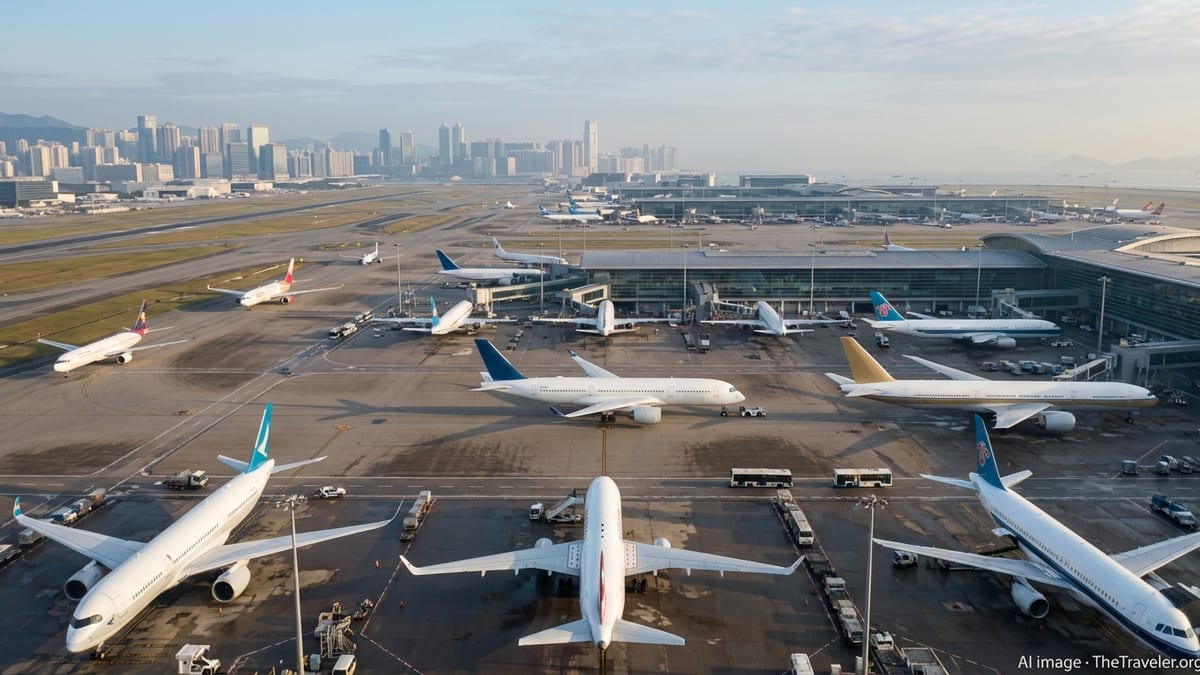
Cebu Pacific Revives Xiamen Link and Deepens China Network
Cebu Pacific is restoring nonstop service between Manila and Xiamen, reconnecting one of the Philippines’ most important coastal gateways in mainland China with its primary international hub. Publicly available schedules indicate the route will return as part of the airline’s wider rebuilding of its China portfolio, after pandemic-era suspensions and a gradual restart of flights to major cities including Shanghai and Guangzhou.
The Xiamen resumption is expected to provide additional options for both leisure travelers and overseas Filipino workers moving between Southeast China and the Philippines. Xiamen has traditionally been a strong source of visiting friends and relatives traffic, and industry observers view the restored connection as an important feeder for secondary destinations across the Philippine archipelago via Manila.
Capacity growth on China routes is also seen as a response to the Philippines’ recent policy steps to woo Chinese travelers, including relaxed entry measures and targeted marketing campaigns. Tourism-focused analysis notes that Chinese visitor numbers, while still below pre-pandemic peaks, remain a critical component of Manila’s goal to restore and eventually surpass its former eight-million-arrivals benchmark.
Analysts point out that additional flights from Cebu Pacific and other regional carriers could help unlock pent-up demand, especially as more Chinese cities regain direct links to Philippine beaches and business centers. The Xiamen service sits within a competitive landscape that now includes expanded services from Chinese airlines to Manila and Cebu, underscoring renewed confidence in the market.
Japan Routes Bolster a High-Growth Source Market
Alongside its China moves, Cebu Pacific is consolidating and expanding its presence in Japan, one of the Philippines’ fastest-growing visitor markets. The low-cost carrier already operates multiple routes from Manila and Cebu to Tokyo, Osaka, Nagoya and Fukuoka, complemented by services from other Philippine airlines and Japanese partners that collectively give travelers a dense web of options.
Recent schedule adjustments show Cebu Pacific fine-tuning capacity on these Japan routes, temporarily trimming some frequencies during off-peak periods while maintaining a strong footprint on key city pairs such as Manila–Tokyo and Cebu–Osaka. Aviation trackers interpret this as a sign of disciplined capacity management rather than a retrenchment, positioning the carrier to scale up quickly when seasonal or event-driven demand returns.
Tourism data for 2025 and early 2026 highlight Japan as a solid third-place source of visitors to the Philippines, trailing only the United States and South Korea. Industry reports emphasize that Japanese travelers spend relatively more per trip than many regional counterparts, making them a prized segment for resort operators, dive centers and urban hotels in Metro Manila, Cebu, Davao and emerging island destinations.
With Cebu Pacific’s Japan network anchored in both Manila and Cebu, tourism planners see opportunities to distribute visitors beyond already popular hotspots. Better connectivity to central and western Japan, in particular, is viewed as a way to tap into new regional markets, including younger independent travelers drawn to budget-friendly flights and beach destinations within a short haul of their home airports.
Surging Arrivals Signal a New Phase for Philippine Tourism
Latest government and industry figures show the Philippines has entered a new phase of tourism recovery, with 2025 international arrivals surpassing 6.4 million and early 2026 data pointing to further growth. While still below the record levels seen before the pandemic, the trend marks a sustained improvement after years of disruption and travel restrictions.
Reports from the Bureau of Immigration and the Department of Tourism highlight strong inflows from the United States, South Korea and Japan, along with recovering numbers from China, Australia and Canada. Analysts note that the visitor mix is becoming more diversified, with long-haul markets in North America and Europe gradually complementing the traditional Northeast Asian base.
Economists tracking the sector link the rebound to a combination of a weaker Philippine peso, pent-up travel demand, and expanded air connectivity. Low-cost carriers such as Cebu Pacific play an outsized role in this picture, accounting for a large share of regional capacity and offering frequent services that make short-break travel more accessible to mid-market tourists.
Tourism’s wider economic footprint is also growing, with recent studies underscoring its contribution to employment, local transport, retail and food services. As more international routes are restored or launched, the sector is expected to remain a key pillar of the Philippines’ post-pandemic growth strategy.
China and Japan Connectivity Reshapes Competitive Landscape
Cebu Pacific’s renewed emphasis on China and Japan is unfolding against a backdrop of intensifying competition among airlines serving the Philippines. Flag carrier Philippine Airlines has rebuilt its own network to major Chinese cities and maintains a robust Japan schedule, while foreign operators from both countries continue to adjust capacity in response to demand and geopolitical dynamics.
Industry commentary suggests that expanded connectivity to China and Japan is not only about inbound tourism but also about capturing outbound travel from Filipinos. Growing middle-class demand for shopping, study tours, medical travel and family visits in East Asia is encouraging carriers to vie for market share, with pricing and schedule convenience as primary battlegrounds.
At the same time, the revival of routes like Manila–Xiamen complements broader regional initiatives to facilitate cross-border mobility within Asia. Economic and cultural exchanges between the Philippines, China and Japan are increasingly reliant on reliable, high-frequency air links, and airlines that can sustain these connections are seen as important enablers of trade and investment.
Observers caution, however, that the market remains sensitive to external shocks such as currency swings, public health developments and diplomatic tensions. Airlines operating in this corridor are expected to remain flexible, using seasonal adjustments and fleet redeployments to balance risk while preserving the long-term strategic value of their China and Japan networks.
Prospects: From Route Resumptions to New Gateways
Looking ahead, Cebu Pacific’s revival of the Xiamen route and continued focus on Japan form part of a broader strategy to position the Philippines as a convenient hub between Southeast and Northeast Asia. Planned additions from Cebu to cities in China and Japan, alongside resumed services to other Asian markets, suggest the carrier is betting on sustained regional mobility and rising intra-Asia tourism.
Tourism planners and aviation analysts expect more secondary Chinese and Japanese cities to enter the Philippine route map over the medium term, especially as airports in Cebu, Clark and other regional gateways expand capacity. Such moves could ease pressure on Manila’s congested terminals while giving visitors more direct access to resort regions in the Visayas and Mindanao.
For travelers, the growing menu of direct flights means shorter journeys and more competitive fares, particularly during seat sales that have become a hallmark of the Philippine low-cost sector. For the country’s tourism industry, each additional route underscores a broader narrative: a travel boom increasingly powered by regional connectivity, with Cebu Pacific’s renewed links to China and Japan at the heart of the story.