


More news on this day
Germany’s skies are set for a shake-up in 2026 as Lufthansa joins Eurowings, Condor, Discover Airlines and Ryanair in rolling out new routes and added capacity, pointing to a decisive reshaping of the country’s air travel landscape.
Get the latest news straight to your inbox!
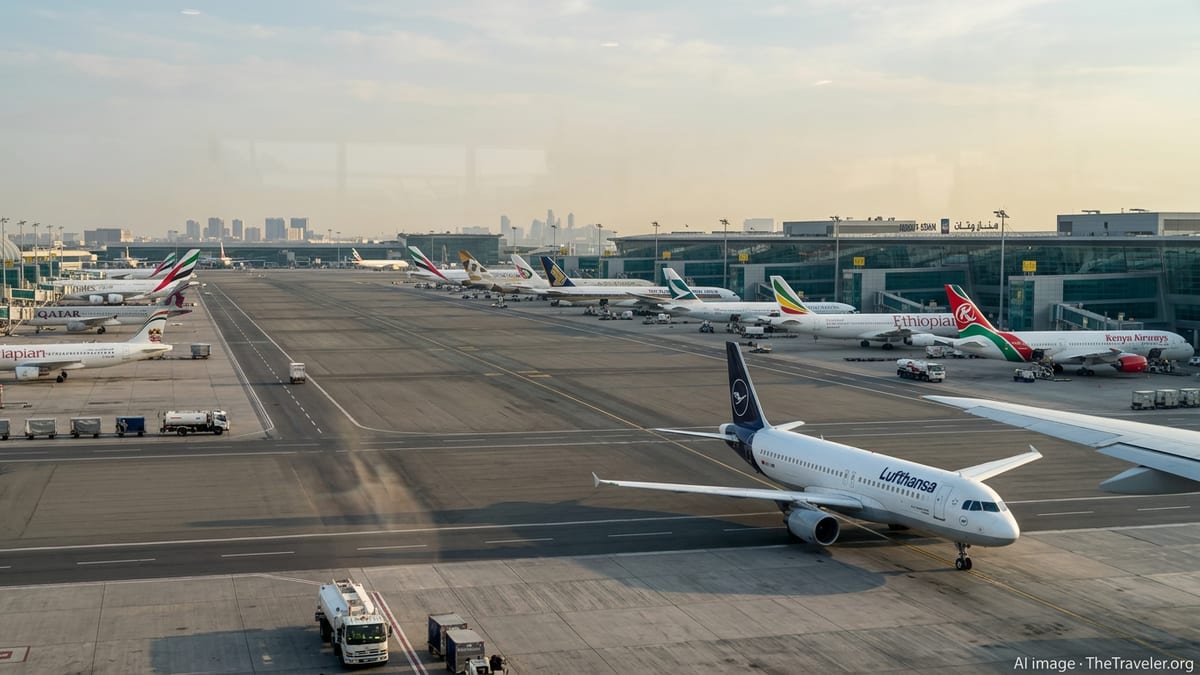
Lufthansa Targets Long Haul Growth and Hub Strength
Lufthansa is positioning 2026 as a year of renewed long haul growth, with publicly available planning data indicating an expected increase of around 6 percent in supply on intercontinental routes. Reporting on the group’s strategy highlights that this expansion is tied to a steady inflow of new widebody aircraft, which will allow more nonstop connections from Germany and other home markets to key business and leisure destinations.
Network information published by the Lufthansa Group shows that the airline is using its newest aircraft, including Boeing 787 9s and upgraded Airbus widebodies, to reinforce Frankfurt and Munich as intercontinental hubs in the 2025 2026 winter season and into summer 2026. Additional frequencies on existing routes and the opening of new long haul city pairs are aimed at recapturing premium traffic while also catering to rising leisure demand.
One headline example for 2026 is the launch of nonstop Frankfurt services to Kuala Lumpur, which external coverage notes will make Lufthansa the sole operator of direct flights between Germany and Malaysia. Combined with capacity growth on North American and Asian routes, the move underscores how the group is betting on long haul connectivity rather than restoring the dense domestic network that existed before the pandemic.
At the same time, the group is deepening its feeder strategy. Lufthansa City Airlines, which began ramping up operations from Munich and Frankfurt in 2024 and 2025, is expanding its European network into 2026 with Airbus A320neo aircraft. Published route maps and industry analysis describe the new regional subsidiary as a core element in channeling passengers from secondary European cities into Lufthansa’s long haul banks at the German hubs.
Eurowings Expands Leisure and City Links for 2025 2026
While Lufthansa focuses on global connections, Eurowings is widening its footprint across Europe and selected medium haul markets. Announcements from the carrier in late 2025 describe new long haul leisure links for the winter 2025 2026 season, alongside additional medium haul destinations from German bases as demand for sun and city breaks remains robust.
News releases for 2026 indicate that Eurowings is adding summer routes from Berlin and other regional airports to Southern European beaches, “coolcation” destinations and secondary cities. The airline is also growing point to point offerings from airports such as Hannover, with new flights to Milan Malpensa in winter 2025 2026, and has signaled an intention to strengthen its presence in markets including the Gulf region and North Africa.
The expansion comes as Eurowings continues to position itself as a value focused carrier within the Lufthansa Group, targeting price sensitive travelers who still seek a degree of service differentiation. A recent environmental and corporate report from the airline highlights an enlarged fleet of Airbus A320 family aircraft, including fuel efficient A320neo and A321neo jets, which are being deployed on newly opened routes and higher frequency city pairs.
For passengers, the result in 2026 will be more direct options between German regional airports and increasingly diverse destinations, often bypassing the main Frankfurt and Munich hubs. That strategy, mirrored by several competitors, is central to what observers are calling a structural shift in how Germans access both nearby European cities and mid haul leisure hotspots.
Condor and Discover Airlines Double Down on Holiday Traffic
Leisure specialists Condor and Discover Airlines are also scaling up for 2026, further intensifying competition for German holidaymakers. Condor’s timetable publications for the 2025 2026 winter season reveal an expanded network from Frankfurt, Berlin and Stuttgart to warm weather destinations in the Middle East, Africa, the Caribbean and Southeast Asia.
A notable highlight is the introduction of a daily Stuttgart Dubai service and a second daily Berlin Dubai flight for winter 2025 2026, making Condor a major player on the German United Arab Emirates market. The airline is also increasing frequencies from Frankfurt to Bangkok, Phuket and Cape Town, as well as maintaining new services to Panama City into the winter season, positioning itself as a bridge between German cities and long haul leisure destinations.
Condor’s published plans for summer 2026 show a broad mix of around 40 short and medium haul destinations and more than 30 long haul routes, supported by a modernizing fleet and new headquarters in Frankfurt’s Gateway Gardens district. The carrier has even re entered selected domestic German routes from March 2025, reinforcing its role as an alternative to the Lufthansa Group on certain city pairs.
Discover Airlines, the Lufthansa Group’s dedicated leisure brand, is following a similar path, with its own network pages showcasing incremental new destinations through 2025 and into 2026. From its bases in Frankfurt and Munich, the airline is adding Mediterranean, Atlantic island and long haul resort destinations, while planning a refreshed cabin product on its Airbus A330 fleet later in the decade. Together, Condor and Discover are ensuring that the 2026 holiday market from Germany is more competitive than it has been in years.
Ryanair’s Aggressive German Push Reshapes Short Haul
Overlaying these developments is Ryanair’s continuing push into the German market, where the low cost carrier has been rebuilding capacity and opening new routes from bases such as Berlin, Cologne Bonn, Memmingen and Nuremberg. Company schedules and external reporting for 2025 and 2026 point to a strategy focused on high utilization of Boeing 737 aircraft and aggressive pricing on routes that directly compete with legacy and leisure carriers.
Ryanair has repeatedly emphasized its ambition to expand in markets where airport fees and slot availability allow for growth, and Germany fits that description as traffic continues to recover and infrastructure projects come online. New and restored routes from German airports to Southern Europe, the United Kingdom and Central and Eastern Europe are expected to continue through the 2026 summer season, with the airline targeting cost conscious city break and visiting friends and relatives traffic.
This competitive pressure is already influencing how German carriers plan their networks. Industry analysis suggests that Lufthansa Group’s reduced reliance on domestic feeder flights and its focus on long haul yield management is partly a response to intense low cost competition on short haul routes. At the same time, Eurowings is expected to defend key bases with expanded frequencies and targeted new destinations that match Ryanair’s appeal but offer closer integration with the wider Lufthansa ecosystem.
For travelers, the presence of a strong ultra low cost rival means greater fare dispersion on many German routes in 2026, with promotional offers and ancillary options shaping final ticket prices. It also accelerates the trend toward more non hub point to point flights from secondary airports, a pattern that continues to erode the dominance of any single carrier on domestic and intra European sectors.
A New Balance of Power in Germany’s Skies
Taken together, these route announcements and capacity plans point to a new balance of power in Germany’s air travel market by the end of 2026. Lufthansa is reinforcing its role as a global network carrier centered on Frankfurt and Munich, supported by Lufthansa City Airlines and Discover Airlines to feed and complement long haul traffic. Eurowings operates as a flexible bridge between the group’s premium positioning and the price driven realities of short and medium haul demand.
Condor, reinvigorated and expanding on both short haul and long haul leisure routes, is competing directly for holiday travelers who might once have booked automatically with the Lufthansa Group. Ryanair, through scale and cost leadership, is pressing its advantage on domestic and European routes where passengers are less concerned about full service frills.
By mid decade, travelers from Germany can expect a denser mesh of direct routes, more differentiated cabin and fare options, and sharper competition across almost every segment of the market. The 2026 schedules already visible in airline timetables and planning documents suggest that this is not a temporary post pandemic adjustment, but the emergence of a new, more fragmented and choice rich era in German aviation.