


More news on this day
A rapidly escalating jet fuel crunch linked to the Iran conflict and the effective closure of the Strait of Hormuz is rippling through aviation markets from Europe to the Gulf, forcing airlines in the United States, China, the United Kingdom, Turkey, France and the United Arab Emirates to pare back operations and rethink capacity plans as fuel costs surge and concerns over physical shortages mount.
Get the latest news straight to your inbox!
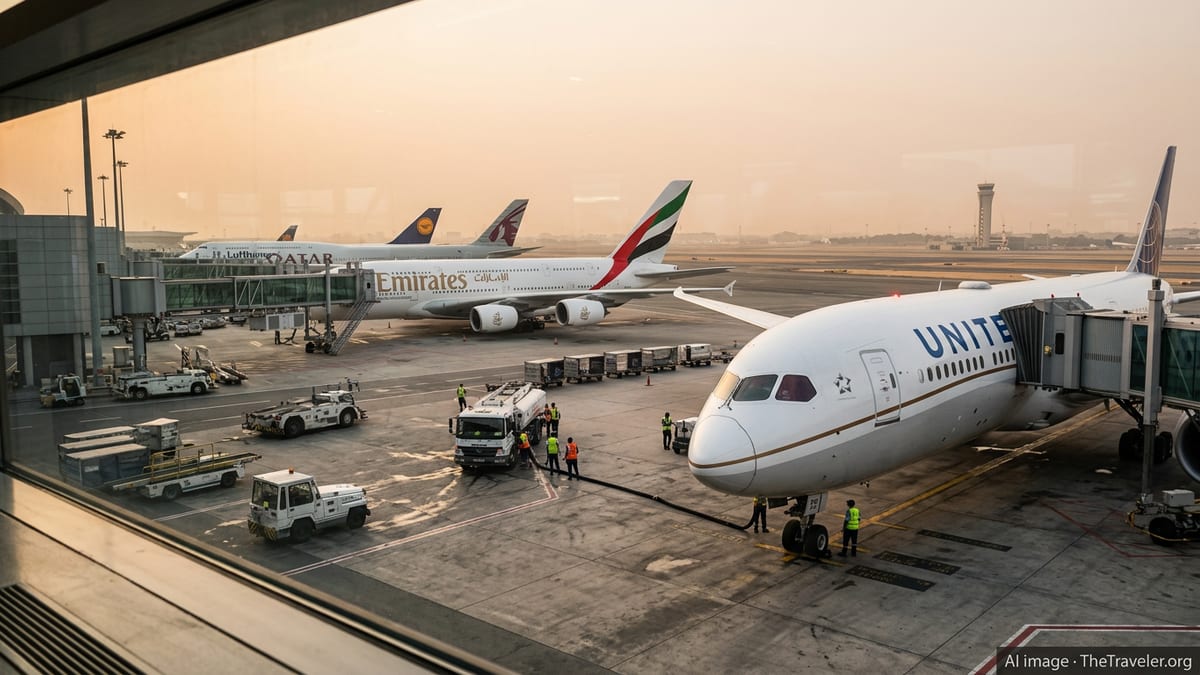
Middle East Conflict Pushes Fuel Markets Into Turbulence
Jet fuel prices have more than doubled since hostilities involving Iran intensified and traffic through the Strait of Hormuz was severely curtailed, according to multiple industry and energy market assessments. The chokepoint normally carries roughly one fifth of global seaborne oil and refined products, making its disruption a critical shock to aviation fuel supplies and pricing worldwide.
Energy and aviation analysts report that wholesale jet fuel prices in Europe and parts of Asia have climbed far faster than underlying crude benchmarks, reflecting the scramble to replace lost Middle Eastern supply. Trade data cited in recent coverage shows European buyers turning to longer haul imports from the United States and South Korea, while refiners attempt to reconfigure output in favor of aviation fuel to ease the shortfall.
Industry risk assessments for 2026 highlight jet fuel availability as a central concern for airlines, warning that localized shortages at specific hubs could emerge if the conflict drags on. These reports point to a tight balance between stocks in storage and expected summer travel demand, especially in Europe and key long haul transfer markets.
Reports from several European airports in recent weeks describe precautionary restrictions and operational adjustments designed to conserve fuel, including tanker operations where aircraft uplift extra fuel at better supplied locations to reduce dependence on constrained hubs. The pattern underscores how a geopolitical shock in the Gulf has quickly translated into logistical stress across global airline networks.
Europe and the UK Trim Capacity as Reserves Come Under Strain
European carriers have moved early to insulate their finances from the fuel shock, cutting seats and consolidating frequencies on selected routes. Published schedule analysis indicates that about two million airline seats were removed from May timetables, a relatively small share of global capacity but an important signal of growing caution as summer approaches.
According to coverage in European business and energy outlets, airlines based in Germany, France and Scandinavia have already pared back some services, particularly on marginal or shoulder period flights where fuel adjusted economics no longer justify full schedules. Some carriers are also shifting capacity toward more fuel efficient aircraft types where available.
Data compiled from customs and statistics agencies suggests that jet fuel stocks in major European economies including Germany, Italy, France and the United Kingdom remain sufficient for several months of operations at current consumption levels, but drawdowns are accelerating. Analysts quoted in recent reports caution that if the Strait of Hormuz remains effectively closed, Europe could face more significant shortages later in the peak season, forcing deeper cuts or emergency rationing at certain hubs.
UK authorities have granted airlines additional flexibility to consolidate flights on popular routes, allowing carriers to merge services and protect connectivity while reducing the overall number of fuel intensive movements. Publicly available information indicates that regulators across the continent are preparing contingency plans should the squeeze intensify.
UAE and Gulf Carriers Navigate Supply Risks With Hedging and Pipelines
The United Arab Emirates occupies a unique position in the current crisis, acting both as a major energy producer and as the home base for some of the world’s largest long haul carriers. The country benefits from pipeline infrastructure that can bypass the Strait of Hormuz, including routes to the port of Fujairah on the Gulf of Oman, which allows crude and refined products to reach global markets without transiting the chokepoint.
Publicly available commentary from aviation sector analysts notes that Gulf carriers, including Emirates, have adopted extensive fuel hedging programs and diversified supply agreements to manage both price and volume risk. In earnings disclosures this month, Emirates reported that it has locked in a substantial share of its future fuel needs and secured physical volumes to support current operations and planned growth, even as global prices spike.
At the same time, wider industry coverage shows that airlines based in the UAE and neighboring states are not immune to network disruptions driven by the broader fuel shock. Regional hubs are seeing altered traffic flows as European and Asian carriers adjust schedules, and there is growing scrutiny of how Gulf airports would respond if fuel availability tightened despite the logistical advantages of local production and pipelines.
Travel forums and regional news outlets reflect heightened concern among passengers about the security of long haul trips transiting the Gulf during the crisis. While there is no evidence of systemic fuel shortages at major UAE airports so far, the country’s inclusion in broader assessments of jet fuel risk highlights how interconnected the global aviation energy system has become.
US, European and Chinese Airlines Scale Back Growth Plans
Major network airlines in the United States, Europe and China are responding to the fuel shock with a combination of targeted capacity cuts, higher surcharges and efficiency measures. Financial disclosures and analyst briefings from Delta Air Lines indicate that the carrier expects more than 2 billion dollars in additional fuel costs through mid year, prompting a “meaningful” reduction in planned capacity and the removal of certain flights where fuel adjusted returns fall short.
Delta and other US carriers have already increased checked baggage fees and refined pricing strategies in an effort to offset cost pressures, while trimming overnight and midweek services that are more vulnerable to demand fluctuations. Trade publications and investor reports describe this as a structural reset in how airlines evaluate each route, embedding fuel costs more directly into scheduling decisions.
In Europe, reports indicate that Air France KLM and Germany’s Lufthansa have dropped some flights from their summer programs, citing elevated fuel prices and uncertainty around supply. Industry data also shows that British Airways and other UK based airlines are consolidating frequencies on selected city pairs and prioritizing higher yielding routes where demand remains robust despite higher fares.
In China, state owned carriers including Air China and China Southern Airlines have raised domestic fuel surcharges in recent weeks in response to surging oil prices linked to the Iran conflict. Chinese aviation coverage notes that while domestic demand remains relatively strong, higher operating costs are squeezing margins and limiting the pace at which airlines can restore or expand international networks.
Travelers Confront Higher Fares, Tighter Networks and New Uncertainty
For passengers, the jet fuel crunch is most visible in higher airfares, fewer flight options on some routes and rising uncertainty about schedule reliability. Fare trackers and consumer travel outlets report broad based price increases on transatlantic and transpacific services, along with selected cuts to secondary routes where demand may not support higher ticket prices.
Several airlines, including Delta in the United States and major European carriers, are emphasizing their efforts to protect core connectivity and avoid mass cancellations. Publicly available statements stress that capacity reductions are being applied “surgically” to minimize disruption, yet schedule data confirms that travelers in smaller markets and on off peak flights are bearing the brunt of the adjustments.
Travel agencies and online booking platforms are advising customers to build in more flexibility, including longer connection times and greater openness to alternative routings, as airlines fine tune networks around fuel constraints. Reports suggest that same day rebooking is becoming more complex in some regions where spare capacity has been reduced.
Aviation economists warn that if the Middle East conflict and associated fuel market disruptions persist well into the peak northern summer, airlines may be forced into a second round of deeper capacity cuts, potentially affecting flagship carriers in Germany, Turkey, the United Kingdom, France, China and the United States. For now, the industry is attempting to balance fragile profitability with the need to preserve connectivity, as the global jet fuel emergency tests the resilience of airline business models and the patience of travelers alike.