


More news on this day
Across continents, luxury rail journeys are surging in popularity as travelers trade speed for scenery, seeking heritage carriages, fine dining and days spent rolling through dramatic landscapes instead of rushing between airports.
Get the latest news straight to your inbox!
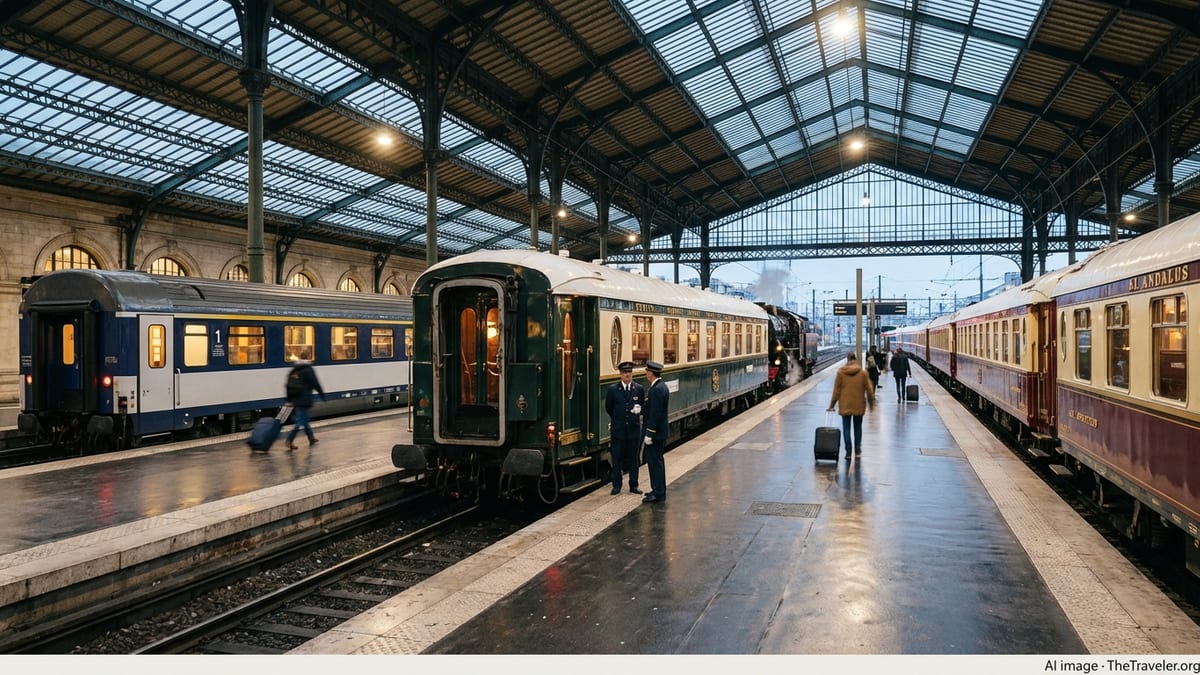
Slow travel demand fuels a luxury rail boom
Recent industry data and travel company reports indicate that luxury rail is one of the fastest growing corners of the travel market as interest in slow, lower-impact journeys rises. Rail specialists at Railbookers describe 2024 as a record year, with sales for luxury train itineraries reportedly up by around 30 percent year over year, while a separate analysis linked to the Global Wellness Summit noted a more than 40 percent increase in luxury rail travel between 2023 and 2024. Public coverage of the sector also underscores that these trips often sell out months in advance, particularly in higher cabin categories.
Analysts point to several factors behind the surge. Travelers are increasingly looking for itineraries where the journey is a central part of the experience, not simply a way to reach a destination. Rail operators and tour companies have responded with multi-day routes that prioritize comfort and landscape views over speed, typically cruising at modest track speeds and timing daylight segments for the most dramatic scenery. The result is a style of travel positioned as both an alternative to short-haul flights and as an immersive, hotel-style stay on rails.
Published coverage from lifestyle and business outlets suggests that this renewed appetite is global rather than regional. Interest is rising simultaneously in Europe, Asia, the Americas and parts of Africa, supported by a pipeline of new trains and refurbished heritage rolling stock. The trend is also feeding into broader consumer shifts toward experiential travel and lower-carbon options, even as these ultra-luxury products remain aimed at a high-spend niche.
Heritage icons revived for a new generation
Some of the most visible symbols of rail’s slow-travel renaissance are historic brands that have been restored and expanded for contemporary audiences. Belmond’s Venice Simplon-Orient-Express, composed of 1920s and 1930s carriages, continues to run classic overnight journeys between London, Paris and Venice, traversing the Alps and the Venetian lagoon. Company statements and media profiles describe how original Art Deco cars have been updated with new suite categories and even a private observatory carriage, while maintaining period detailing that evokes rail’s so-called golden age.
Elsewhere, Belmond’s Eastern & Oriental Express in Southeast Asia has returned to service after a multi-year pause, with two seasonal itineraries out of Singapore that loop through Malaysia. Media coverage highlights jungle-fringed tracks, coastal views and excursions to historic towns as key elements of these journeys, which are marketed as a way to experience the region’s landscapes at a measured pace. The relaunch forms part of a wider strategy by heritage-focused rail operators to invest in refurbishments and more varied routing rather than brand-new high-speed hardware.
In the United Kingdom, Belmond’s newest project extends this heritage-led approach to a different set of landscapes. The Britannic Explorer, billed in the company’s announcements as the first dedicated luxury sleeper train serving England and Wales, is scheduled to begin operations in July 2025. Itineraries released so far outline three- and six-night loops that take guests to the Lake District, Cornwall and coastal or cathedral cities across Britain, pairing vintage-inspired interiors with excursions that focus on local culture and scenery.
New global routes knit together continents
Alongside individual heritage trains, complex global itineraries are redefining what slow rail travel can look like at scale. A 59-day “around the world by luxury train” journey assembled by Railbookers and profiled in business media combines seven different premium services across four continents and 12 countries. Public descriptions of the program indicate that guests move between North America, Europe, Africa and Asia using a mix of luxury trains and connecting flights, with the emphasis firmly on long, scenic rail segments and extended hotel stays en route rather than rapid point-to-point transfers.
Consumer travel magazines have also reported on one-off or inaugural journeys that stitch multiple train experiences into a single itinerary. One example highlighted in 2024 coverage involved a route beginning in Vancouver and linking several pre-existing luxury trains across continents in a single, weeks-long program. These highly curated trips are marketed as “grand tours” in the historical sense, with rail serving as both transport and moving observation deck through varied landscapes, from alpine passes to desert plateaus.
The appeal of these globe-spanning programs lies partly in their logistics. Tour organizers package rail, hotels, transfers and excursions into one product, removing complexity for travelers who might otherwise be daunted by cross-border timetables or language barriers. Industry commentary suggests that this bundled approach has broadened the audience for long-haul rail, attracting travelers who might previously have chosen cruise ships or escorted coach tours for similar multi-country experiences.
Italy and Southeast Asia spotlight slow travel by rail
Italy and Southeast Asia have emerged as focal points in the current wave of luxury rail launches, offering itineraries that combine gastronomy, heritage sites and distinct regional landscapes. Accor’s Orient Express La Dolce Vita project, developed under license of the historic Orient Express name, began operations in April 2025 according to company and news reports. The train, styled with 1960s Italian design cues, runs a series of roundtrip journeys from Rome that explore regions including Tuscany, Puglia and Sicily.
Publicly available information about La Dolce Vita’s schedules shows eight core itineraries, ranging from short overnight trips to multi-night circuits with experiences such as cave dining in Matera and vineyard visits in little-visited wine regions. The emphasis, according to promotional material and independent travel coverage, is on celebrating Italian art, architecture and food while moving at a relaxed pace between cities and countryside.
In Southeast Asia, the reborn Eastern & Oriental Express complements these Mediterranean itineraries with routes that trace palm-fringed coasts and forested interiors. Two recurring journeys, typically marketed for departures in specific seasons, carry passengers from Singapore through western Malaysia with stops that may include Penang, Langkawi-adjacent ports and smaller inland towns. The trains are configured with observation cars, dining cars and sleeper cabins that allow travelers to watch the scenery shift from metropolis to rice field and limestone karst without leaving their seats.
Landscape-focused itineraries redefine rail luxury
Across regions, the defining feature of this new generation of rail journeys is the way itineraries are built around landscapes rather than speed. Travel features and tour operator materials consistently emphasize daylight viewing of mountain ranges, coastlines and high plateaus, with schedules often adjusted to ensure that the most photogenic segments occur when guests are awake and at leisure. In Peru, for example, the Andean Explorer operated by Belmond is frequently cited for its route across the Altiplano between Cusco, Puno and Arequipa, passing high Andean lakes and wide grasslands in slow succession.
In the United Kingdom, the upcoming Britannic Explorer is being positioned as a way to immerse travelers in rural and coastal vistas that are difficult to experience from major highways, including national parks and smaller seaside towns. Elsewhere in Europe, long-standing luxury services such as the Venice Simplon-Orient-Express have added new seasonal routes to destinations like the Ligurian coast and Portofino, allowing passengers to wake to views of the Riviera after departing inland cities the previous evening.
Industry analyses suggest that this focus on scenery, combined with onboard amenities like multi-course regional menus and spa or wellness offerings, is reshaping perceptions of what counts as “luxury” in rail. Rather than chasing ever-faster transit times, operators are foregrounding unhurried movement through natural and cultural landscapes, aligning with travelers who view time, space and sensory immersion as the ultimate premium.
https://www.railbookersgroup.com/articles/luxury-train-travel-is-entering-another-golden-age
https://www.cntraveler.com/story/luxury-train-travel-is-entering-another-golden-age
https://www.railbookersgroup.com/global-wellness-summit-the-future-of-wellness-rail