


More news on this day
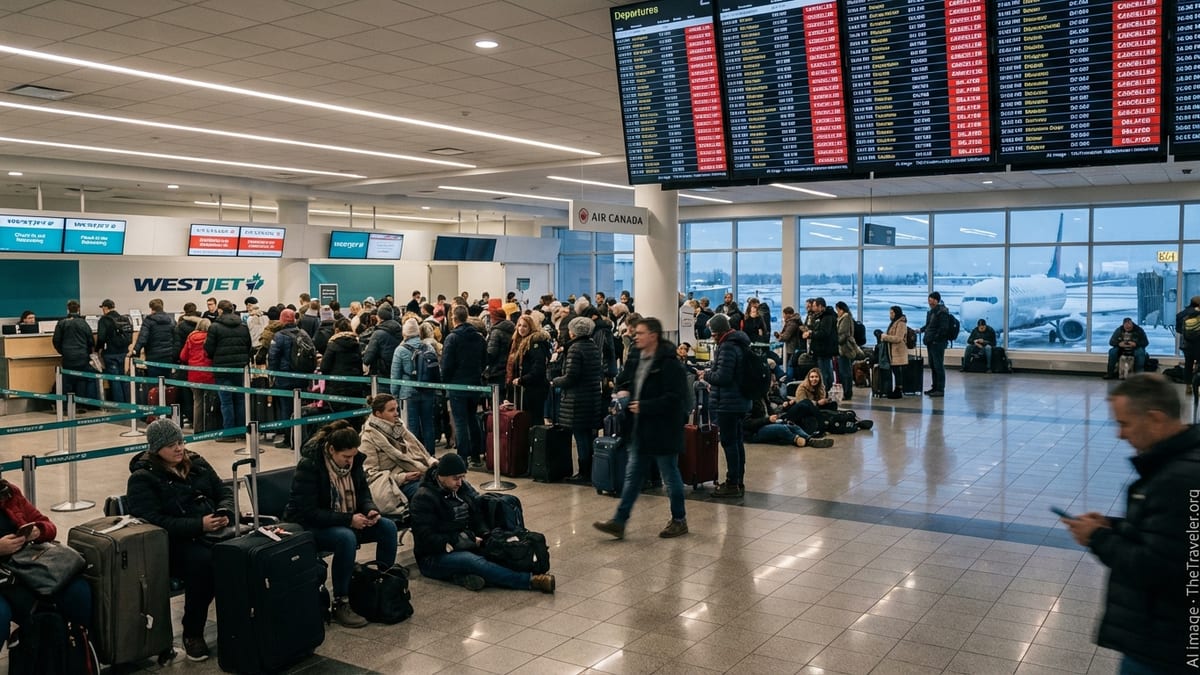
Regional carrier Air Borealis has cancelled multiple flights serving remote Labrador communities from Goose Bay, intensifying ongoing disruption at the key northern hub and leaving travelers scrambling for alternative routes.
Get the latest news straight to your inbox!
Fresh Cancellations Hit a Critical Northern Hub
The latest round of disruption centers on Happy Valley–Goose Bay’s CFB Goose Bay Airport, where Air Borealis operates many of the short regional hops that connect isolated Labrador communities with medical services, supplies and onward travel. Recent monitoring of flight-status and disruption-tracking sites shows a pattern of cancellations and delays on routes into and out of Goose Bay, affecting communities such as Nain, Rigolet, Natuashish and Churchill Falls.
Published coverage of Canada-wide disruption indicates that Air Borealis has repeatedly appeared among the carriers cancelling services during broader operational meltdowns. In several nationwide disruption events this spring, summaries of cancellations highlighted Goose Bay and small Labrador airstrips alongside large hubs, underscoring how problems in the national network can cascade quickly into the North.
Aviation schedule data shows Goose Bay handled a modest number of departures on some recent days, with regional flights still operating, but the overall pattern points to a strained schedule where even the loss of a few flights can have outsized consequences. For travellers in roadless communities, missing a single connection may mean delays measured in days instead of hours.
Remote Communities Face Renewed Travel Uncertainty
Air Borealis was created to serve Labrador’s most remote settlements, many of which have no road link to the rest of the province. Publicly available operator profiles describe the airline as a partnership rooted in Innu and Inuit communities, headquartered in Happy Valley–Goose Bay and operating small turboprops suited to short, rugged airstrips. That fleet is heavily utilized, which limits the ability to absorb schedule shocks when weather, crew availability or technical issues arise.
Airport reports and recent media coverage describe repeated instances where cancellations at Goose Bay and nearby airfields have disrupted what are effectively lifeline services. Even a handful of grounded flights can postpone medical appointments, interrupt cargo deliveries and force passengers to pay for extra nights of accommodation while they wait for the next available seat.
During major disruption days earlier this year, travel industry roundups counted dozens of cancellations across Canada and singled out Air Borealis among the affected carriers. Those accounts pointed to Goose Bay as one of several northern points where near-total service interruption occurred for part of the day, temporarily severing links to southern hubs and other Labrador communities.
Part of a Wider Pattern of Canadian Flight Disruptions
The cancellations at Goose Bay come against a backdrop of repeated turbulence across Canada’s aviation network. In the first half of 2026, multiple operational breakdowns triggered hundreds of delays and dozens of cancellations nationwide, affecting airlines from major carriers to small northern operators. Labrador’s regional links were repeatedly swept up in those events.
Travel and aviation analysts have noted that Canada has comparatively lower overall flight volumes than some larger markets, yet disruption levels can be disproportionately high during weather events, holiday peaks or system failures. When hubs in southern Canada struggle, smaller carriers like Air Borealis can face downstream impacts ranging from aircraft rotation issues to crew scheduling problems that ultimately manifest as cancelled regional legs.
For passengers, the result at Goose Bay has been recurring uncertainty. Some flights depart on time while others vanish from departure boards with little warning. Publicly accessible delay trackers and news summaries show that on several recent high-disruption days, Goose Bay featured among airports with clusters of cancelled regional services.
What Stranded Travelers Are Being Advised to Do
Consumer-rights organizations and travel advisories covering Canada’s recent disruptions recommend that passengers caught up in cancellations at Goose Bay document their situation carefully and stay in close contact with their airline through official channels and mobile apps. Because regional networks offer few alternative flights, rebooking can take longer than in major cities, making early communication crucial.
Guides on Canadian flight-disruption rules explain that compensation and care obligations vary depending on the cause of the cancellation, the size of the carrier and whether the issue is considered within the airline’s control. In practice, that means travellers on Air Borealis services may have different entitlements than those flying on larger national airlines, regardless of the level of inconvenience.
Travel experts also encourage passengers heading to or from remote Labrador destinations to build extra buffer time into itineraries, particularly when connecting to long-haul international flights or time-sensitive events. With cancellations repeatedly affecting Goose Bay and other northern stops, tight same-day connections carry higher risk than usual.
Calls for More Resilient Regional Connectivity
The wave of Air Borealis cancellations at Goose Bay is feeding a broader debate about how resilient Canada’s regional air links really are. Annual reports from the Goose Bay airport authority point to steady or growing demand for services that connect Labrador communities, even as carriers grapple with thin margins, older aircraft and extreme operating conditions.
Analysts tracking northern aviation argue that a system where a single small airline serves as the main connector between multiple isolated communities is highly vulnerable to disruption. When that carrier cancels several flights in quick succession, the impact extends well beyond frustrated tourists to touch freight chains, health access and the movement of essential workers.
For now, publicly available information suggests that Goose Bay’s schedule remains in flux, with some Air Borealis services operating and others cancelled outright. As the summer travel season continues, travellers across Labrador will be watching departure boards closely, hoping that the latest spate of cancellations proves to be a temporary setback rather than a sign of deeper, ongoing instability in the region’s air network.