


More news on this day
Air travel across Australia and New Zealand has been heavily disrupted as major carriers including Qantas, Virgin Australia, Jetstar and Air New Zealand grapple with a fresh wave of operational problems, contributing to hundreds of delays and dozens of cancellations at key hubs in Melbourne, Sydney, Auckland, Christchurch and Wellington.
Get the latest news straight to your inbox!
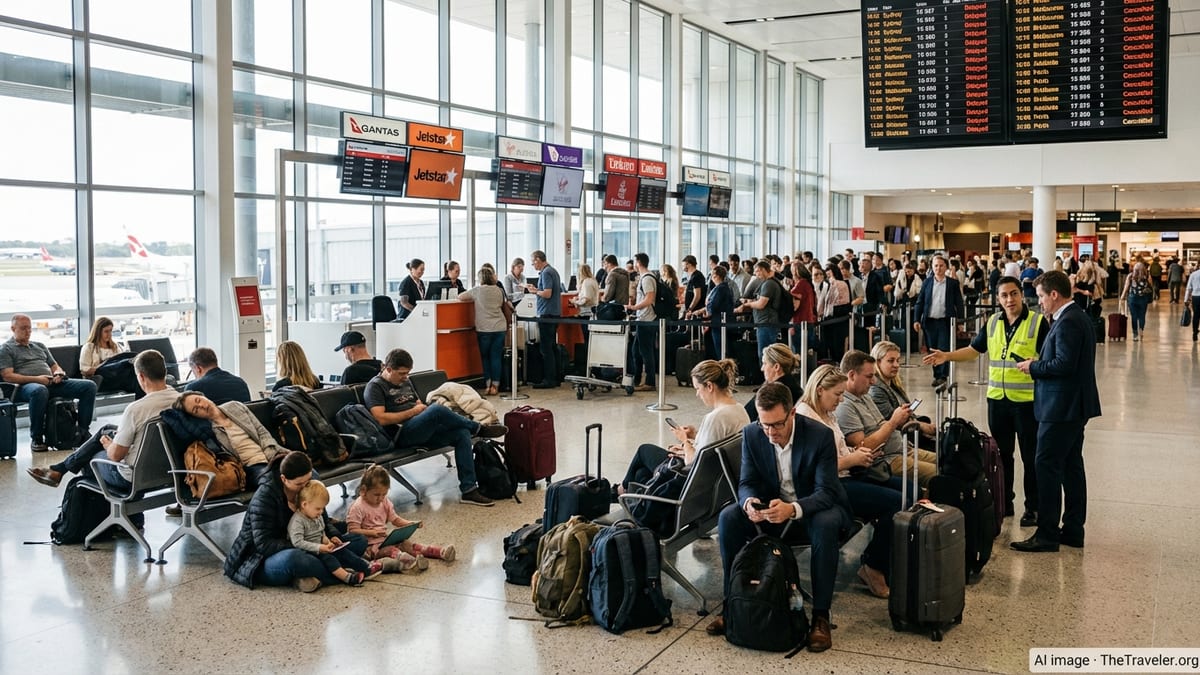
Widespread Disruptions Across Trans-Tasman Hubs
Publicly available airport and flight-tracking data for the latest operational day indicate a combined tally in the order of 839 delayed services and 61 cancellations across the Australian and New Zealand networks of leading airlines. The disruption has been concentrated on trunk routes linking Melbourne, Sydney, Auckland, Christchurch and Wellington, where dense schedules mean that even relatively small timetable changes can cascade quickly.
Reports from aviation industry outlets show that Qantas, Virgin Australia, Jetstar and Air New Zealand together account for the bulk of the affected flying program, alongside a handful of regional and international partners operating under codeshare arrangements. Delays have ranged from short timetable slippages of 15 to 30 minutes through to multi hour disruptions that have forced passengers to abandon same day connections.
Operational patterns seen in recent months suggest that disruptions at one gateway can rapidly spread across the broader network. When early morning departures from Melbourne or Sydney leave behind schedule, aircraft and crew often arrive late into Auckland, Wellington and Christchurch, generating rolling delays across the day as carriers try to rebalance their fleets and keep as many services operating as possible.
The latest spike in disruption mirrors several earlier episodes documented this year in which combined delay and cancellation totals across Australia and New Zealand have climbed into the hundreds. Previous daily snapshots have recorded more than 800 delayed services and upward of 50 cancellations systemwide, underscoring how vulnerable the regional network remains to operational shocks.
Qantas, Virgin Australia, Jetstar and Air New Zealand Under Pressure
Published performance data from recent months highlight persistent reliability challenges for the region’s largest airlines. Government on time performance reports show that routes connecting Melbourne and Sydney with New Zealand cities such as Auckland, Christchurch, Wellington and Queenstown have recorded modest punctuality and a measurable rate of cancellations, particularly during busy travel periods.
Qantas and its regional arm QantasLink remain central players in the current disruption pattern given their extensive domestic and trans Tasman schedules. Delays to early services out of Melbourne and Sydney can quickly affect onward connections to New Zealand, Southeast Asia and North America, leaving passengers facing missed connections and the need for complex rebookings on already busy flights.
Virgin Australia and low cost carrier Jetstar have also been frequent contributors to recent disruption tallies. Previous daily snapshots compiled by aviation news outlets have listed these carriers among the most delayed by sector count, with some reports noting that combined delays for Jetstar and Virgin Australia alone have exceeded several hundred services on particularly difficult days.
In New Zealand, Air New Zealand is concurrently managing its own operational pressures, with trans Tasman and domestic sectors regularly appearing in delay statistics. When services operated by Air New Zealand, Qantas, Virgin Australia and Jetstar all face timetable strain on the same day, the result is a tightly coupled system in which recovery becomes challenging and minor issues can quickly escalate.
Knock On Impact for Passengers at Major Gateways
For travellers, the practical impact of 839 delays and 61 cancellations is being felt most acutely at the region’s busiest hubs. At Melbourne Tullamarine and Sydney Kingsford Smith, dense morning and evening departure banks mean that a delayed arrival can occupy gates longer than planned, slow boarding for subsequent services and strain airport resources from security screening to baggage handling.
Across the Tasman, Auckland, Christchurch and Wellington are experiencing similar knock on effects. Late arriving aircraft from Australia can push back turnaround times, creating crowded departure lounges and forcing ground handlers to juggle aircraft movements within tight curfew and noise restriction windows. These pressures can be particularly severe in the evening, when a missed slot may mean an overnight delay instead of a short hold on the tarmac.
Published accounts from previous disruption days show passengers encountering long queues at rebooking counters, busy call centres and difficulty finding last minute accommodation near airports when late night cancellations occur. In some cases, travellers on multi sector itineraries have needed to be re routed through secondary hubs such as Brisbane or Adelaide when direct links between Melbourne, Sydney and New Zealand cities have been temporarily withdrawn from the schedule.
Travel industry observers note that airlines sometimes choose to delay rather than cancel marginal flights in order to preserve connectivity for as many passengers as possible. While this strategy can reduce the number of outright cancellations, it may also lead to rolling timetable adjustments across an entire operational day, as aircraft and crew remain out of position for subsequent services.
Underlying Causes: Weather, Capacity and Staffing Constraints
The precise mix of causes behind the latest wave of delays and cancellations varies by route and carrier, but recent public reporting points to a combination of adverse weather, air traffic management restrictions and ongoing staffing and fleet constraints. Thunderstorms, low cloud and strong winds around Sydney and Melbourne can trigger flow control measures that reduce the number of aircraft allowed to land or depart each hour, immediately affecting tightly scheduled morning and evening banks.
On the New Zealand side of the Tasman, winter weather systems sweeping through Wellington and Christchurch often bring turbulence, crosswinds and low visibility that can force holding patterns or diversions. When aircraft and crew are unable to complete their rostered sectors, airlines must reshuffle resources, which can ripple into the next day’s schedule even after conditions improve.
Airlines across the region are also still recalibrating capacity after several years of pandemic related disruption. Industry coverage notes that while passenger demand has largely returned, crew availability, engineering capacity and spare aircraft remain constrained. Under these circumstances, a technical issue that might previously have been covered by a standby aircraft can now result in multi hour delays or cancellations if no spare capacity is available.
Operational challenges are compounded by strong seasonal demand on trans Tasman and domestic leisure routes, particularly around school holidays and major events. High load factors reduce the ability of airlines to re accommodate disrupted passengers on alternative flights, often leading to longer waits for open seats and more complex rebooking itineraries spanning multiple carriers.
What Travellers Can Do When Disruption Strikes
Consumer advocacy organisations and travel industry advisories suggest several practical steps for travellers caught up in large scale disruption events such as the latest wave of delays and cancellations. Passengers are encouraged to monitor airline apps and airport departure boards closely, as electronic systems often display changes to departure times before announcements are made in terminal areas.
When a service is cancelled outright or a delay causes a missed connection, publicly available guidance typically advises passengers to work directly with the operating carrier to secure rebooking options or refunds. Many airlines serving Australia and New Zealand allow affected travellers to move to a later flight without additional change fees during major disruption events, subject to seat availability.
For those facing overnight delays in Melbourne, Sydney, Auckland, Christchurch or Wellington, travel advisories often recommend asking about meal vouchers, ground transport support and hotel accommodation where applicable under airline policies. These arrangements vary by carrier and by the reason for disruption, but publicly accessible airline customer service charters generally set out the forms of assistance available.
Analysts observing the current situation argue that the latest figures on delays and cancellations reinforce the importance of building extra time into itineraries that rely on tight connections across the Tasman. Allowing longer layovers, avoiding last flight of the day options where possible and holding flexible accommodation and ground transport bookings can all help reduce the stress associated with sudden timetable changes when regional aviation networks come under pressure.