


More news on this day
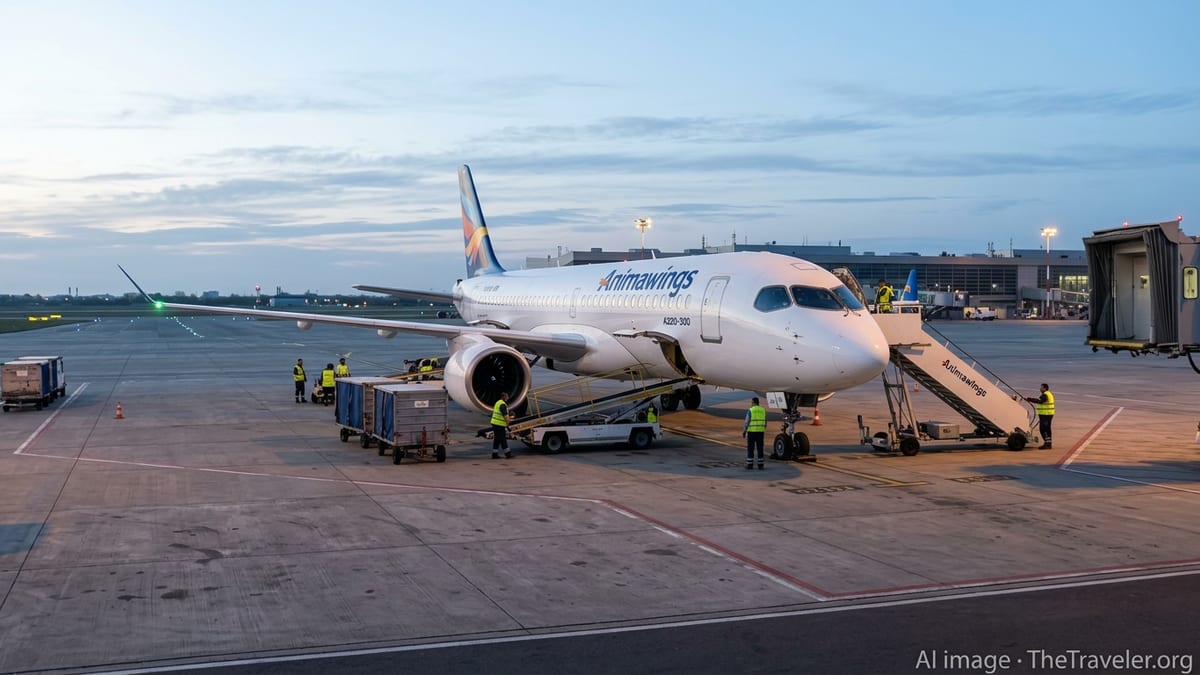
Lufthansa City Airlines is preparing to take delivery of its first Airbus A220-300 aircraft in the second half of the fourth quarter of 2026, positioning the Lufthansa Group’s newest carrier for a major step in its regional fleet modernization and network expansion across Europe.
Get the latest news straight to your inbox!
A new chapter in Lufthansa’s short-haul strategy
Publicly available fleet planning documents from Lufthansa Group indicate that Lufthansa City Airlines expects the first of its 40 Airbus A220-300s on order to arrive toward the end of 2026, with deliveries then continuing into the next decade. Internal roadmap material referenced in industry coverage points to a ramp-up phase that gathers pace from late 2026 and into 2027, aligning with broader group efforts to standardize and modernize short- and medium-haul operations.
The A220s are earmarked specifically for Lufthansa City Airlines, the Munich and Frankfurt based regional operator that began commercial services in 2024 using Airbus A319 and A320neo aircraft. The carrier is being developed as a key feeder for Lufthansa’s main hubs, and the introduction of the smaller-gauge A220 is viewed by analysts as a way to match capacity more precisely to demand on thinner European and domestic routes.
Group fleet tables published in recent investor materials list 40 firm A220-300 orders plus 20 options, with an indicated delivery window running from 2026 to 2031. While exact handover dates are typically confirmed closer to production, reporting based on Lufthansa City Airlines’ recruitment and training schedule suggests that the first aircraft are planned to join the fleet in mid to late fourth quarter 2026, ahead of a larger wave of arrivals the following year.
From A320neo launch to mixed-fleet operations
Lufthansa City Airlines first focused on the Airbus A320neo family to establish operations, taking delivery of its initial factory-fresh A320neo in 2025. The carrier is set to grow this narrowbody fleet through 2025 and 2026, reaching around 20 A320neos alongside a small number of A319s, according to the group’s latest annual report and published network updates.
The arrival of the A220-300 in late 2026 will turn Lufthansa City Airlines into a mixed Airbus short-haul operator, combining the larger A320-family jets with the smaller-capacity A220. Industry observers note that this combination mirrors the approach taken by other European network airlines, which increasingly pair the A220 with the A320 family to cover a wide range of route profiles and airport constraints.
Operational planning information made public through job advertisements and pilot briefings points to a gradual ramp-up in flying activity, with additional aircraft arriving roughly monthly for the group from 2025 onward and a dedicated A220 build-up at Lufthansa City Airlines from the final weeks of 2026. This staged introduction is designed to allow time for crew training, maintenance preparation and schedule optimization before the type reaches higher utilization in 2027.
Why the A220 matters for Lufthansa City Airlines
The Airbus A220-300 has become a popular choice among airlines seeking fuel-efficient aircraft in the 130 to 150 seat category. Manufacturer data and independent assessments highlight its lower fuel burn per seat, modern cabin and range suitable for both dense intra-European city pairs and longer regional sectors. For Lufthansa City Airlines, the aircraft is expected to open up additional point-to-point and hub-feeding opportunities where the larger A320neo may be less economical.
By introducing the A220, Lufthansa Group is also signaling a continued shift away from older-generation regional jets and smaller narrowbodies that have formed the backbone of its regional operations in previous decades. Publicly available fleet information shows a gradual phase-out of Embraer and Bombardier types at associated regional subsidiaries, with the A220 positioned as the primary replacement in some segments.
Analysts following the group’s strategy view Lufthansa City Airlines as a test bed for a more streamlined regional operation centered on common Airbus cockpit philosophy. Although the A220 is technically a different family from the A320neo, common digital avionics and cabin standards are expected to deliver efficiencies in training, maintenance planning and passenger experience when combined in a single short-haul portfolio.
Network implications for Munich, Frankfurt and beyond
Since its launch, Lufthansa City Airlines has focused on building up short-haul connectivity from Munich, later adding a base at Frankfurt. Timetable data and corporate announcements describe a network of European business and leisure destinations designed to feed Lufthansa’s long-haul departures as well as serve point-to-point demand within Germany and neighboring countries.
The deployment of the A220-300 from mid to late fourth quarter 2026 is likely to influence how the group structures this network. Aviation analysts expect the type to appear initially on existing Lufthansa City Airlines routes where smaller capacity and improved economics can boost profitability, before being extended to new destinations that cannot support larger narrowbodies year-round.
Smaller airports with runway or noise constraints, as well as markets with highly seasonal traffic patterns, are frequently cited as natural candidates for A220 deployment. The aircraft’s performance profile and cabin comfort could allow Lufthansa City Airlines to compete more aggressively with low-cost carriers and regional rivals, particularly on routes where schedule frequency and on-time performance are as important to passengers as price.
Part of a broader European A220 trend
Lufthansa City Airlines’ planned A220 deliveries coincide with a broader wave of A220 adoption across Europe and beyond. Recent orders from flag carriers and low-cost operators have pushed the global A220 backlog to record levels, contributing to strong production rates at Airbus final assembly lines in Canada and the United States.
Observers note that the concentration of A220 orders among network carriers in Europe, including members of major alliances, reflects a wider strategic move toward more efficient fleets in the 100 to 150 seat range. In this context, Lufthansa City Airlines’ late-2026 introduction of the type is seen as a critical milestone in the Lufthansa Group’s effort to remain competitive on short- and medium-haul routes as older aircraft are retired.
With the first A220-300 due to arrive in the latter part of the fourth quarter of 2026, attention now turns to how quickly Lufthansa City Airlines can integrate the aircraft into its operation and how prominently the type will feature in future schedule expansions from Munich, Frankfurt and other potential bases in the group’s European network.