

More news on this day
Grand Bahama is entering a new phase of tourism-driven growth as the large-scale redevelopment of Freeport’s Grand Lucayan resort converges with expanding cruise activity from MSC Cruises, signaling a shift toward higher-end, mixed-use hospitality on the island.
Get the latest news straight to your inbox!
Landmark Sale Sets Stage for Grand Lucayan Transformation
The sale of the Grand Lucayan resort in May 2025 marked a turning point for Grand Bahama’s struggling tourism sector, which has faced years of hurricane damage, stalled investment and pandemic disruption. Public information on the transaction indicates that Miami-based Concord Wilshire Capital acquired the oceanfront property and the adjacent Reef Golf Course from the Bahamian government for about 120 million dollars, ending an extended period of public ownership and uncertainty surrounding the site.
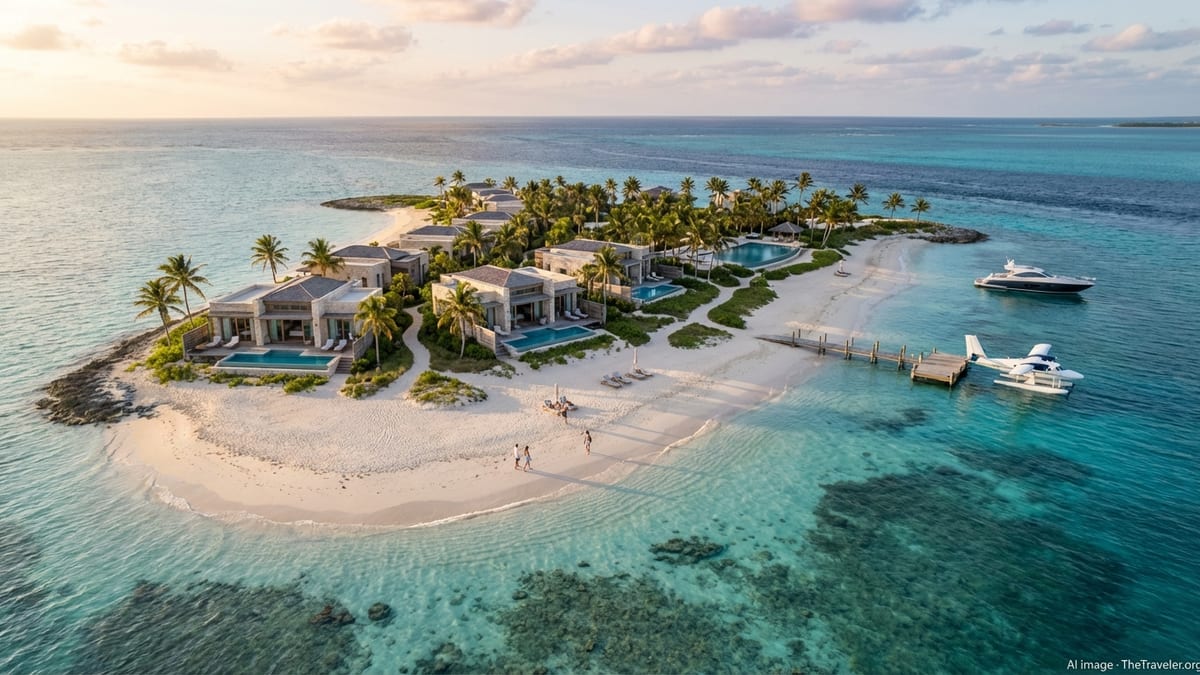
According to transaction details released at the time, Concord Wilshire plans an estimated 827 million dollar redevelopment of the 56-acre beachfront resort and 160-acre golf course into a reimagined Grand Lucayan Resort, Casino and Village. The project is described as a mixed-use, walkable complex featuring a branded hotel, residential units, timeshares and an upgraded golf offering designed to meet international standards.
Plans outlined in public documents also reference a stand-alone casino of roughly 25,000 square feet, an expanded marina component and new entertainment amenities intended to keep visitors on island longer and diversify revenue beyond traditional room nights. The ambition is to restore Grand Lucayan’s position as an anchor property that supports airlift, local excursions and small businesses across Freeport and the wider island.
Local commentary and industry analysis frame the sale as both a financial and symbolic milestone, positioning Grand Bahama as open for large-scale private investment again. The project is expected to roll out in phases, with demolition and enabling works already reported as under way on parts of the aging hotel complex.
MSC Cruises Deepens Footprint in Freeport
While Concord Wilshire leads the land-based redevelopment, MSC Cruises is reinforcing Grand Bahama’s maritime infrastructure and visitor pipeline. The European cruise group has become increasingly visible in Freeport through both its regular calls and its growing role at Grand Bahama Shipyard, a key regional hub for cruise ship repair and maintenance.
Industry coverage in 2025 and 2026 highlights MSC’s move to join Carnival Corporation and Royal Caribbean Group as a strategic partner in the Grand Bahama Shipyard, alongside a Bahamian government stake. Reports describe plans for two of the largest dry docks in the Western Hemisphere as the yard restores and expands capacity, with full services projected to scale up through 2026.
This investment is not purely industrial. The shipyard’s recovery and growth underpin the cruise lines’ confidence in routing vessels through Grand Bahama for both operational needs and guest itineraries. Recent coverage of MSC Seashore’s routine dry dock at the facility in April 2026 underscores how Freeport’s technical capabilities are increasingly aligned with the demands of newer, larger ships that also carry high-spending passengers.
At the same time, MSC’s published itineraries continue to feature Freeport as part of broader Caribbean and Bahamas routes, complementing the company’s private-island operations elsewhere in the archipelago. The combination of shipyard equity stakes, port calls and marketing exposure is strengthening the island’s profile within the global cruise network.
From Aging Hotel to Integrated Resort Village
The redevelopment blueprint for Grand Lucayan signals a shift away from a single large hotel complex toward an integrated destination village model. Concord Wilshire’s materials describe a dense mix of uses, including hotel rooms, branded residences, vacation ownership units and a pedestrian-friendly environment anchored by shopping, dining and entertainment.
A notable feature in the published plan is a 36-acre cruise destination component designed to handle up to 10,000 cruise visitors per day. Although it is described as open to all cruise brands rather than tied to a single line, the cruise-focused facilities are expected to link closely with the rest of the resort through transport connections, shore excursions and shared attractions such as a water park and beach club areas.
Developers have also emphasized the inclusion of a new championship-level golf course and an expanded mega-yacht marina. These amenities are aimed at higher-yield segments of the market and are intended to support Grand Bahama’s aspiration to compete with other luxury Caribbean destinations by attracting long-stay visitors, yacht clientele and group events.
Observers note that integrating Port Lucaya Marketplace and nearby marinas into the broader master plan could help revive existing commercial areas rather than displacing them. If successfully executed, the Grand Lucayan precinct could evolve into a cohesive waterfront district that disperses economic benefits across a wider swath of the island’s tourism economy.
Economic Ripple Effects Across Grand Bahama
The scale of the Grand Lucayan and shipyard initiatives suggests far-reaching implications for employment, training and small business development on Grand Bahama. Government statements and independent commentary emphasize that the 827 million dollar resort investment is expected to create thousands of construction and operations jobs over the life of the project, alongside indirect work in transportation, retail, food service and excursions.
Tourism data released in 2024 and 2025 already point to rising cruise arrivals for Grand Bahama, from both traditional operators and newer entrants targeting short-getaway itineraries. Analysts suggest that the addition of a purpose-built cruise destination node at Grand Lucayan could lift per-passenger spending on island by offering more reasons to disembark, from shopping and dining to guided tours and golf.
At the same time, MSC’s participation in the shipyard’s ownership group and the expansion of its dry-dock capacity are seen as anchors for year-round economic activity that is not as exposed to seasonal tourism swings. The shipyard’s growth is expected to support skilled trades, engineering roles and related services, broadening Grand Bahama’s employment base beyond hospitality alone.
Local business advocates quoted in regional coverage have argued that the combination of high-end resort development, cruise destination facilities and industrial maritime investment offers a more resilient economic model. By aligning tourism, logistics and ship services, Grand Bahama is aiming to position itself as a diversified Caribbean hub rather than a single-sector beach destination.
Positioning Grand Bahama in a Competitive Caribbean
Grand Bahama’s new investment wave is unfolding in a crowded regional landscape where destinations from Cozumel to St. Maarten continue to upgrade ports and hospitality offerings. In that context, the Grand Lucayan redevelopment and MSC-linked shipyard expansion give the island a distinct proposition: a deep-water industrial base paired with a new luxury resort village and cruise destination experience.
Travel trade publications describe a shift in how Grand Bahama is marketed, with greater emphasis on multi-day stays that combine resort amenities, golf, eco-excursions and day trips into Freeport’s commercial areas. As construction progresses, early phases of the redevelopment are expected to be used to test new visitor experiences and refine the resort’s positioning in relation to Nassau and other Bahamian islands.
Industry observers also point to the timing of these projects, which coincide with a broader upswing in global cruise capacity and renewed consumer demand for Caribbean vacations. With major lines adding new ships and homeports in Florida, proximity and airlift advantages could help Grand Bahama capture a larger share of pre- and post-cruise stays linked to U.S. gateways such as Miami, Port Canaveral and Palm Beach.
Much will depend on execution, regulatory approvals and the pace of construction in the coming years. Nevertheless, the combination of Concord Wilshire’s large-scale resort vision and MSC Cruises’ growing presence in Freeport and the shipyard has already reoriented expectations. For Grand Bahama, the revival of the Grand Lucayan site is emerging as both a physical and symbolic centerpiece of a new tourism and economic chapter.