


More news on this day
One of Alaska’s most iconic glacier sail-ins is suddenly off the map for 2026, as a growing list of cruise lines quietly remove Tracy Arm Fjord from their Alaska itineraries and redirect guests to nearby Endicott Arm instead.
Get the latest news straight to your inbox!
From Signature Fjord to No-Go Zone
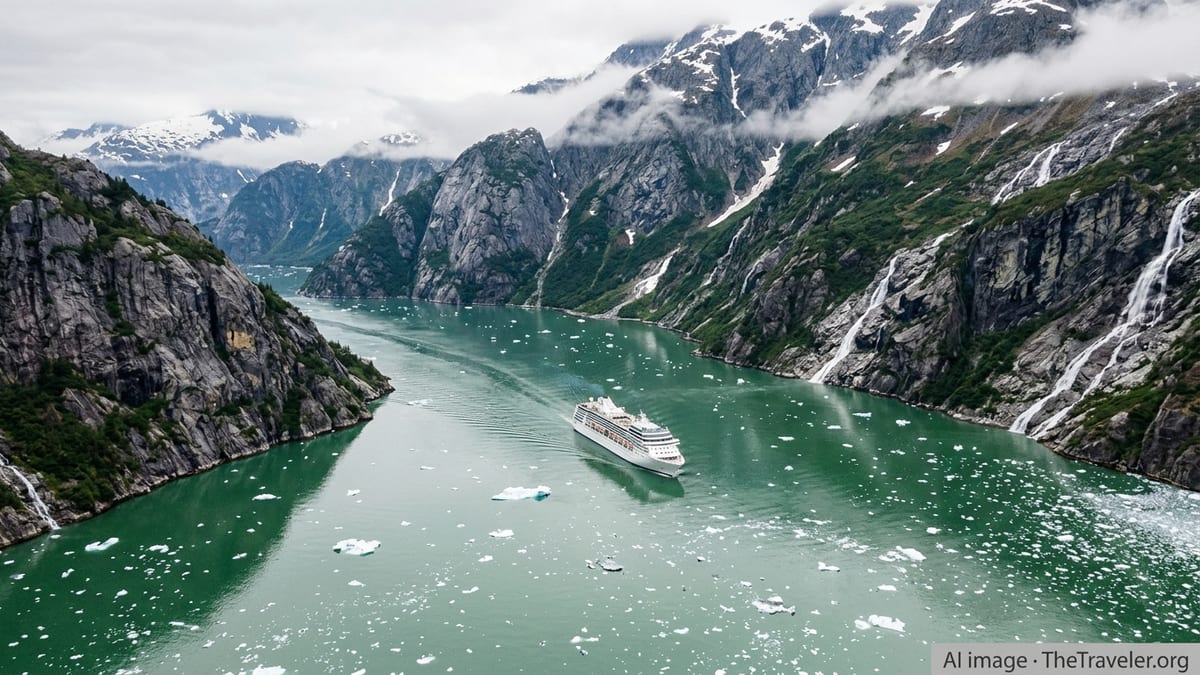
For years, Tracy Arm Fjord south of Juneau has been a marquee highlight on many Alaska cruise itineraries, offering narrow, twisting channels, sheer rock walls and close-up views of North and South Sawyer Glaciers. That experience is now on hold for large cruise ships after a major slope failure near South Sawyer Glacier on August 10, 2025, triggered a powerful localized tsunami within the fjord.
Publicly available reporting describes a mass of rock and ice crashing into the head of Tracy Arm, sending water surging up the opposite valley wall and racing down the fjord. No cruise ships were present at the time, but the event scattered debris, ice and sediment through the channel and swept away gear from kayakers camping near the entrance to the Tracy and Endicott arms.
Since then, scientific assessments cited in regional and national coverage have pointed to ongoing instability on the steep fjord walls, with experts noting that landslide scars can continue to shed rock and generate smaller waves for years. In that context, cruise companies are treating the waterway as too risky for routine large-vessel navigation in the near term.
Industry-focused outlets now characterize Tracy Arm as effectively off limits for mainstream ships for the entire 2026 season, even though small-boat operators and flightseeing tours may still adapt individually to evolving conditions.
Big-Name Lines Quietly Rewrite 2026 Itineraries
Through late March and early April 2026, a wave of schedule changes has rippled across Alaska programs as major brands strip Tracy Arm from published routes. Reports from cruise trade publications and regional news sites indicate that Carnival Cruise Line, Holland America Line, Royal Caribbean, Virgin Voyages and MSC Cruises have all removed Tracy Arm sail-ins from at least part, and in most cases all, of their 2026 Alaska seasons.
According to cruise news coverage, Holland America has dropped Tracy Arm excursions across its 2026 offerings, redirecting affected scenic cruising days into Endicott Arm and toward Dawes Glacier. Royal Caribbean communications summarized in consumer and enthusiast outlets explain that the company will “no longer” cruise through Tracy Arm Fjord in 2026 because of the landslide and related navigation concerns.
Carnival-focused reports describe letters to booked guests advising that “the waterways in the area are currently not suitable for cruise ship navigation” and that ships will now follow Endicott Arm instead. Coverage of Virgin Voyages’ first Alaska season notes a similar message to travelers, with the adults-only line removing Tracy Arm and promising a reimagined scenic program in Endicott Arm.
Most recently, industry reporting shows that MSC Cruises, preparing for its own inaugural Alaska deployment, has adjusted itineraries that originally advertised Tracy Arm, substituting Endicott Arm for scenic cruising later in the summer. The updates place nearly all mass-market operators on the same course away from the fragile fjord.
Endicott Arm and Dawes Glacier Step Into the Spotlight
For travelers reading these itinerary changes as a total loss of the glacier experience, the reality is more nuanced. Endicott Arm, the narrow fjord running parallel to Tracy Arm from the shared entrance at Holkham Bay, offers a very similar visual profile: steep granite walls, floating ice, waterfalls and a tidewater glacier at its head.
Reports from cruise specialists and regional tourism sources emphasize that Dawes Glacier, which terminates at the end of Endicott Arm, can be a dramatic sight in its own right. Ships that are able to maneuver through ice conditions may approach within comparable viewing distances to those once common at South Sawyer Glacier in Tracy Arm, giving guests the calving-glacier moments many associate with an Alaska voyage.
Travel accounts and operator briefings suggest that Endicott Arm has already been used for years as a substitute when Tracy Arm was choked with ice or otherwise inaccessible. That existing familiarity is now being scaled up into a default plan for 2026, with some lines framing the change as a “minor adjustment” that still preserves a full day of fjord cruising.
The key difference, according to guide-style analyses circulating among cruise planners, is more about branding and expectation than scenery. Tracy Arm has long been marketed as the quintessential glacier fjord, but in practical terms, Endicott Arm delivers much of the same atmosphere, especially for first-time visitors.
What Booked and Prospective Cruisers Should Watch
For passengers already holding 2026 reservations, the most immediate impact is on advertised scenic cruising descriptions and port times, not necessarily on the overall value of the trip. Travelers are being notified of changes via updated invoices, email notices and revised online itineraries that replace “Tracy Arm Fjord” or “Sawyer Glacier” with “Endicott Arm” and “Dawes Glacier.”
Consumer-oriented cruise sites advise guests to read itinerary language closely. Some schedules now reference “Stephens Passage scenic cruising” or “Holkham Bay and surrounding fjords” without naming a specific glacier, a phrasing that can conceal whether the ship intends to attempt Endicott Arm or simply offer more general coastal viewing.
Travel planners note that the experience on the day will still depend heavily on weather, ice conditions and marine traffic. Even in Endicott Arm, captains may occasionally need to stop short of Dawes Glacier if ice density becomes unsafe. Travelers who prioritize glacier time are being encouraged in public guidance to review deck plans for best viewing areas, consider cold-weather gear for extended outdoor time and, where offered, evaluate small-boat glacier excursions that depart from the main ship.
Price-wise, published coverage so far does not indicate broad fare reductions tied directly to the rerouting. Instead, cruise lines appear to be emphasizing that the core “Alaska fjord and glacier” promise remains intact, even if the name of the fjord has changed.
Uncertain Timeline for Tracy Arm’s Return
The longer-term question for Alaska cruise fans is how long Tracy Arm will remain effectively closed to large ships. Scientific commentary cited in national and Alaska-based reporting underscores that slopes destabilized by a major collapse can keep shifting for extended periods, and that there is no simple way to quantify the likelihood or size of future events on a given cliff.
Some cruise coverage points to cautious optimism that conditions could stabilize enough for renewed surveys and navigation trials ahead of the 2027 season, but there is no formal timetable and no public indication that large-scale cruising will resume on a specific date. Analysts following the region note that any return would likely require updated hazard assessments and a clear risk framework agreed across operators.
In the meantime, the shift away from Tracy Arm is becoming a case study in how quickly glacier tourism can change as landscapes evolve. The 2026 rerouting underscores that Alaska’s most photogenic places are also some of its most geologically active, and that iconic views may move from one fjord to another from one season to the next.
For travelers planning future Alaska adventures, the message emerging from current coverage is to focus less on a specific glacier name and more on the overall promise of fjord cruising, wildlife spotting and time amid the steep, ice-carved channels of Southeast Alaska, wherever evolving conditions allow ships to safely sail.