


More news on this day
Greece and Austria are strengthening cooperation in mountain tourism, focusing on joint training, sustainability initiatives and destination management as both countries look to diversify beyond traditional peak seasons and develop higher-value, lower-impact travel experiences.
Get the latest news straight to your inbox!
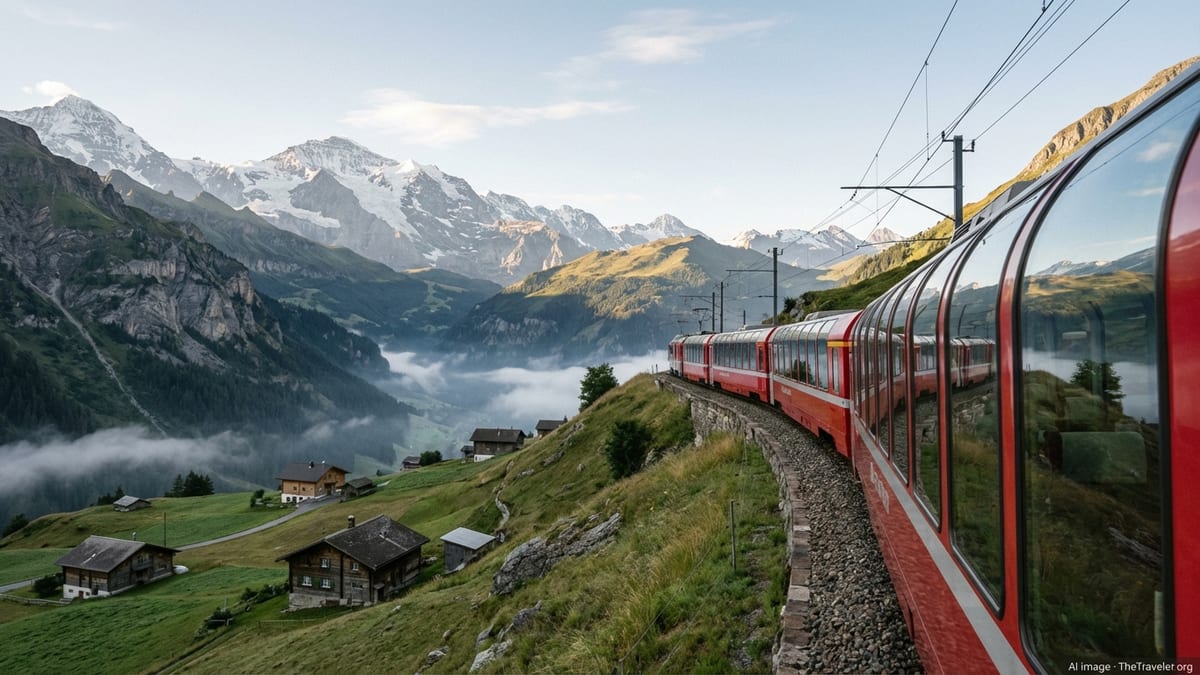
Ministers Put Mountain Tourism at the Center of Bilateral Agenda
Recent meetings between Greece and Austria have placed mountain tourism high on the bilateral agenda, reflecting a shared interest in developing destinations beyond well-known coastal and urban hotspots. According to published coverage of talks held in late July 2026 in Austria, the two tourism ministers highlighted mountain regions as strategic areas for year-round development and as laboratories for greener tourism models.
Public information on those discussions indicates that tourism education and training, as well as the exchange of technical know-how, formed the backbone of the talks. Athens is working to elevate its mountainous areas, from the Pindus range to Mount Olympus and the Peloponnese highlands, while Vienna is drawing on decades of experience managing dense visitor flows in the Alps.
Both sides appear to view mountain tourism as a way to rebalance visitor numbers, ease pressure on over-visited islands and cities, and spread tourism income more evenly across rural communities. The cooperation also aligns with wider European goals to adapt tourism to climate pressures and to promote lower-emission travel options in fragile environments.
The bilateral agenda builds on earlier contacts between the two countries that framed Greece as a key source of summer visitors for Austria and Austria as a reference point for alpine infrastructure, destination governance and vocational education. The renewed emphasis on mountains represents a more structured attempt to translate that relationship into concrete joint initiatives.
Training and Education Exchanges Draw on Austria’s Alpine Expertise
A core pillar of the emerging partnership is the exchange of knowledge in tourism education and vocational training. Reports on the July 2026 visit indicate that the Greek tourism minister toured leading Austrian tourism schools in Salzburg and Tyrol, including facilities that specialize in hospitality operations and mountain destination management.
These institutions are seen as benchmarks in preparing workers for the particular demands of alpine tourism, from safety and rescue protocols to winter sports logistics and year-round resort operations. Greek officials are looking to adapt aspects of this model to their own network of tourism schools and lifelong-learning programs as part of a broader effort to upgrade skills in the sector.
Greece has already identified education and training as a central plank of its tourism strategy, with recent action plans emphasizing workforce upskilling and modernized curricula. In parallel, Austria has launched awareness and recruitment campaigns to attract new talent to tourism careers, reflecting a shared concern over seasonal labor shortages and the need for stable, higher-quality jobs.
Closer cooperation is expected to involve study visits, joint seminars and the sharing of training materials on areas such as mountain guiding, destination analytics, digital tools for small businesses and customer experience in high-altitude environments. Observers note that these exchanges could ultimately feed into joint certification schemes or harmonized standards that make it easier for trained professionals to work across borders.
Sustainability Frameworks Guide Mountain Destination Development
The focus on mountains is emerging at a time when both countries are under pressure to manage tourism growth within environmental limits. Publicly available policy documents show that Greece has set out plans to upgrade its mountain tourism infrastructure and extend the season in inland regions by promoting outdoor activities, nature-based experiences and rural tourism products.
Austria, for its part, has long aligned its alpine development with environmental protocols and international frameworks that treat the Alps as a single ecological region. National strategies place strong emphasis on reducing pressures from transport, supporting low-impact mobility in resorts and incentivizing investments that protect landscapes and biodiversity.
Analysts point out that this creates space for Greece to draw on Austrian practice in visitor management, climate adaptation and the monitoring of environmental indicators in highland destinations. In turn, Greece’s work on sustainable branding, digital services and data-driven policymaking in tourism offers examples that Austrian planners can study as they refine their own evidence base.
According to assessments by international organizations, both countries are moving toward more systematic monitoring of tourism performance, with specific attention to sustainability metrics such as resource use, seasonality and the distribution of benefits to local communities. Joint mountain initiatives are likely to be evaluated against these evolving indicators, which could help clarify what successful, low-impact growth looks like in very different topographies.
Extending the Season and Diversifying Visitor Flows
Beyond training and governance, the cooperation has a clear commercial dimension. Greece is working to reposition itself as a year-round destination, and the development of mountainous and rural regions is a key instrument in that strategy. By enhancing hiking networks, winter sports facilities and cultural routes in the interior, planners hope to attract visitors outside the summer beach peak.
Austria, which already welcomes significant numbers of Greek travelers for city breaks and winter holidays, is interested in strengthening two-way flows and cross-promotion of mountain products. Industry observers note that joint marketing could eventually involve themed itineraries that pair alpine experiences in Austria with highland stays in Greece, targeting European travelers seeking multi-country outdoor trips.
Greek policy documents also underline the goal of easing pressure on iconic islands by channeling part of demand toward less-visited inland areas. Mountain destinations are central to that rebalancing, offering cooler temperatures, cultural heritage, wine and gastronomy, and adventure tourism options that complement rather than compete with the coastline.
For Austria, cooperation with a Mediterranean partner allows its mountain regions to tap into new narratives around wellness, culture and climate-conscious travel, instead of relying solely on traditional ski-based demand. As climate patterns evolve, both countries appear keen to anchor their mountain products in a mix of nature, culture and active experiences that can thrive with shorter snow seasons.
Opportunities for Local Communities and Small Businesses
The deepening partnership is also framed as a chance to strengthen rural economies in both countries. Analytical work on small and micro tourism enterprises in Greece highlights the importance of tailored support for family-run guesthouses, guides, farms and craft producers, many of which operate in mountain regions.
By studying how Austria structures financing tools, advisory services and innovation programs for alpine businesses, Greek institutions are expected to refine their own schemes aimed at helping small operators adopt digital tools, improve quality and invest in sustainable practices. This could include support for energy-efficient renovations, soft-mobility solutions and local supply chains.
In Austria, long-standing cooperation between tourism boards, municipalities and agricultural stakeholders has created models for integrating farming, nature protection and visitor experiences in the same landscapes. Observers suggest that sharing these models with Greek regions could accelerate the development of integrated mountain products built around local food, outdoor sports and cultural heritage.
As Greece and Austria broaden their cooperation, attention is likely to focus on whether new joint projects deliver tangible benefits at village level, such as new training opportunities for young residents, stronger off-season revenues and clearer incentives to protect fragile mountain environments. The outcome of these efforts may help define how European destinations use cross-border partnerships to reshape tourism for a more sustainable era.