


More news on this day
Egypt and a handful of rapidly expanding African carriers are stepping up route launches, hub investments and capacity increases in 2026, signaling a new phase of air connectivity growth across the continent despite higher fuel costs and fragile industry margins.
Get the latest news straight to your inbox!
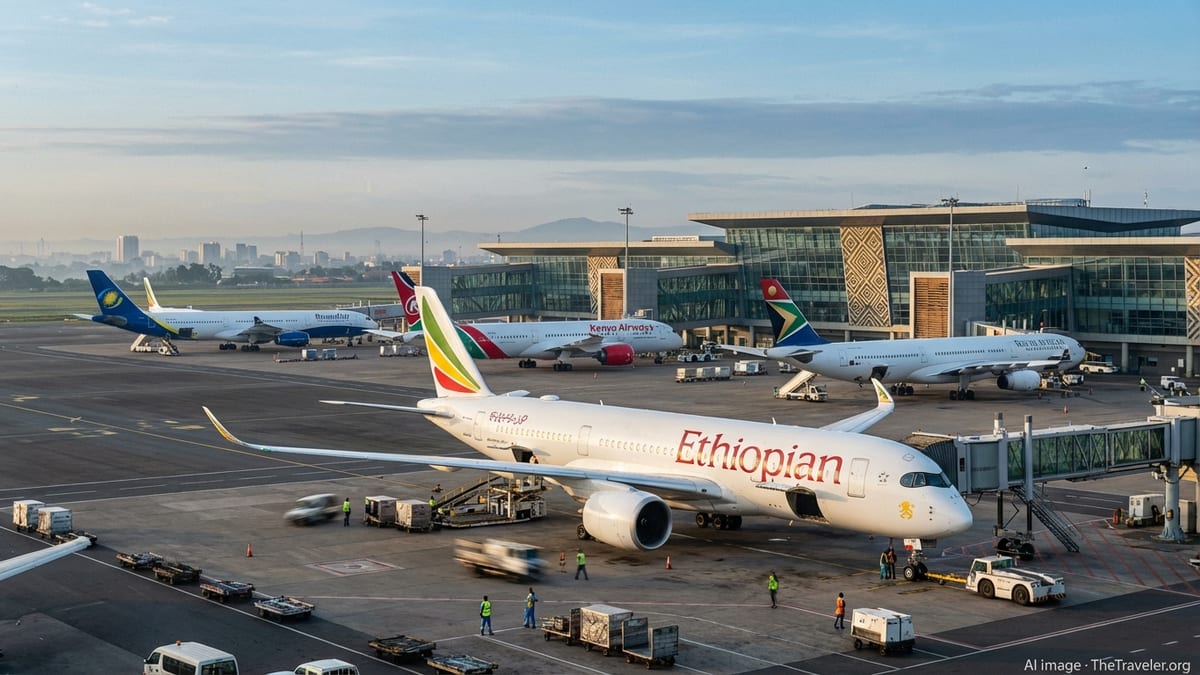
Traffic Growth Outpaces Global Average Across African Markets
Industry data for early 2026 indicates that Africa has entered a faster growth phase in passenger demand, even as airlines worldwide grapple with higher fuel prices and weaker global trade. According to publicly available figures from international aviation bodies, African carriers recorded double-digit year on year traffic growth at the start of 2026, outpacing the global average and reinforcing the region’s status as one of the fastest growing air travel markets.
Forecasts for the year point to passenger demand in Africa rising around 6 percent in 2026, above the projected global rate. Analysts link the momentum to a mix of demographic and economic factors, including a young and increasingly mobile population, a growing middle class and the gradual recovery of tourism flows to and from key African destinations. At the same time, the continent continues to rely heavily on a small number of powerful hub carriers to provide long haul links to Europe, the Middle East and Asia.
Industry assessments note that profitability across African airlines remains thin, with some of the highest unit costs in the world and limited access to affordable finance. Yet the consolidation of traffic through a few strategically located hubs is allowing certain markets to capture disproportionate gains in connectivity and transfer traffic. Egypt is among the countries benefitting most from this trend.
Egypt Emerges as a North African Super Connector
Egypt’s geographic position between Africa, Europe, the Gulf and South Asia has long made Cairo a natural aviation crossroads. In 2026 that role is expanding as both national and foreign airlines add capacity and new routes to and from Egyptian airports. Government and industry presentations highlight aviation as a major driver of employment, tourism receipts and trade, with network growth considered a key pillar of national economic strategy.
EgyptAir has been steadily rebuilding and broadening its international network, adding destinations in both Africa and Europe through 2025 and into 2026. Recent schedule updates and published reports show new routes to African leisure destinations such as Zanzibar, alongside additional services to European cities. The new flights are structured to feed Cairo’s hub banks, improving one stop options between African points and long haul markets in Europe and North America.
Egypt’s connectivity push is not limited to its flag carrier. Regional operator Air Cairo has announced a series of new services for 2026 linking Egyptian cities to West African destinations as well as to secondary European markets. Company statements describe the expansion as part of a strategy to deepen Egypt’s presence on the continent and to position the carrier as a competitive option for short and medium haul traffic around the Red Sea and Mediterranean basins.
Foreign airlines are also scaling up in Egypt, further enhancing the country’s role as a regional gateway. A leading Gulf network carrier has scheduled a fifth daily service on its Cairo route in 2026, using widebody aircraft and optimized connections to Asia and the Americas. Additional long haul capacity, including new operations at major United States gateways, adds to the pool of intercontinental seats available via Egyptian airports and increases the viability of Cairo as a transfer point for passengers originating across Africa.
Ethiopia, the Gulf and Other Hubs Drive Pan African Links
While Egypt consolidates its status in North Africa, other major hubs are simultaneously expanding their reach across the continent. Ethiopian Airlines, already one of the largest and most geographically diverse carriers in Africa, continues to adjust and grow its network heading into the 2025 to 2026 winter season. Route filings and schedule disclosures show increased frequencies on several intra African routes and the planned inauguration of new domestic airports in Ethiopia by mid 2026.
The airline’s long stated goal of “bringing Africa together and beyond” is being underpinned by both network growth and infrastructure investment. Construction has begun on a large new airport complex near Addis Ababa that is intended to complement the existing hub and support long term capacity needs. Industry observers note that this project, together with ongoing fleet expansion, is designed to cement Ethiopia’s position as a primary transfer point linking African cities with Europe, the Middle East, Asia and the Americas.
Outside Ethiopia, Gulf carriers and European network airlines are also reinforcing their African footprints. Capacity increases from Middle Eastern hubs into Egypt, Morocco, Kenya and South Africa are enabling a denser web of one stop options for African travelers heading to Asia and Europe. At the same time, European carriers are selectively reinstating or growing services to key African capitals where demand has rebounded and where local partners can feed regional traffic.
Analysts commenting on these developments point out that connectivity gains remain uneven. Major hubs such as Cairo and Addis Ababa are capturing a growing share of transfer flows, while many secondary African cities still lack direct international links. However, each new long haul route into a leading hub typically opens up multiple one stop combinations for surrounding markets, incrementally improving the continent’s overall connectivity.
New Data Shows Africa Climbing Global Connectivity Rankings
Fresh connectivity snapshots released in 2026 by global airline associations provide quantitative backing for the sense of acceleration in African aviation. These reports track the evolution of international air networks by measuring route density, seat capacity, frequency and the range of destinations reachable within specified travel times. Recent editions highlight that Africa’s share of global connectivity, while still modest, has been rising faster than the world average.
Country level rankings for 2025 show that several African states, including Egypt, Ethiopia, Morocco and South Africa, recorded some of the largest percentage gains in international connectivity compared with 2024. Researchers attribute these jumps to the combined effect of new routes, added frequencies on existing sectors and the entry of additional operators into established markets. The rebound of tourism and business travel after years of disruption has given airlines confidence to invest in more capacity.
Analytical papers focusing specifically on Africa emphasize that airline decisions about where to add seats and how frequently to serve a route can significantly shape economic outcomes for connected cities. Studies covering the period from 2016 to 2022 found that capacity tends to concentrate on a relatively limited set of corridors and carriers, leaving many potential city pairs underserved. Current expansion in 2025 and 2026 is starting to address some of these gaps, particularly on intra African routes, but large disparities remain between the best connected and least connected markets.
Policymakers are being encouraged by industry groups to use the new data sets when designing air service agreements, airport investment plans and regulatory reforms. Clearer visibility on which links are strengthening and which are vulnerable is considered essential for building a more resilient and inclusive connectivity map across the continent in the decade ahead.
Structural Challenges Temper Long Term Outlook
Despite the positive headlines around route launches and hub expansion, the overall outlook for African aviation in 2026 remains constrained by structural headwinds. Latest global industry outlooks underline that higher fuel prices, rising inflation and slower world trade are putting pressure on airline margins everywhere. For African carriers, which already face relatively high operating costs and currency volatility, these factors could limit the pace at which new capacity can be profitably deployed.
Infrastructure shortfalls at some airports, gaps in air traffic management and fragmented regulatory regimes across different states also weigh on the continent’s ability to fully capitalize on demand growth. Industry advocates argue that broader adoption of open skies style agreements within Africa, along with investments in modern airport facilities and digital systems, would help unlock further connectivity improvements.
Nevertheless, near term indicators suggest that 2026 will mark another step forward in Africa’s integration into global air networks. Egypt’s rising role as a super connector, coupled with vigorous expansion by Ethiopian Airlines and increasing engagement from Gulf and European carriers, is reshaping traffic flows in and out of the continent. If structural reforms and infrastructure projects keep pace, analysts suggest that Africa’s main hubs could transition from niche transfer points to globally significant connectors over the next decade.
For travelers, the most visible effects of this shift in 2026 are likely to be more non stop options within Africa, increased competition on key long haul routes and gradually improving onward connections via leading hubs such as Cairo and Addis Ababa. For businesses and governments, the stakes are higher, as enhanced air connectivity is closely linked in research to stronger trade links, tourism growth and broader economic development, placing aviation firmly on the agenda for Africa’s next phase of integration with the global economy.