


More news on this day
Fresh wildfires in Greece at the height of the summer season are prompting anxious travelers to ask whether it is still safe to visit one of Europe’s busiest holiday destinations, even as flights and ferries continue to operate and most resorts remain open.
Get the latest news straight to your inbox!
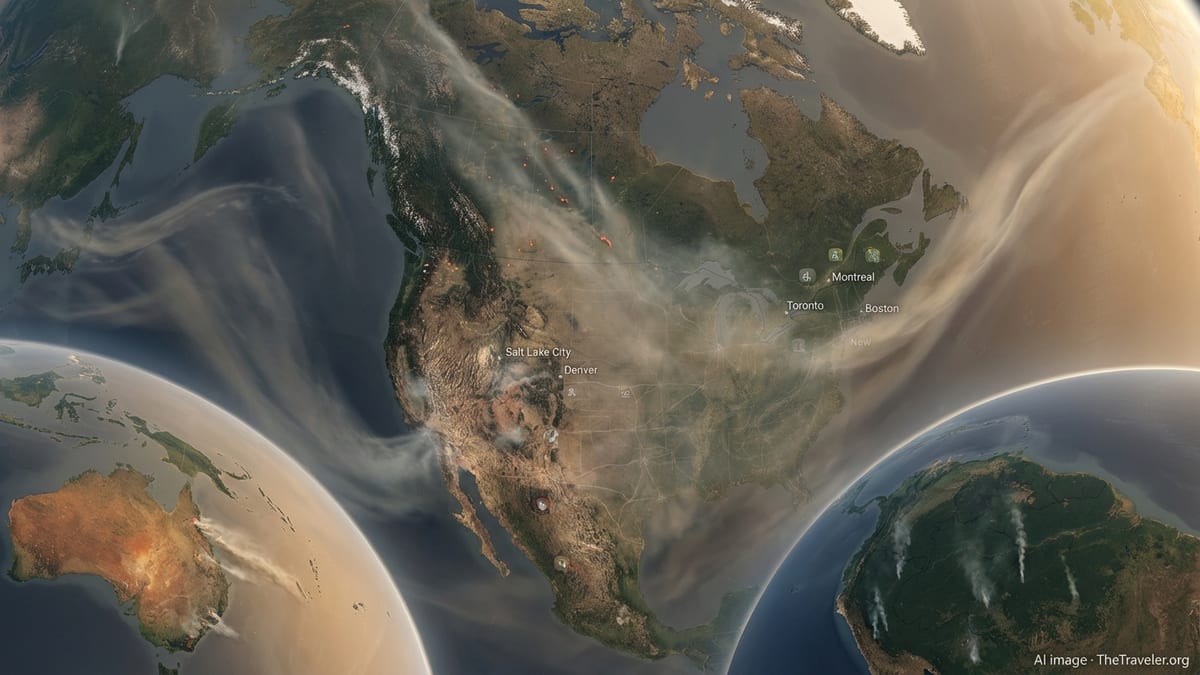
Where fires are burning and how widespread they are
Greece is again facing a series of summer wildfires, with the most active fronts currently reported west of Athens in Attica and in parts of Crete and the Peloponnese. Recent coverage describes water‑bombing aircraft working over scrubland and forest close to communities but largely outside the main urban core of the capital. Separate fires have affected rural or mountainous areas on Crete, including the Rethymno region, where firefighters have faced difficult terrain and intense heat.
These outbreaks follow a pattern that has become familiar across the Mediterranean, with long, hot, dry spells creating conditions where even a small spark can quickly escalate into a major blaze. Greek and European monitoring services classify much of the country as high or very high risk for wildfires from June to October, with risk peaking in late July and August.
For visitors, the key point is that the active fire zones remain geographically limited relative to the country’s main tourism footprint, which stretches from the Athens area and mainland coastal resorts to dozens of islands across the Aegean and Ionian seas. While some villages and local roads have been temporarily disrupted, there are currently no broad nationwide shutdowns of tourist infrastructure.
That said, conditions can change fast when strong winds pick up, and new ignitions are possible on dry days. Travelers with imminent departures should pay close attention to local updates for their specific island or region rather than relying on a general picture for the whole country.
Impact on flights, ferries and popular holiday areas
As of early August, Greek airports, including Athens and major island gateways, are functioning normally. There are no widespread reports of flight cancellations directly due to smoke or fire. Athens International Airport is located some distance from the current main wildfire front, and publicly available information indicates that access roads and normal air traffic procedures remain in place.
On the islands, tourism continues largely as usual in destinations such as Santorini, Mykonos, Corfu and much of Crete, although some visitors have reported haze or smoke in the distance on days when the wind carries plumes from inland fires. Ferry services between the mainland and the islands are running to schedule apart from occasional weather‑related disruptions that are typical in high summer.
Travelers already in the Peloponnese and on Crete have shared mixed experiences in recent days. Some report seeing fire fronts several kilometers away from coastal resorts or highways, but still being able to move around, swim and dine out. Others mention anxieties about whether fires could cut off a peninsula or close a key road, even as local advice stresses that major routes and ports are treated as priority infrastructure and are only closed as a last resort.
Package tour operators and airlines serving Greece have so far continued their programs, while advising customers to monitor updates and be contactable in case of local evacuations. Independent travelers are being encouraged to keep flexible plans, especially if staying in rural properties near forests or gorges where access roads are limited.
What official guidance and travel advisories are saying
Foreign travel advisories for Greece currently acknowledge a heightened risk of wildfires during the summer but continue to rate the country as generally safe for tourism. Governments describe Greece as a destination where routine security precautions are sufficient, while highlighting that extreme weather events, including fires and heatwaves, are becoming more frequent and severe.
Printed and online guidance from European governments emphasizes that wildfires can spread rapidly and that conditions may deteriorate with little warning. Travelers are urged to register their mobile phone numbers so they can receive emergency alerts from the Greek 112 system, which sends text messages with evacuation instructions or shelter‑in‑place orders during fast‑moving incidents.
Official materials also stress that starting a wildfire, even accidentally, is treated as a criminal offense in Greece. Visitors are reminded not to light barbecues in unauthorized areas, to avoid any open flames in or near forests, to extinguish cigarettes carefully and to avoid leaving litter such as glass that can intensify heat.
Insurance implications are also highlighted in some public advice. Policies may exclude cover for trips booked after a wildfire becomes a known event in a particular area, or they may only pay out if local authorities order an evacuation or your accommodation is rendered unusable. Travelers are encouraged to read policy wording carefully before cancelling on their own initiative.
Practical safety advice for travelers heading to Greece now
For those still planning to travel, experts in disaster risk and emergency management typically recommend a combination of preparation and situational awareness rather than blanket avoidance of fire‑prone regions. In the Greek context, that means researching your exact destination, understanding how far it is from forested hills or gorges, and noting the nearest main road and coastal escape points.
On arrival, it is sensible to check the local fire danger rating, which is published daily by Greek civil protection authorities, and to identify at least two evacuation routes from your accommodation. Many hotels and guesthouses now include wildfire guidance in room information, explaining assembly points and what to do if you receive a 112 alert.
Day to day, travelers should avoid hiking or driving off‑road in areas where smoke is visible or where strong winds are forecast, even if a blaze seems distant. Renting a car with sufficient fuel, keeping a charged phone and carrying water are basic but useful safeguards when exploring rural areas. If smoke suddenly thickens or ash begins to fall, the safest course is usually to move toward the coast or an open, cleared area and to follow instructions from local emergency messages.
Parents with young children, older travelers and those with respiratory or heart conditions may wish to be especially cautious, since wildfire smoke can aggravate health problems even at some distance from the flames. Packing basic FFP2 or similar masks and any necessary medication can help mitigate short‑term exposure to poor air quality.
Should you cancel or adjust your Greek holiday?
The decision to travel is ultimately personal and depends on your risk tolerance, itinerary and health needs. At present, there is no blanket recommendation against travel to Greece, and the majority of visitors are continuing their holidays with only minor adjustments, such as canceling a planned hike near a smoky area or choosing a beach on the opposite coast of an island when winds shift.
Travelers with bookings in areas close to recent or ongoing fires may want to contact their accommodation providers to ask about local conditions, road access and any visible damage. In some cases, guesthouses in affected villages have chosen to postpone arrivals while they focus on clean‑up and support for residents, even when resorts a short drive away remain busy.
If you are particularly anxious about wildfires, one option is to favor destinations that are less forested and have easier coastal access, such as urban stays in Athens and Thessaloniki or established resort towns with multiple road and ferry links. Another approach is to travel later in the season, when temperatures typically moderate and fire risk gradually falls, although climate patterns are becoming less predictable.
What is clear from recent years is that wildfires are now a recurring summer feature across the Mediterranean, not only in Greece but also in Spain, Italy, France and Turkey. For many would‑be visitors, the question is shifting from whether to travel at all to how to travel more safely, with better preparation, realistic expectations and respect for the communities living with fire risk every year.