


More news on this day
Govia Thameslink Railway has opened applications for its 2027 engineering apprenticeship intake, offering four-year, paid rail engineering roles at depots in London and Brighton with a starting salary of £18,474 and structured progression to £25,807 during the programme.
Get the latest news straight to your inbox!
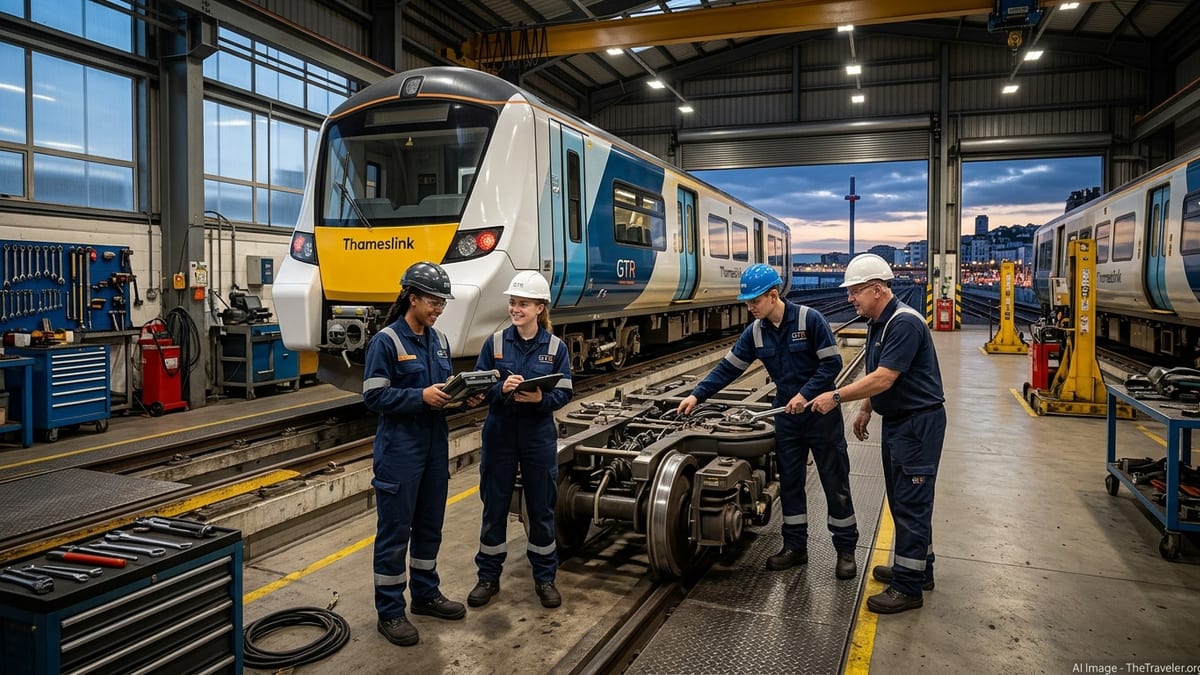
Four-year engineering scheme across key London and South Coast depots
The latest intake covers GTR depots at Selhurst and Battersea in South London, Hornsey in North London and Brighton on the South Coast, according to the operator’s current job listing for the “Engineering Apprenticeship – 2027.” These locations sit across the Southern, Thameslink and Great Northern parts of the network, giving successful candidates exposure to different fleets and maintenance facilities.
The programme is a Level 3 Rail Engineering Technician apprenticeship running over four years. GTR’s recruitment and apprenticeship pages state that it combines on-the-job training in depots with classroom and workshop learning, designed to build practical skills in inspecting, maintaining and repairing modern passenger trains while working alongside experienced engineers.
Applications are open now, with GTR’s own careers site and associated job boards giving a published closing date of Friday 11 December 2026 for this intake. Prospective applicants are advised to recheck the live vacancy before applying in case the operator adjusts the deadline or fills roles earlier.
“Earn while you learn” with above-minimum pay and benefits
GTR’s advertising for the 2027 engineering apprenticeship confirms a starting salary of £18,474 a year, set to increase on a defined scale during the scheme to £25,807 once the apprentice is fully qualified within that Level 3 programme. Separate rail-industry careers portals currently list the full band as £18,474 to £25,807 per year plus access to GTR’s final-salary pension scheme, underscoring that £25,807 is the upper end of the apprenticeship pay scale, not the starting rate.
Once apprentices complete the scheme and move into depot engineering roles, GTR and partner publications have previously cited typical earnings for Level 1 service engineers at around the mid-£30,000s per year, for example in the region of £37,800. These figures are presented as indicative current rates rather than guarantees and sit outside the apprenticeship pay band itself, but they highlight the potential step up for those who secure permanent positions.
Alongside salary, current GTR job information points to benefits including free travel on Southern, Thameslink, Great Northern and Gatwick Express services, which can significantly reduce commuting costs for London and South East residents. Apprentices also receive 25 days of annual leave plus bank holidays and are eligible for the company’s final-salary pension, bringing their package above the legal apprenticeship minimum in several respects.
Entry requirements and training structure for new starters
The scheme is open to applicants aged 16 and above who meet minimum academic requirements. GTR’s latest press release and apprenticeship guidance specify that candidates must hold GCSEs at grade 4/C or above in Maths, English and Science, or equivalent qualifications. The recruitment material notes that no previous engineering or railway experience is required, which makes the intake accessible to school leavers and career-changers prepared to commit to a technical pathway.
Training is delivered through a mix of college and depot-based learning. Current documentation indicates that apprentices attend East Surrey College in Redhill for the classroom element, while spending substantial time at one or more of GTR’s depots, including Selhurst, Battersea, Hornsey and Brighton. Over the four-year period, apprentices work towards a nationally recognised Level 3 rail engineering qualification, learning to diagnose faults, carry out scheduled maintenance and support day-to-day fleet reliability.
GTR’s apprenticeship pages and recent case studies emphasise structured mentoring and progression planning, with experienced engineers and managers assigned to help apprentices develop both technical and safety competencies. The operator reports that many previous participants have gone on to secure permanent roles in its engineering teams, although a job at the end of the scheme is not guaranteed and depends on performance and business needs.
How this compares and what applicants should check next
Within the UK rail sector, operators such as Network Rail and Transport for London also run Level 3 engineering apprenticeships with their own pay scales and conditions. For example, Network Rail currently advertises a three-year Rail Engineering Technician apprenticeship with a higher starting salary but a different work pattern and focus on infrastructure rather than rolling stock. These programmes are separate from GTR’s scheme and are not directly comparable in terms of duties, locations or benefits, though they illustrate that rail engineering apprenticeships can vary significantly between employers.
For potential applicants in London and the South East, GTR’s 2027 intake offers a route into depot-based train maintenance with free travel across a dense commuter network, which may be particularly attractive for those living along Southern, Thameslink, Great Northern or Gatwick Express routes. The balance of paid work, college study in Redhill and the prospect of moving into a Level 1 service engineer role positions the scheme as a concrete entry point into the rolling-stock side of the industry rather than a short-term placement.
Before applying, candidates should reconfirm key details on GTR’s careers website, including the published closing date of 11 December 2026, the current salary band of £18,474 to £25,807, benefit entitlements such as free travel and annual leave, and any updates to depot locations or qualification requirements. As these elements can change between recruitment cycles or be adjusted mid-campaign, GTR’s own vacancy pages remain the authoritative source for final decisions.