


More news on this day
LNER has extended its trial of “super-low” early-bird fares from London to a wider set of East Coast Main Line destinations, adding limited sub-£20 one-way tickets on selected London King’s Cross services to York, Northallerton, Darlington, Durham and Newcastle, in a move that brings rail pricing on these routes closer to long-distance coach levels for travellers able to book specific trains well in advance.
Get the latest news straight to your inbox!
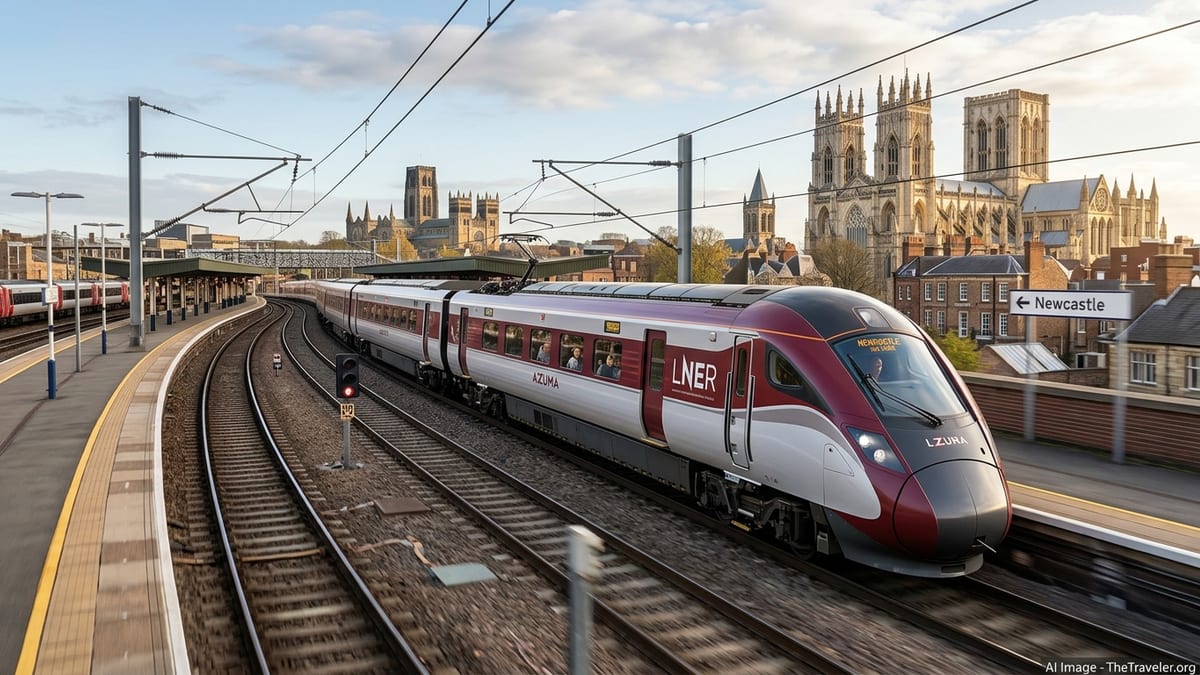
What has changed on LNER’s northern routes
The new fares build on LNER’s recently launched £12 one-way early-morning offer between London King’s Cross and Leeds, which applies on specific departures and is marketed as a “super-low” advance ticket rather than a new product tier across the timetable. Independent fares specialists now confirm that the same pricing model has been rolled out to more London flows on the East Coast Main Line, including York, Northallerton, Darlington, Durham and Newcastle, with clearly defined lead-in prices.
As of mid-November 2026, example starting fares from London are around £14 to York, £15 to Northallerton, £16 to Darlington, £18 to Durham and £19 to Newcastle on selected LNER-operated trains, alongside the original £12 London–Leeds headline fare. These figures reflect current availability in the booking systems checked on the day of writing, but they only appear on particular departures and dates and should not be read as typical prices for every train.
LNER continues to sell these tickets within its existing brand and rolling stock. Services are operated by its standard Azuma and InterCity 225 trains on the East Coast Main Line, rather than a separate low-cost sub-brand, and the new fares sit alongside the operator’s simplified single-leg pricing structure and other existing ticket types.
How the new super-low fares work
The expanded fares are sold as capacity-controlled Advance Singles tied to a specific LNER service. They must be booked before travel and are not available as walk-up tickets at the Anytime or regular Off-Peak rate. Once the quota of the cheapest Advance fares on a given train sells out, prices step up through higher tiers, so the sub-£20 lead-in levels are likely to be found first on less busy trains and off-peak dates.
Tickets can be booked directly via LNER’s website and app or through standard UK rail retailers that connect to the national fares database. On LNER’s own channels, these tickets appear alongside other Advance and 70-minute Flex products where applicable, and seat reservations are included as part of the booking flow. Travellers should note that normal Advance ticket conditions apply, typically limiting refunds and restricting changes to specific rules and fees.
The new fares are available for travel dates already within the current booking horizon. National Rail and LNER sales channels generally release Advance tickets several months ahead, although exact dates can vary, particularly around major timetable changes or engineering works. Prospective passengers looking for the very lowest prices will usually need to commit to a train well in advance and be flexible on departure time.
Journey times and how the prices compare
Journey times on these routes are unchanged, meaning the new fares effectively allow a faster trip at something closer to coach pricing for those who secure them. LNER’s London to York services typically take around 1 hour 50 minutes to 2 hours, while London to Newcastle timings are usually close to 2 hours 50 minutes to 3 hours on direct trains, with intermediate stops at stations such as Northallerton, Darlington and Durham.
Compared with standard Off-Peak or flexible singles on the same flows, the new lead-in levels represent a substantial discount for passengers who do not need flexibility. For example, headline Off-Peak single prices between London and major East Coast cities often sit many tens of pounds above the new Advance minimums, reflecting the usual premium for turn-up-and-go travel that is valid across multiple departures.
Against Lumo, the open-access operator on the London–Newcastle–Edinburgh corridor that markets itself as a low-cost carrier with an all-standard seating model, LNER’s new fares narrow the gap on specific departures without changing LNER into a budget operator overall. On days when the super-low Advances are available, rail travelers may find LNER pricing close to or occasionally below Lumo’s entry-level fares, but this will depend heavily on date, time and advance purchase window. Compared with long-distance coach services, which often undercut rail on price, the new LNER fares provide a significantly faster journey at a cost point that in some cases approaches coach levels.
Who benefits most, and the limitations to know
The main winners from LNER’s expanded super-low fares are price-sensitive leisure travellers with fixed itineraries, such as city-break visitors, people visiting friends and relatives, and domestic tourists planning rail-based trips through northern England. For these groups, trading flexibility for a confirmed seat on a specific fast train can deliver material savings compared with buying tickets closer to departure.
Business travellers and anyone whose plans could change at short notice are less likely to benefit, as the conditions and change rules on cheap Advance tickets remain more restrictive than on flexible singles. In addition, availability of the very lowest tiers is capacity-controlled and often sparse at traditional peaks such as Friday afternoons, Sunday evenings and holiday periods, when demand is strongest and LNER’s revenue-management systems are likely to steer buyers toward higher price points.
Travellers should treat the quoted lead-in prices as current examples, not as a guaranteed permanent feature or a statutory ceiling. LNER retains the ability to adjust the offer, alter the specific trains on which the cheapest tickets appear, or withdraw the promotion in future. Anyone planning a trip around securing one of these fares should confirm the latest pricing and terms at the time of booking rather than relying on previously advertised levels.
What to watch next and how to book smart
Looking ahead, the key questions for travellers will be how consistently LNER maintains these super-low fares across the timetable and whether the scheme is expanded to additional destinations or allocated a larger quota of cheap seats on the most popular flows. For now, the offer remains limited to specific London–Leeds and London–northern England services rather than a blanket reduction across the operator’s network.
To maximise the chance of securing the lowest prices, prospective passengers should check LNER’s own site or trusted UK rail retailers as early as practical once their travel dates are fixed and be prepared to consider early-morning, late-evening or shoulder-peak departures. Monitoring prices across several days can help identify when the cheapest tiers appear, especially around timetable changes and holiday periods when advance quotas are released in batches.
As with all yield-managed rail pricing on the East Coast Main Line, the fundamentals remain the same: booking early, being flexible on times and travelling on less busy days usually delivers the best value. The difference now is that for a subset of London–York and other northern journeys, those best-value tickets have moved noticeably closer to coach territory, at least while the current super-low fare initiative remains in place.