


More news on this day
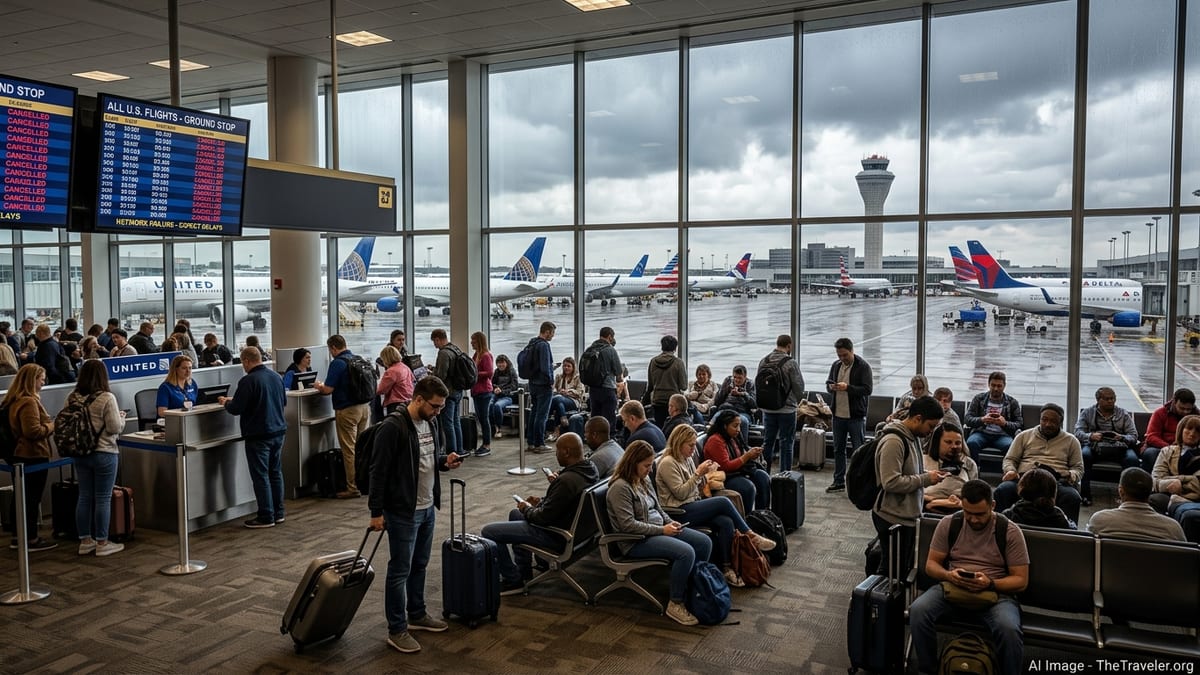
A rare nationwide Federal Aviation Administration ground stop on November 13 halted U.S. departures for hours after a telecommunications failure in the air traffic control network, canceling more than 12,000 flights and exposing fresh vulnerabilities for corporate travelers who rely on tightly timed flight schedules.
Get the latest news straight to your inbox!
How a Router Swap Triggered a Nationwide Halt
The Federal Aviation Administration ordered a nationwide ground stop on all U.S. departures on Friday, November 13, 2026, after a telecommunications failure disrupted radar and radio links at multiple air traffic control facilities. According to an FAA question-and-answer bulletin, the problem emerged during ongoing work to transition from aging copper lines to fiber, when a new router installation at a site in El Dorado, Arkansas contributed to a flood of network traffic that overwhelmed parts of the legacy system.
The ground stop, initiated at about 3:54 p.m. Eastern time, affected traffic flows at 17 of the country’s 22 Air Route Traffic Control Centers, which manage high-altitude traffic between airports. The FAA has confirmed that operators ultimately canceled approximately 12,462 flights nationwide, including 9,082 flights by major U.S. airlines, alongside thousands of delays and diversions as aircraft already in the air were allowed to continue to their destinations.
Officials say there is currently no evidence that a cyberattack or deliberate sabotage caused the outage, although cybersecurity agencies have not fully ruled out that possibility. The Department of Transportation and FAA have instead framed the incident as a failure of aging infrastructure under the strain of new equipment, noting that the underlying work to replace obsolete copper lines with fiber has been underway for several years.
Chicago’s Airports Illustrate Corporate Travel Fallout
Chicago’s O’Hare and Midway airports, both central nodes for business travel in and out of Illinois, experienced some of the sharpest visible impacts. Local airport data and media reports show hundreds of cancellations and delays across both airports on November 13, with disruption spilling into Saturday, November 14, as airlines worked to reposition aircraft and crews.
In Chicago, long lines formed through terminals as passengers attempted to rebook. Local coverage highlighted business travelers from Illinois either stuck en route to meetings or trying to return home, including some who opted to rent cars out of O’Hare rather than wait for backlogged departures, and others who shifted to rail for regional trips when short-haul flights were scrubbed. The Chicago Department of Aviation and airlines warned travelers late on November 13 to expect residual disruption into the weekend.
The fallout was not unique to Illinois, but Chicago’s dual role as a major connecting hub and home base for many Midwest corporate itineraries made its experience representative of what business travelers saw nationwide. Similar patterns were reported at other large hubs, including significant delays, missed connections tied to client meetings and conferences, and last-minute rerouting through whatever airports and modes remained available.
Peak Season Shock for Corporate Travel Programs
The outage hit as airlines and travel managers were preparing for the peak pre-Thanksgiving and late-fall business travel period. Corporate travel analysts note that, while ticket demand for business itineraries remains strong, the November 13 disruption forced widespread, abrupt changes to trip plans for sales calls, site visits and industry events across the country.
Major carriers responded with temporary waivers that allowed customers booked on November 13 and 14 to change itineraries without standard change fees, within specified rebooking windows and routing conditions. For Illinois-based companies, that meant scrambling to rebook key staff around diminished O’Hare and Midway schedules, in some cases pushing meetings back by several days or moving engagements online when no reasonable same-day alternatives were available.
Travel insurers and intermediaries also weighed in. Allianz Partners issued a specific travel advisory referencing the November 13 nationwide ground stop and outlining how its policies may respond to travel disruption, while specialist insurance platforms reminded travelers that coverage would depend on policy type and purchase timing relative to the outage. Corporate travel managers are now reviewing how their duty-of-care frameworks handle sudden nationwide airspace interruptions that are not tied to weather or labor disputes.
Investigations, Modernization Push and What Travelers Should Expect
The Department of Transportation and FAA have opened a formal investigation into the ground stop, focusing on how a single telecommunications failure cascaded through critical air traffic systems. In the immediate aftermath, the FAA said it had disabled the functionality associated with the routers believed to be involved and has temporarily paused parts of the broader router upgrade rollout while engineers review the modernization plan and additional safeguards.
Transportation Secretary Sean Duffy and FAA Administrator Bryan Bedford are using the incident to press Congress for what the administration describes as an additional 50.1 billion dollars in aviation system funding, including roughly 10.1 billion dollars specifically earmarked for air traffic control modernization such as telecommunications and digital technology upgrades. In recent days, Duffy and Bedford have briefed lawmakers on the proposal, but early reactions from Senate Republicans suggest skepticism about the size of the request. A bipartisan group of senators, including Illinois Senator Tammy Duckworth, has sent an oversight letter demanding detailed explanations of the failure and assurances on network resilience before new funding is approved.
For now, as of November 18, 2026, the national airspace system and Chicago’s airports are operating normally, and airlines have largely worked through the November 13–14 backlog. However, both federal officials and industry advisers caution that the underlying infrastructure questions and the political fight over long-term funding remain unresolved. Corporate travel managers, particularly at Illinois-based firms that route significant volumes through O’Hare and Midway, are being advised to plan for potential schedule volatility through the upcoming holiday period, to ensure stronger contingency planning and traveler tracking, and to consider when rail or driving may be more resilient options for regional trips if air traffic is disrupted again.
Travelers planning business trips in the coming weeks are being urged to monitor FAA status tools and airline notifications closely, verify whether their employers provide supplemental travel insurance or emergency assistance services, and build greater schedule flexibility into critical journeys, especially those relying on tight connections through major hubs.