


The University of Helsinki consistently ranks among the leading universities in Europe and has become a compelling choice for international students seeking high-quality education in a safe, well organized Nordic capital. If you are considering a degree or exchange period here, understanding how programs, campuses, housing, and everyday student life fit together will help you plan a smoother move to Finland.
Get the latest updates straight to your inbox!
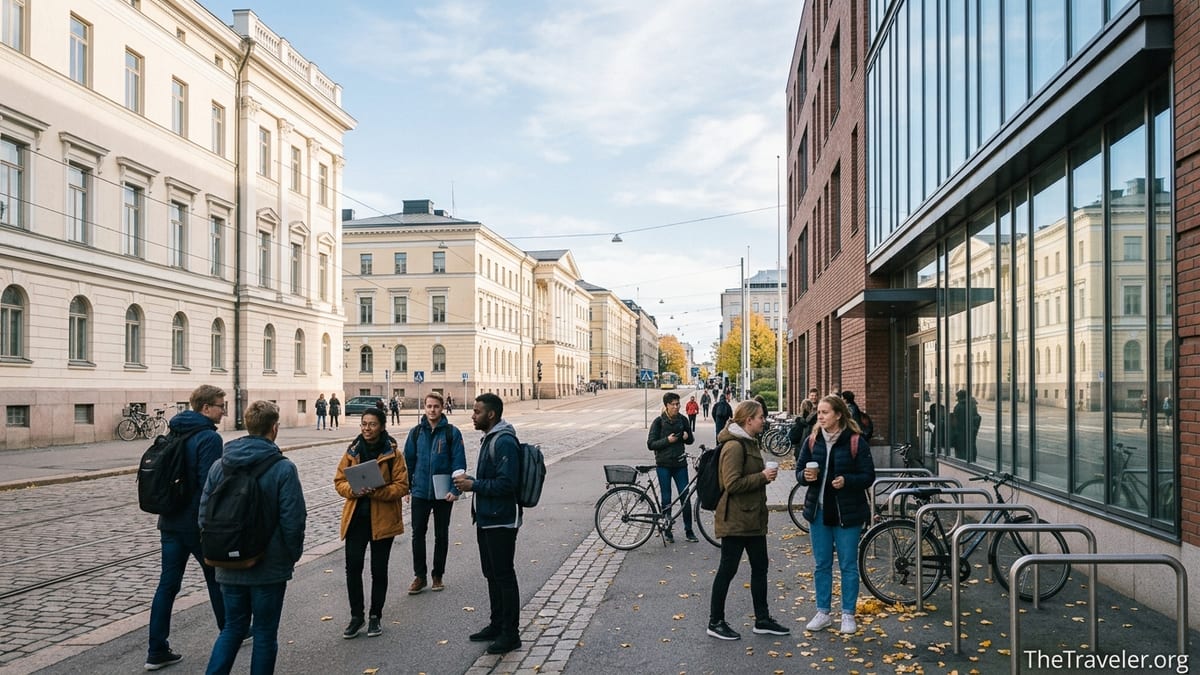
Understanding the University of Helsinki at a Glance
The University of Helsinki is Finland’s oldest and largest university, with roughly 30,000 degree students spread across four main campuses throughout the city. Teaching and administration are primarily in Finnish and Swedish, but the university offers an expanding portfolio of English-taught programs, particularly at master’s level, that attract students from around the world.
Instead of a single closed campus, the university is woven into the urban fabric of Helsinki. The historic City Centre Campus is a short walk from the Central Railway Station, while science students often commute a few kilometers north to Kumpula. Life and health sciences are concentrated in Meilahti, close to the main university hospital, and many agriculture, forestry, and life science students spend their days in the greener surroundings of Viikki.
For a prospective student this structure means you will almost certainly be moving around the city rather than staying on a secluded campus. A typical international master’s student might live in a student apartment in a residential neighborhood like Pihlajamäki, commute 20 minutes by tram to City Centre for a language course, then take a bus out to Kumpula or Viikki for major-specific lectures.
Helsinki’s compact size and strong public transport infrastructure make this multi-campus model workable in practice. As you evaluate programs, it is worth noting on which campus your main faculty is located, since this will directly influence where you choose housing and how your daily routine will look.
English-taught Programs and How Admission Works
The University of Helsinki offers one English-language bachelor’s program, the Bachelor’s Programme in Science, and more than 30 international master’s programs fully taught in English. These cover areas such as Data Science, Environmental Change and Global Sustainability, European and Nordic Studies, Neuroscience, and many more, with most programs lasting two years at master’s level.
Admission procedures and deadlines vary slightly by program, but for most international applicants the main intake is for studies beginning in late August each year. The application period generally falls in the first months of the preceding academic year, often in January. Applicants apply through the national Studyinfo system, where you select the specific University of Helsinki program and upload required documents such as transcripts, proof of language proficiency, and a motivation letter.
As an illustration, a prospective student interested in the Data Science master’s would typically need a strong background in mathematics, statistics or computer science, evidence of English proficiency such as an IELTS or TOEFL score (unless exempt), and a degree certificate from a relevant bachelor’s program. Some programs use entrance examinations or interviews, while others select solely on documents and academic performance.
Because many programs receive far more qualified applicants than places available, admission can be competitive. It is common, for example, for the Environmental Change and Global Sustainability master’s to attract applicants with previous field experience or NGO work, so a concise, well targeted motivation letter that connects your background to the specific profile of the program can make a difference.
City Centre, Kumpula, Meilahti and Viikki: How the Campuses Differ
The University of Helsinki’s four main campuses each has a distinct character. Understanding these differences will help you picture where you will actually spend your days once classes begin. The City Centre Campus houses disciplines such as law, theology, arts, social sciences and much of the university administration. Buildings are tucked among cafes, bookstores, and government offices in the historic core of Helsinki, with the main library located in the landmark Kaisa House.
Kumpula Campus, about four kilometers north of the center, is the science hub. It is home to the Faculty of Science, including mathematics, physics, chemistry, geology and computer science. Many students in the English-language Bachelor’s Programme in Science have their core courses here. While the surroundings are quieter than the city center, Kumpula still has a student-dense feel, with HOAS student housing blocks nearby and regular bus and tram connections that bring you to the center in roughly 20 minutes.
Meilahti Campus, to the west of the center, focuses on medicine and health sciences. Here the university’s Faculty of Medicine is closely integrated with the Helsinki University Hospital complex. A typical day might see medical students moving between Biomedicum research facilities and clinical work in neighboring hospital buildings. The area has a more professional and hospital-oriented atmosphere than other campuses, which can be helpful if you are in a clinically oriented program and want easy access to teaching hospitals and research groups.
Viikki Campus, in the geographic center of Helsinki, specializes in biological sciences, agriculture, forestry, environmental sciences and related fields. The campus is surrounded by fields, nature reserves and student housing clusters, including a well-known student district in Latokartano. For many international students in programs such as Agricultural Sciences or Forest Sciences, Viikki offers a distinctive mix of modern teaching facilities and easy access to experimental farms, greenhouses and outdoor research areas, while still being roughly 25 to 30 minutes by bus from the city center.
Housing, Neighborhoods and Typical Student Budgets
Securing housing in Helsinki is one of the most important practical tasks for new students. The main providers of student accommodation are HOAS, the Foundation for Student Housing in the Helsinki Region, and Unihome, a university-owned company that offers furnished rooms and studios for students, visiting researchers, and staff. The University of Helsinki also reserves a limited number of rooms and studios via HOAS and Unihome specifically for new international degree students.
In practice, a typical international student might apply simultaneously for HOAS and Unihome housing while also browsing private rental platforms. Recent examples show that a furnished 23 square meter studio apartment offered via Unihome in the Vuolukiventie student complex has been priced around 500 to 600 euros per month, including utilities and internet. Shared HOAS apartments can be somewhat cheaper, often in the 300 to 400 euro range for your own room with shared kitchen and bathroom, depending on location and condition.
Neighborhoods popular among University of Helsinki students include Kumpula, Viikki, Pihlajamäki, and Pihlajisto for science and Viikki students, as well as more central or inner-suburban districts like Kamppi, Pasila, and Kallio for those studying primarily at the City Centre Campus. Students based in Meilahti often look for apartments along major tram and bus corridors such as Mannerheimintie to keep commute times short to both Meilahti and the center.
For monthly budgeting, the university advises international students to prepare for overall living costs in the range of roughly 900 to 1,250 euros per month, excluding any tuition fees. This estimate typically covers 300 to 700 euros for rent, 35 to 55 euros for a student public transport card, and several hundred euros for food, study materials, and leisure. A realistic example for a master’s student in Viikki might be 350 euros for a HOAS shared apartment, 40 euros for public transport with student discount, and 350 to 450 euros for food and other expenses, resulting in a monthly budget of about 800 to 900 euros.
Student Services, Community Spaces and Daily Life on Campus
The University of Helsinki and its Student Union support a wide network of student services that make everyday life easier, from orientation and language courses to health care and student discounts. New international students are encouraged to join the Student Union, which provides the student card used to access subsidized meals in student cafeterias, reduced fares on public transport, and various commercial discounts across Finland.
An eye-catching aspect of campus life is the network of Helsinki Think Company community spaces, located on each campus. These are open co-working and event environments where students, researchers and aspiring entrepreneurs can work on projects, attend workshops, or simply use a free desk between classes. For example, a group of master’s students in Environmental Change and Global Sustainability might use the City Centre space to develop a climate start-up idea, then pitch it at an evening event attended by local entrepreneurs and mentors.
Each campus also has its own character when it comes to informal gathering spots. In Kumpula, students often meet in the science library or in small cafes between lecture halls, while Viikki’s green surroundings and campus farming plots invite outdoor activities when weather permits. Meilahti’s proximity to the seaside and hospital campus offers quiet walking routes for a break between lab sessions, and City Centre students have countless cafes, lunch spots and cultural venues within a short walk of the main buildings.
Orientation weeks at the start of the academic year help new students learn how to navigate this landscape. Tutors and student organizations typically organize campus tours, social events, and practical info sessions dealing with topics such as how to register your address with local authorities, how to open a Finnish bank account, and how to apply for a student travel card, so that by the time regular classes begin you have the basic logistics in place.
Support for International Students and Language Learning
International students at the University of Helsinki have access to support services tailored to their needs. The university’s Instructions for Students portal centralizes practical information on topics such as residence permits, insurance, health care, and academic regulations, and many faculties designate contact persons or planning officers for international programs who can answer program-specific questions.
Language learning is another important part of settling in. While degree programs taught in English do not require knowledge of Finnish, even basic skills can make daily life and future job hunting smoother. The university typically offers free or low-cost Finnish language courses to enrolled international students, starting from absolute beginner level. A common pattern is for a new master’s student to combine full-time studies in English with one or two introductory Finnish courses in the first academic year, picking up everyday phrases for use in grocery stores, on public transport, and in part-time jobs.
Beyond Finnish, the university’s Language Centre offers courses in a range of languages, and many master’s programs explicitly support students who want to build an international career. For example, a student in European and Nordic Studies might combine core courses taught in English with Swedish language classes, using both languages during an internship at a local cultural institution in Helsinki or another Nordic country.
Peer networks are also valuable. International student associations, such as subject-specific guilds in science or faculty organizations in social sciences and arts, often pair international and Finnish students through buddy or mentoring schemes. This can help you navigate bureaucratic steps in your first weeks in Finland and introduce you to local student traditions, from academic dinner parties known as sitsit to outdoor events celebrating the start of spring.
Planning Your Application and Arrival
Because admission is competitive and housing in Helsinki can be tight, careful planning is crucial. Future students should first map out which campus their preferred program belongs to, then sketch a realistic timeline that covers application submission, possible entrance exams or interviews, residence permit processing, and housing applications. It is common for successful applicants to receive decisions in the spring and to arrive in Helsinki in early or mid August for orientation if studies begin at the end of that month.
In practical terms, a non-EU applicant accepted to the Bachelor’s Programme in Science might receive an admission letter in late spring, then immediately schedule a visa appointment for a Finnish residence permit and submit housing applications to both HOAS and Unihome. With processing times for residence permits sometimes taking several weeks, starting early can prevent stressful last-minute travel arrangements.
Arrival in Helsinki usually involves a short train or bus journey from the airport to the city center, followed by a move into temporary or permanent student accommodation. Many new students begin with a furnished Unihome room for the first months, then transition to a longer-term HOAS apartment or private rental once they know the city better. During the first days you will need to complete key administrative steps such as registering as a resident if staying long term, paying the student health care fee if applicable, and activating your university IT credentials.
As you adjust, factor in the Nordic climate and seasonal rhythm. Autumn in Helsinki is cool and darkens quickly toward winter, so investing in warm clothing, indoor hobbies, and social activities through student organizations can help you stay active and connected. At the same time, the long, bright evenings of late spring and early summer are ideal for exploring the city’s waterfronts, islands, and parks after exams are over.
The Takeaway
Studying at the University of Helsinki means joining a research-intensive university embedded in a compact, livable Nordic capital. The four-campus structure exposes you to different parts of the city, from the historic center and hospital district to science hubs and semi-rural research fields, and English-taught programs bring together students from dozens of countries.
For prospective students, the key to a successful experience lies in matching the right program and campus to your academic goals, budgeting realistically for housing and daily costs, and making use of the extensive support services that help international students orient to life in Finland. With careful preparation, the practical details of visas, housing, and transport quickly become routine, allowing you to focus on the opportunities that drew you to Helsinki in the first place.
Whether you imagine yourself doing physics problem sets in Kumpula, analyzing policy documents in the City Centre, or collecting soil samples near Viikki’s experimental fields, the University of Helsinki offers a broad range of academic paths within a safe, well organized city that is easy to navigate as a student.
FAQ
Q1. Which University of Helsinki campus will I study on?
Most students are based on the campus where their main faculty sits: humanities, law and social sciences are primarily in the City Centre; science programs such as the Bachelor’s Programme in Science are mainly in Kumpula; medicine and many health sciences in Meilahti; and agriculture, forestry and many biological sciences in Viikki.
Q2. Are there bachelor’s programs taught entirely in English?
The University of Helsinki currently offers one English-language bachelor’s program, the Bachelor’s Programme in Science, which combines subjects such as mathematics, physics, computer science and statistics and is based largely on the Kumpula Campus.
Q3. How many international master’s programs are available?
The university offers over 30 international master’s programs taught in English in fields ranging from data science and environmental change to linguistics, law and cultural studies. The exact number and titles can change as programs are updated, so always check the latest list when you apply.
Q4. What does it typically cost to live as a student in Helsinki?
A realistic monthly budget for a single student is roughly 900 to 1,250 euros, including rent, food, local transport and daily expenses. Students who secure an inexpensive HOAS shared apartment and cook at home can often stay toward the lower end of this range.
Q5. How long does it take to commute between campuses and the city center?
Public transport connections are generally efficient. A typical commute from Kumpula or Viikki to the city center takes around 20 to 30 minutes by bus or tram, while Meilahti is usually 10 to 20 minutes away depending on the route and time of day.
Q6. How do I apply for student housing?
Most students submit applications to HOAS and Unihome as early as possible after accepting their study place. You fill in an online application with your study details, preferred housing types and areas, then wait for an offer. Because demand is high, it is wise to apply broadly and consider several neighborhoods.
Q7. Is it necessary to speak Finnish to study at the University of Helsinki?
No, English-taught programs do not require Finnish, and many academic and administrative services are available in English. However, learning at least basic Finnish can make everyday life easier and is often appreciated by local employers if you plan to work in Finland during or after your studies.
Q8. What kind of support is available for international students?
International students have access to orientation programs, tutoring schemes, student advising, language courses, health care services and community spaces such as Helsinki Think Company. Faculty-specific staff can also help with questions about degree structures, course choices and academic regulations.
Q9. Are there part-time job opportunities for international students in Helsinki?
Helsinki offers some part-time work in sectors such as retail, hospitality, cleaning, and IT, and many positions use English as a working language. Competition can be significant, and speaking basic Finnish often increases your chances, so most students treat any income from work as a supplement rather than their main financial support.
Q10. When should I arrive in Helsinki before my studies start?
Most degree programs begin in late August, and international students are encouraged to arrive at least one to two weeks earlier to attend orientation events, settle into housing and complete necessary administrative steps such as registering with local authorities and arranging a student travel card.