


Choosing between the University of Helsinki and Aalto University is less about which is better on paper and more about which fits your personality, study goals, and lifestyle. Both are top Finnish institutions in the same metropolitan area, yet they feel very different in atmosphere, academics, and daily life. This guide walks you through real-world differences, from campus vibe and housing to costs, teaching style, and career paths, so you can decide which one feels like your future home.
Get the latest updates straight to your inbox!
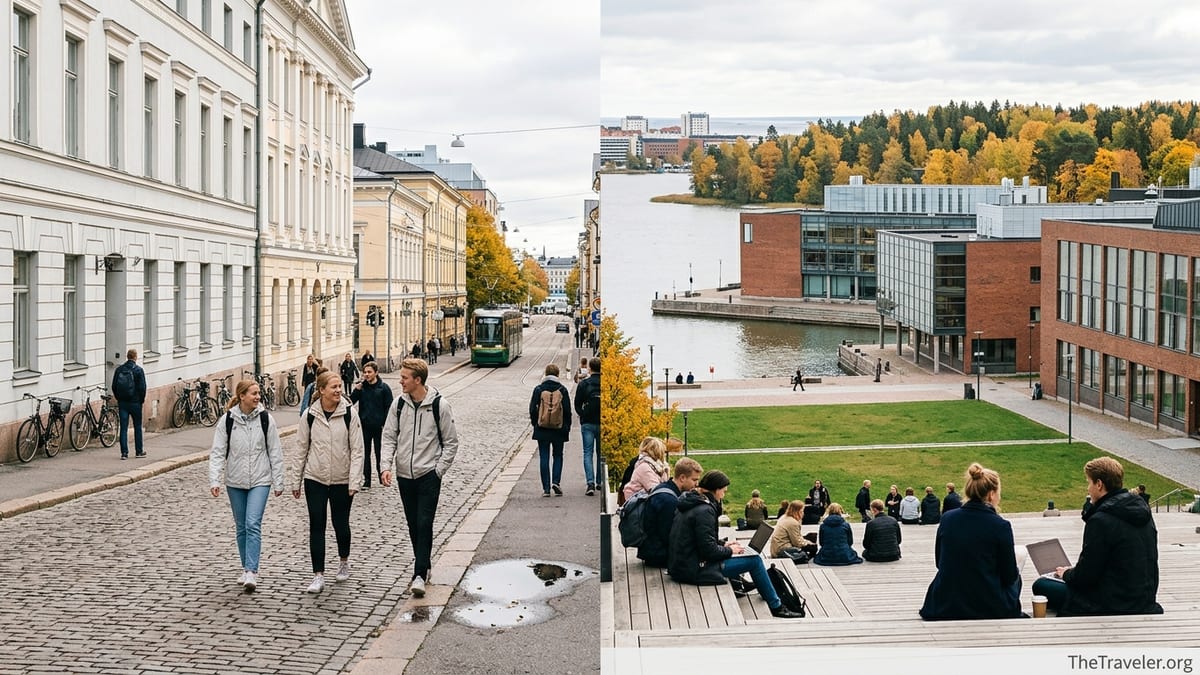
Big Picture: Two Top Universities, Two Different Personalities
The University of Helsinki and Aalto University sit only a short metro ride apart, but they represent two distinct sides of Finnish higher education. The University of Helsinki is Finland’s oldest and largest academic institution, with close to 32,000 students and a strong reputation in research-heavy fields such as humanities, social sciences, natural sciences and life sciences. Its city centre buildings, historic libraries and traditional lecture halls give it a classic European university feel mixed with modern facilities.
Aalto University is newer and smaller, created by merging three institutions in technology, business and arts. It is based mainly in Otaniemi, Espoo, which has developed into a compact “student town” full of labs, design studios and startup spaces. Aalto’s identity is strongly tied to innovation, entrepreneurship and multidisciplinary collaboration between engineers, business students and designers.
In practice, your choice often comes down to what you want to study and what kind of academic culture motivates you. If you imagine yourself doing qualitative fieldwork in social sciences, reading in historic libraries or joining public debates about education or climate policy, the University of Helsinki may feel like home. If you are drawn to building prototypes in a makerspace, pitching ideas in a startup accelerator or combining technology with sustainable design, Aalto is more likely to match your rhythm.
Because both institutions are public universities in Finland, EU and EEA students do not pay tuition for degree programmes. Non EU and non EEA students usually pay tuition fees for English taught bachelor’s and master’s programmes, though both universities offer competitive scholarships that can significantly reduce costs. You should always confirm programme specific fees and scholarship options shortly before applying, as amounts and rules are updated regularly.
Campus Atmosphere: Historic City vs Student Town by the Sea
The University of Helsinki is spread across several campuses in Helsinki, with the City Centre Campus being the most recognisable. Here you study steps away from the main railway station, government buildings and the harbour. Between lectures, many students grab coffee on a side street off Aleksanterinkatu or revise for exams in the main university library overlooking the city rooftops. It is easy to combine studying with urban life: attending a film festival, visiting a contemporary art museum or catching a tram to a seaside sauna after class.
Aalto’s main Otaniemi campus, by contrast, is concentrated in one area in Espoo. The mood is closer to a dedicated student district, with lecture halls, labs, student housing, cafes and the metro station all within walking distance. Otaniemi sits on a peninsula surrounded by forest and shoreline. You can finish a programming lab and, ten minutes later, be walking along the water or grilling at a public barbecue spot with classmates. Many students describe the area as a tight knit community where you bump into familiar faces on your way to the supermarket or the campus gym.
For someone who loves big city energy, the University of Helsinki’s integration into the urban fabric is a major advantage. For example, a political science student might attend a public seminar at Parliament in the afternoon and an international film screening in Kallio in the evening, all connected by metro and tram. Meanwhile, an Aalto engineering student might spend that same day moving between a lab, a startup hub on campus and an evening event hosted by the student guild, all within a few hundred meters of their shared student apartment.
Transport between the two is straightforward. The metro line connects Otaniemi to central Helsinki in roughly 15 minutes, so even if you choose one university you can still enjoy events, nightlife and cultural activities around the whole capital region. In practice, many students at both universities spend weekends in different districts, from the cafes of Punavuori to the nature trails in Nuuksio National Park.
What You Study: Academic Strengths and Typical Students
At the University of Helsinki, degree options are broad. It is particularly strong if you are interested in humanities, social sciences, education, law, theology, languages, life sciences or environmental and climate research. A typical example might be a student in the Master’s Programme in Environmental Change and Global Sustainability who splits their week between lab work, field excursions to nearby forests or coastal areas and policy focused seminars about EU climate measures.
The university is also known for education and teacher training, psychology, and several areas of natural sciences. If your dream is to become a high school teacher in Finland, a researcher in linguistics or a sociologist studying social inequality, you will almost certainly be looking more closely at programmes in Helsinki rather than Aalto.
Aalto University focuses on technology, business and art and design. Its flagship fields include computer science, data science, electrical engineering, mechanical engineering, industrial engineering and management, economics, finance, and design disciplines like architecture, fashion and product design. Many programmes are built to be cross disciplinary. For instance, a student in Aalto’s design or business programme might take courses at the Startup Sauna or in entrepreneurship, work part time in a Helsinki area startup and use a capstone project to develop a real service or prototype for a company.
If you picture yourself working as a software developer, product manager, startup founder, architect or creative director, Aalto’s environment is deliberately tuned to those paths. If you are more likely to pursue a career in public policy, NGOs, education, journalism, academic research outside applied technology or law, the University of Helsinki usually aligns better with your long term plans.
Teaching Style, Workload and Daily Academic Life
Both universities follow the general Finnish model of higher education, which emphasises student independence and relatively informal relationships between students and teachers. However, the way this culture plays out can feel slightly different in each place.
At the University of Helsinki, you will encounter a mix of lectures, small seminars, group work and independent reading. In many humanities and social science programmes, it is common to have substantial reading lists and essay based assessment. For example, a history student might attend two or three weekly lectures, one seminar, and spend the rest of the time preparing readings and research papers at the library or from a laptop in a quiet cafe. Science students will have more lab work and problem sets, but independent study still plays a central role.
Aalto students, especially in engineering and design, often deal with more project based and hands on coursework. A course in user interface design might culminate in a working prototype developed in small teams, evaluated not only on theoretical understanding but on how well the interface functions when classmates test it. A mechanical engineering course might involve building and testing a physical device in a campus workshop. Business courses commonly use case studies and group presentations that mirror workplace situations.
Whichever university you choose, expect relatively few contact hours compared to some countries and significant self management. You may have two or three long days per week full of classes and labs, with other days lighter and reserved for independent work. Students at both institutions frequently combine studies with part time jobs, internships or intensive language courses, especially Finnish language classes that can help with integration and employment.
Costs, Housing and Everyday Student Budget
Helsinki is not a cheap city, but with careful planning most students manage on a moderate budget by using student housing and subsidised services. The universities themselves estimate that you should allow roughly 800 to 1,200 euros per month for living costs, depending on your housing choice and lifestyle. Rent is the largest expense, so where and how you live makes a big difference.
Many students at both universities apply for housing through the Foundation for Student Housing in the Helsinki Region, commonly known by its Finnish acronym. Typical rents for shared student apartments through such providers are often in the range of about 280 to 450 euros per month for a room in a shared flat, with water and internet usually included. Studios and family apartments are more expensive and can reach and exceed 600 to 800 euros per month depending on size and location. These prices are approximate and can vary from year to year, so you should check the latest information when you apply.
Aalto students also have access to housing through their student union in and around Otaniemi, and these options are often on or very near campus. Many Aalto students live a short walk from their lecture halls, which can reduce transport costs and time. University of Helsinki students are more widely spread around the city and suburbs, living in different neighbourhoods connected by metro, train, tram and bus. It is common for a University of Helsinki student to live in a residential area like Kumpula or Vuosaari and commute 20 to 30 minutes to campus by public transport.
Daily expenses beyond rent are similar for students at both universities. A subsidised student lunch in a campus restaurant usually costs around 3 to 4 euros and includes a hot meal, salad, bread and drink. Many students rely on these lunches on weekdays and cook simple meals at home in the evenings or on weekends. Groceries might cost roughly 200 to 300 euros per month if you shop at mainstream Finnish supermarket chains and cook most of your meals, though costs can be higher if you buy many imported items or eat out often. Student union membership gives discounts on public transport, museums and some cultural events, making it easier to explore the city on a budget.
Student Culture, Community and Free Time
Student culture is strong at both universities but has a different flavour. The University of Helsinki’s student union is one of the oldest in Finland and organises a wide variety of associations covering everything from debate clubs and faculty specific societies to choirs, sports and role playing groups. You can join a subject association in your field, which organises excursions, informal evening events and study support. For instance, a law student might attend an excursion to a local law firm followed by a relaxed social event with classmates.
Aalto’s student community is famous across Finland for its special traditions, particularly in engineering and technology. The Otaniemi area is known for large student parties, colourful overalls worn by different student guilds and a lively calendar of events, especially in spring. Design and art students contribute to a creative campus culture with exhibitions, performances and collaborative projects. Many newcomers describe their first autumn at Aalto as a blur of orientation events, campus tours, coding nights, sauna evenings and spontaneous group dinners.
If you value a strong, nearly campus wide community where many friends live nearby, Aalto’s concentrated campus may feel ideal. You might attend a morning lecture, meet a project group in the afternoon and then walk five minutes to a guild room where people are cooking late night pancakes. If you are more interested in integrating into the wider city, exploring different districts, and mixing with students from various institutions and working professionals, the University of Helsinki’s more dispersed urban setting can be a better match.
Free time activities overlap: students at both universities take advantage of coastal walking paths, public saunas, ice swimming spots, indoor sports facilities and cultural venues. For example, you might spend a winter evening at an ice swimming sauna on an island off Helsinki, warming up in a wood fired sauna between jumps into the sea, or take a summer ferry with friends to explore car free islands with picnic spots and historic fortifications.
Careers, Internships and Life After Graduation
Both universities enjoy good reputations in Finland and internationally, but the types of employers that know them best differ. The University of Helsinki is widely recognised in academic and public sector circles, especially for fields like education, social sciences, law and natural sciences. Many graduates work in the Finnish public sector, international organisations, research institutes, NGOs or continue into doctoral studies. For example, a graduate from an international relations programme may intern at a ministry, then work on EU related policy issues or move into a role with a Nordic think tank.
Aalto University has deep ties with technology firms, consultancies, design studios and startups in the Helsinki metropolitan area and beyond. Its graduates are often found in companies working on software development, telecoms, gaming, industrial design, clean energy solutions and finance. The proximity of tech hubs and coworking spaces around Otaniemi encourages students to take part in hackathons, incubator programmes and startup competitions. It is common to meet Aalto students who already work part time as developers, data analysts or junior designers while finishing their degrees.
For international students, language can be an important factor after graduation. While some positions in tech, research and certain international companies are available in English only, many roles in the public sector or client facing services require at least conversational Finnish. Both universities offer Finnish language courses, and students who actively invest time in language learning tend to have more options later. If you see yourself long term in Finland, taking language courses from the start and practicing with classmates is one of the most practical decisions you can make, regardless of which university you attend.
Work opportunities during studies are comparable for students at both institutions, since they live in the same labour market. For instance, an Aalto computer science student might work part time in a Helsinki based game studio, while a University of Helsinki psychology student might find a part time role in a research project at a hospital or NGO. In both cases, balancing work and study requires time management, but many students find that local work experience helps them understand Finnish workplace culture and improve their language skills.
The Takeaway
Choosing between the University of Helsinki and Aalto University is ultimately about alignment rather than ranking. Both sit in the same high quality Finnish education system, offer respected degrees and provide access to the same vibrant metropolitan region. The key is to match the university’s strengths and culture with your own interests, personality and long term plans.
If you are drawn to broad academic disciplines, public debate, humanities, social sciences, education or basic research, and you like the idea of studying in the heart of a Nordic capital with historic buildings and a wide city backdrop, the University of Helsinki is likely to fit you better. Daily life there often means mixing lectures with time in libraries, city cafes, cultural institutions and neighbourhoods filled with a blend of students, families and professionals.
If your passion leans toward technology, business, design or entrepreneurship, and you like the idea of a close knit campus where you can walk from your apartment to labs, startup spaces and student parties in minutes, Aalto University may be the right choice. Its Otaniemi campus offers a distinctive “student village” atmosphere wrapped around a strong innovation and design identity.
Before deciding, picture a typical week for yourself in each place. Imagine where you would live, what your commute would look like, what kind of classmates you would have, where you would eat lunch, how you would spend your evenings, and what sort of internships or projects you would pursue. When one of those mental pictures starts to feel like your real life, you will know which Finnish university fits you better.
FAQ
Q1. Is the University of Helsinki or Aalto University better overall?
The two are strong but different: Helsinki excels in humanities, social sciences and life sciences, while Aalto is stronger in technology, business and design.
Q2. Which university is cheaper for international students?
Living costs are similar in the Helsinki region; tuition fees for non EU and non EEA students vary by programme, so you must check current rates and scholarships.
Q3. Where is it easier to find student housing?
Both rely heavily on student housing foundations and unions. Aalto has more housing directly around Otaniemi, while Helsinki students are spread across the city and suburbs.
Q4. Which campus has a stronger student community feel?
Aalto’s compact Otaniemi campus often feels like a tight knit student town, while Helsinki offers multiple smaller communities embedded in the wider city.
Q5. Do I need to speak Finnish to study at either university?
No, many programmes are fully in English. However, learning Finnish improves everyday life and significantly helps with part time jobs and long term careers.
Q6. Which university is better for finding a job in Finland after graduation?
For tech and design roles, Aalto has strong ties to companies; for public sector, education and many research roles, the University of Helsinki is often more relevant.
Q7. Can I take courses at the other university if I enrol in one?
In some cases, yes. There are cooperation agreements and open university options, but details depend on your programme and should be checked in advance.
Q8. How much money should I budget per month as a student?
Many students manage on roughly 800 to 1,200 euros per month, depending mainly on rent, food habits and how often they pay for leisure or travel.
Q9. Is public transport good for students in the Helsinki area?
Yes. The metro, trains, trams and buses connect campuses and neighbourhoods well, and student discounts make monthly passes more affordable.
Q10. How do I decide which Finnish university fits me better?
List your study interests, preferred campus atmosphere and career plans, then compare them with each university’s strengths and imagine your weekly life in each place.