


More news on this day
Air Arabia is rapidly deepening its Eurasian footprint, using hubs in the United Arab Emirates to knit together an expanding low-cost network that now spans Russia, Kazakhstan, Uzbekistan, Armenia and Georgia, opening fresh opportunities for two-way tourism, trade and labor mobility across the region.
Get the latest news straight to your inbox!
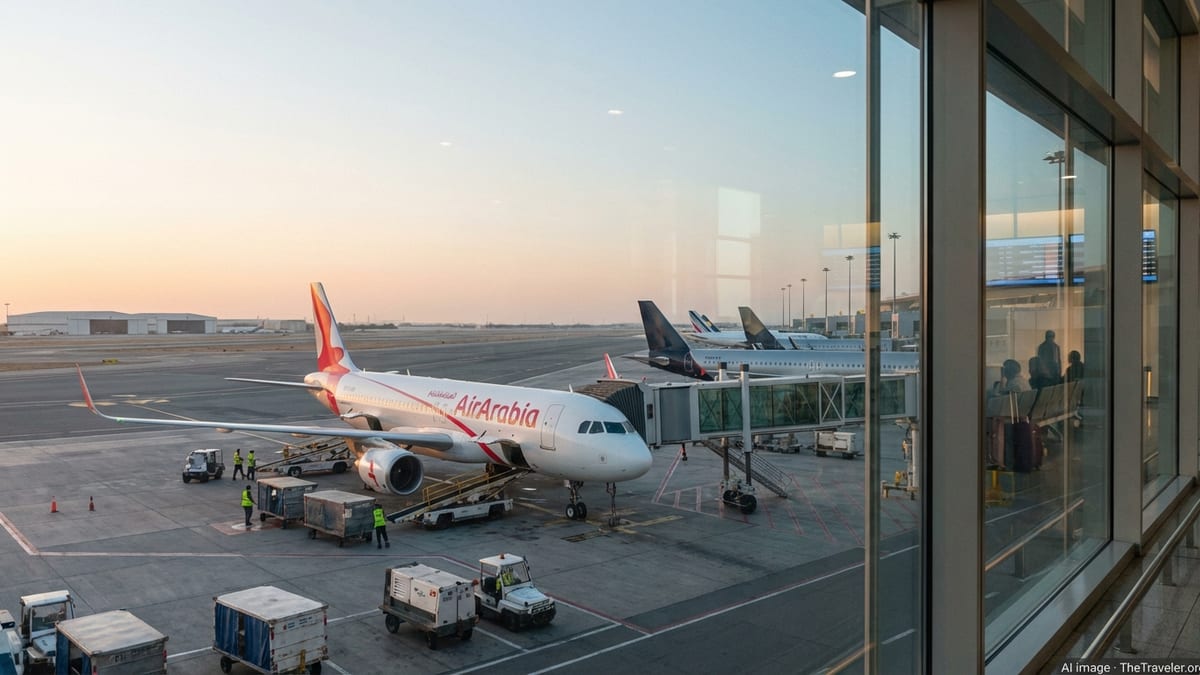
UAE Hubs at the Heart of a Wider Eurasian Grid
Publicly available information shows that Air Arabia’s multi-hub model in the United Arab Emirates is central to its Eurasian strategy. Sharjah International Airport remains the core base, complemented by growing operations from Abu Dhabi and Ras Al Khaimah, allowing the carrier to channel traffic from across the Gulf into a single web of routes reaching deep into Russia, Central Asia and the Caucasus.
Corporate data indicates that Air Arabia and its joint-venture affiliates collectively serve more than 200 destinations across the Middle East, North Africa, Asia and Europe. Within that map, Russia, Kazakhstan, Uzbekistan, Armenia and Georgia form a contiguous corridor where the airline has steadily layered routes over the past decade, turning the UAE into a key stopover point for regional travelers as well as long-haul passengers connecting from South Asia and North Africa.
By positioning the UAE as an affordable alternative gateway to hubs such as Istanbul or Doha, the carrier is tapping into demand from cost-conscious passengers seeking one-stop connections between secondary Eurasian cities. Travel industry observers note that this strategy supports the UAE’s ambitions to reinforce its role as a bridge between Europe and Asia while diversifying beyond premium, full-service traffic.
Russia Routes Return, Strengthening Northbound Links
Routes between the UAE and Russia are once again a visible pillar of Air Arabia’s network. According to recent schedule data and regional industry coverage, the airline has progressively rebuilt services linking Sharjah with Russian cities including Moscow and regional centers such as Samara, Kazan and Yekaterinburg, following periods of suspension and adjustment.
Flight timetables published for the coming seasons show multiple weekly frequencies on key routes, timed to arrive in the UAE during late evening or early morning connection banks. This structure allows passengers from Russian cities to connect onward via Sharjah or other UAE hubs to destinations in the Indian subcontinent, the Gulf and North Africa, using a single low-cost carrier rather than stitching together separate itineraries.
Analysts tracking the market suggest that the partial restoration of air links between the UAE and Russia has created a competitive landscape where low-cost offerings sit alongside services operated by national carriers. For leisure travelers, the availability of direct flights into both major and secondary Russian cities enhances the appeal of UAE stopovers, especially when combined with visa-on-arrival or e-visa schemes that several Gulf states have expanded in recent years.
Central Asia: Kazakhstan and Uzbekistan Gain Sharjah Connectivity
Central Asian markets are emerging as some of the fastest-growing components of Air Arabia’s Eurasian network. Historical and current schedules indicate daily or near-daily flights between Sharjah and major Kazakh cities such as Almaty, supported by additional links to other urban centers over time. These services are designed to connect seamlessly with departures to South Asia, the Levant and North Africa from the same hub.
Uzbekistan has also gained a place in the carrier’s expansion story, with routes from the UAE into key cities feeding both outbound tourism and a significant labor corridor. Publicly available route maps and booking engines show that passengers from Tashkent and other Uzbek gateways can access a broad range of destinations via Sharjah or Abu Dhabi on a single ticket, often at price points below those of traditional network airlines.
Industry observers note that these Central Asian links are strategically important because they offer one-stop options between markets that previously relied on indirect routings through Moscow or European hubs. As more travelers in Kazakhstan and Uzbekistan seek affordable international travel, the combination of low fares, simplified connections and growing awareness of the UAE as a short-break and shopping destination is expected to support further capacity growth.
Caucasus Connections: Armenia and Georgia in Focus
Air Arabia’s presence in the Caucasus extends the network’s reach westward and complements its Central Asian push. Public schedules and aviation media coverage reference regular flights from Sharjah to Tbilisi in Georgia, an increasingly popular leisure destination for Gulf travelers attracted by cooler climates, mountain scenery and visa-friendly entry rules.
Armenia has seen a different type of engagement through Fly Arna, the Yerevan-based low-cost carrier created as a joint venture between the Armenian National Interests Fund and Air Arabia. While Fly Arna operates as a separate airline, its establishment illustrates how the UAE-based group has embedded itself in the country’s aviation sector, enabling Armenian travelers to connect more easily into the wider network through coordinated schedules and similar service models.
Taken together, these Caucasus routes provide additional options for travelers coming from Russia and Central Asia who want to combine city breaks in Tbilisi or Yerevan with stopovers in the UAE. Travel platforms indicate that multi-city itineraries pairing Sharjah with Caucasus destinations are gaining traction, particularly during peak summer and extended holiday periods in the Gulf.
New Cross-Regional Flows and Competitive Pressures
The growing lattice of flights linking Russia, Kazakhstan, Uzbekistan, Armenia and Georgia with the UAE is reshaping passenger flows across Eurasia. Booking data cited in regional media reports suggests that a rising share of travelers use Sharjah and Abu Dhabi as intermediate points rather than final destinations, building itineraries that connect, for example, Almaty to Cairo, Samara to Goa or Tbilisi to Dhaka with a single connection on Air Arabia services.
This pattern is intensifying competition with both full-service and low-cost rivals operating from Turkey, the Gulf and Central Asia. New routes launched by other carriers into Georgia, Armenia and Kazakhstan underscore how airlines across the region are targeting similar city pairs, often focusing on price-sensitive leisure and visiting friends and relatives traffic. In this environment, schedule reliability, ancillary pricing and airport experience are becoming as important as headline fares.
For the UAE, the airline’s expanding Eurasian network supports broader economic priorities, including tourism promotion, aviation hub development and closer trade links with post-Soviet markets. For travelers across Russia, Central Asia and the Caucasus, it translates into a wider choice of affordable cross-regional flight options, with the UAE solidifying its role as the central node in a fast-evolving Eurasian travel web.