


More news on this day
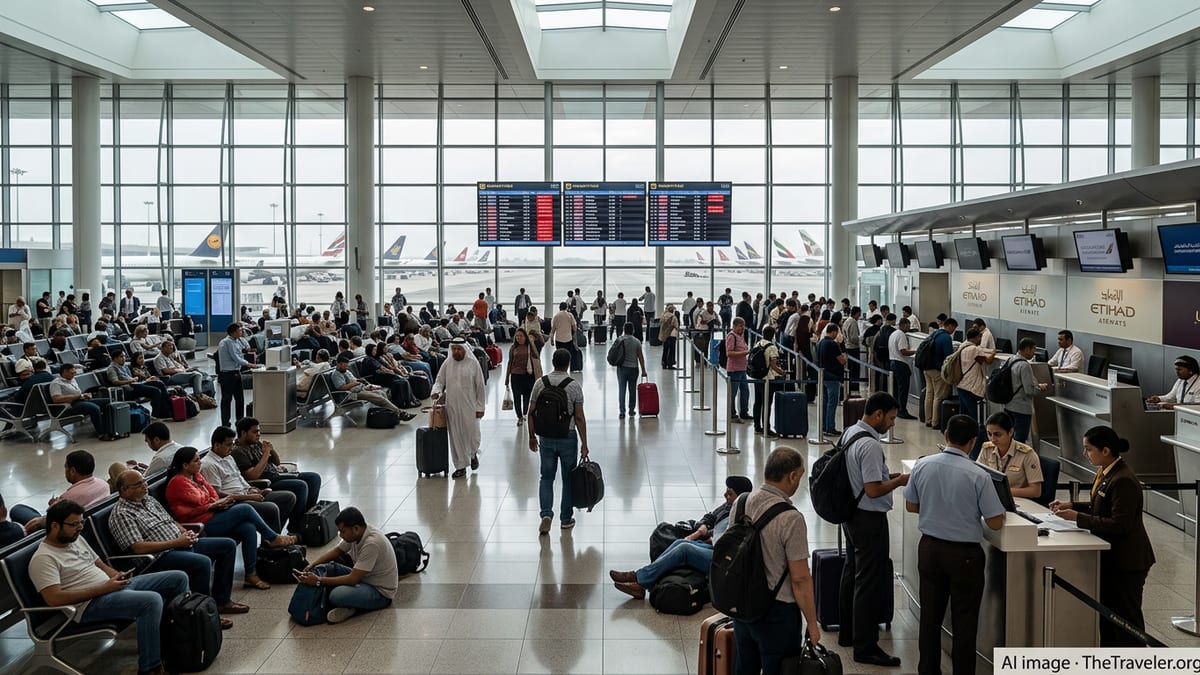
Flight-tracking snapshots indicate a sharp spike in disruption across the Gulf aviation network, with 1,585 delays and 40 cancellations recorded around September 19, 2026 across major Middle East gateways that serve as key global connection points.
Get the latest news straight to your inbox!
What the disruption numbers capture and why the Gulf is vulnerable
The 1,585-delay and 40-cancellation tally reflects a region-wide strain event rather than a single-airport shutdown. In practice, that distinction matters: when most flights still operate but run late, passengers can face missed connections, long terminal waits, and rebookings that become harder by the hour as later departures fill with displaced travelers.
Gulf hubs are designed around tightly timed “banks” of arrivals and departures, with large volumes of connecting traffic moving between Europe, Asia, Africa, and North America. When inbound aircraft arrive late, the same aircraft and crews often power multiple downstream segments, amplifying the impact across an airline’s network and across multiple airports.
Disruption trackers also differentiate between “minor” and “major” airport problems based on a combined index of delayed flights, cancellations, and average delay time. A “major problems” label typically indicates long delays alongside several cancellations, an at-a-glance signal that connections may be at higher risk even if departure boards still show many flights operating.
Where the delays clustered: Riyadh, Dubai, Doha and other connectors
Published coverage tying the spike to September 19 points to multiple Gulf airports recording elevated delays at the same time. Reports around that window highlighted pressure in Saudi Arabia and the United Arab Emirates, where dense schedules and high connection volumes can turn runway or air-traffic flow constraints into terminal-wide backups.
Riyadh’s King Khalid International Airport drew particular attention in publicly available disruption trackers during the spike. When a major hub becomes congested, the ripple effects can show up in later-day departures elsewhere because aircraft rotations, maintenance slots, and gate schedules are planned as interlocking sequences rather than standalone flights.
For travelers, the practical takeaway is that a disruption centered in one city can still break an itinerary that never lands there. A missed connection in a Gulf hub can mean arriving a day later in Europe or Asia, losing onward tickets on separate reservations, or triggering re-pricing for last-seat rebookings on competing airlines.
What likely drives a Gulf-wide spike: airspace changes, flow management, and crew limits
Coverage of the September disruption window described conditions consistent with network-style stress, including shifting air-traffic flows and operational constraints. Even when airports remain open, airspace re-routings can lengthen flight times, compress arrival banks, and increase holding, all of which raise the odds of late gates and missed connection windows.
Regional aviation risk advisories also remained a factor in late summer 2026 planning. The European Union Aviation Safety Agency’s conflict-zone bulletin for the Persian Gulf and Gulf of Oman was extended into September 2026, reflecting an environment in which airlines may adjust routings or operational posture based on evolving risk assessments.
Once delays accumulate, airline crew duty-time limits can convert an afternoon delay into an evening cancellation if a flight can no longer operate within legal rest and maximum duty rules. That dynamic helps explain why spikes can show many more delays than cancellations: a system can keep moving while still causing widespread misconnects and overnight knock-on disruption.
What travelers can do when a Gulf connection breaks
During disruption spikes, flight status pages and airport disruption trackers can change quickly as airlines swap aircraft, consolidate loads, and re-time departures. Travelers are typically best served by monitoring their flight status frequently and screenshotting key updates, especially when a long delay could cause a missed connection and a same-day rebooking scramble.
Passengers connecting through the Gulf on a single ticket generally have stronger rebooking protection than those piecing together separate tickets. When itineraries are on one reservation, airlines can often reroute travelers across partner networks, but seats can become constrained quickly once hundreds or thousands of passengers are displaced across the same banks of flights.
Consumer protection rules vary by jurisdiction and itinerary. For travel involving Saudi Arabia, publicly available passenger-rights materials describe support such as meals during extended delays and hotel accommodation plus transport in longer delay scenarios, along with complaint escalation pathways. For international trips more broadly, consumer guidance in the United States notes that the Montreal Convention may allow claims for certain documented out-of-pocket expenses caused by delays, though the details and outcomes depend on the circumstances and the airline’s handling of the disruption.