


More news on this day
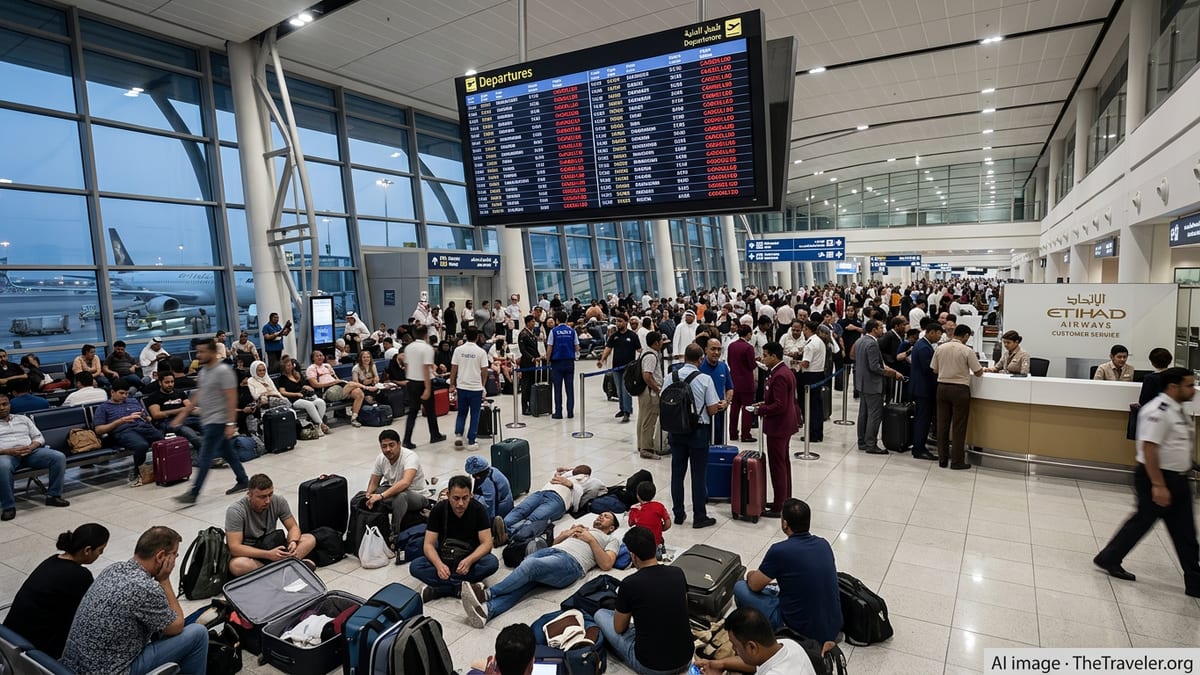
Flight cancellations and long delays have been reported across the UAE’s three busiest gateways, Dubai, Abu Dhabi and Sharjah, after updated U.S. travel warnings urged Americans to reconsider travel and prepare for sudden airspace disruptions tied to regional tensions.
Get the latest news straight to your inbox!
What’s driving the latest UAE flight disruptions
Published U.S. guidance in late August kept the United Arab Emirates at Level 3 (“Reconsider Travel”), citing risks linked to terrorism and armed conflict and noting ongoing threats of drone and missile activity in the broader region, along with “significant disruptions to commercial flights” since hostilities began earlier this year.
The U.S. Department of State’s Worldwide Caution, last updated in July, separately advised travelers to expect periodic airspace closures and flight cancellations across parts of the Middle East, recommending that passengers monitor airline and airport operations closely when traveling to or through the region.
In parallel, airline and airport updates across the UAE continue to show that operations are largely continuing, but with day-to-day volatility: some routes are delayed by several hours, others are cancelled outright, and re-routings can change departure and arrival times with little notice.
Dubai: DXB cancellations and extended delays reported
At Dubai International Airport (DXB), published airport data and local coverage over the weekend of September 20, 2026 pointed to a mixed operating picture: most flights continued, but some services were cancelled and others pushed back significantly.
Examples cited in published coverage included flydubai’s Bahrain services, with flight FZ 024 cancelled on Sunday and flight FZ 029 cancelled for Monday. The same updates showed Kenya Airways flight KQ 310 from Nairobi listed as cancelled.
Delays at DXB ranged from routine one-to-three-hour slips to much longer disruptions on select arrivals, including a SpiceJet service from Kochi that was listed as delayed by nearly 11 hours in the same published update.
Abu Dhabi: Zayed International sees rolling changes across multiple carriers
At Abu Dhabi’s Zayed International Airport (AUH), published airport data summarized by local media indicated delays on a range of inbound and outbound flights across multiple airlines, with schedules shifting throughout the day rather than a single blanket suspension of operations.
Recent publicly posted examples included delays affecting Etihad Airways services, including EY770 from Nairobi, EY014 from Atlanta, and EY858 from Sochi, as well as Air Arabia Abu Dhabi flights such as 3L715 from Tbilisi and 3L764 from Tashkent.
These changes reflect a common pattern during periods of airspace constraint: even when airports remain open, airlines may hold flights for revised routings, crew availability, or slot reassignments, creating knock-on delays that can cascade into later departures.
Sharjah: cancellations reported alongside continuing operations
At Sharjah International Airport (SHJ), published flight information and local reporting have shown selected cancellations alongside continuing operations on many routes. In the same September 20 updates, Air Arabia flight G9070 to Gassim was listed as cancelled on both Sunday and Monday.
Sharjah’s role as a major base for low-cost operations can amplify the impact of disruptions on short-haul regional routes, where small schedule changes may quickly affect aircraft rotations for subsequent flights.
Separately, broader airline advisories and regional aviation bulletins have continued to highlight elevated operating complexity in Gulf airspace, reinforcing why carriers may cancel specific city pairs even as neighboring routes continue to run.
What travelers should do now if flying via the UAE
Airline notices and government advisories have converged on the same practical takeaway: travelers should verify flight status repeatedly, including on the day of travel, and avoid relying on earlier confirmations. Emirates, for example, has continued to publish travel updates advising customers to check flight status and monitor notifications for delay, change, or cancellation alerts.
Because disruptions may involve re-routings and airspace management, travelers connecting through Dubai, Abu Dhabi, or Sharjah may want to build extra buffer time between flights where possible, particularly for separate-ticket itineraries that do not provide protected connections.
For U.S. travelers, the State Department’s public guidance also encourages preparations that do not depend on government assistance for departure during rapidly changing conditions, and recommends monitoring official updates and airline channels for operational changes that can occur on short notice.