


More news on this day
The United States is again spotlighting Iran as a highest-risk destination, maintaining a Level 4 “Do Not Travel” advisory and urging U.S. citizens currently in Iran to leave immediately, as regional tensions raise concerns about sudden travel disruptions and limited access to consular help.
Get the latest news straight to your inbox!
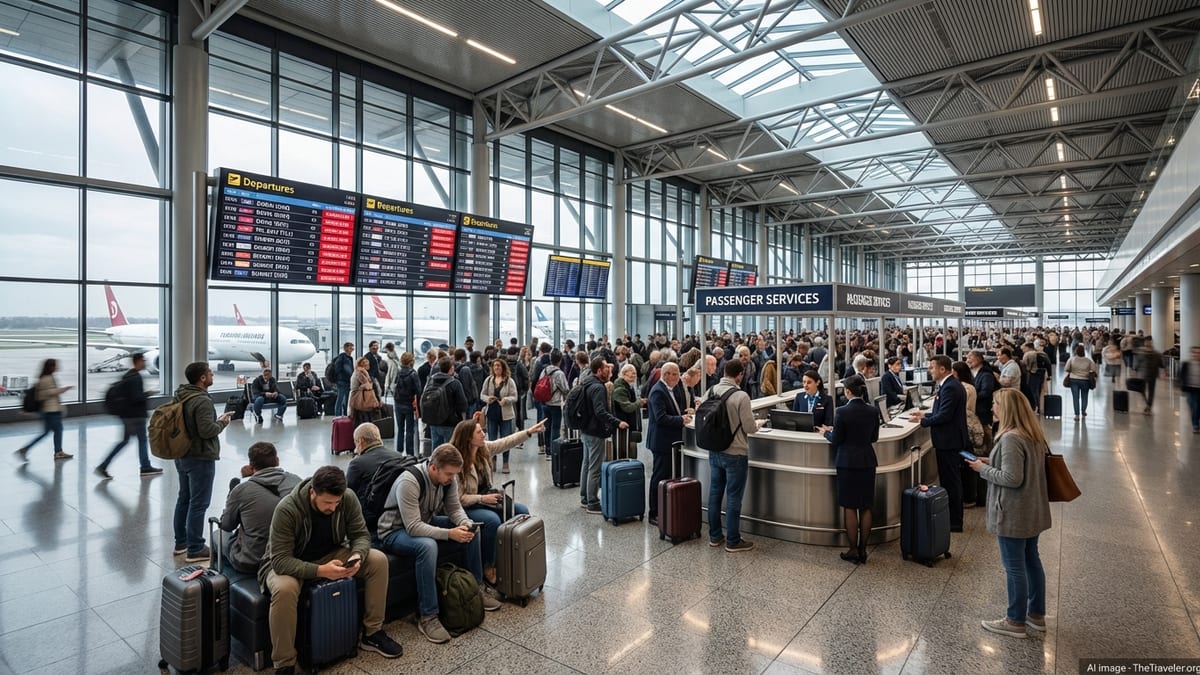
What the US advisory says and why it matters now
Publicly available State Department guidance lists Iran at Level 4, the department’s highest advisory category. The advisory language also tells U.S. citizens in Iran to leave immediately, a directive that can take on added urgency when regional security conditions appear volatile and transportation options may tighten with little notice.
The Iran advisory cites a broad set of risks that U.S. officials have repeatedly highlighted in recent years, including terrorism concerns, civil unrest, kidnapping risk, and the possibility of arbitrary detention and wrongful detention. The advisory also emphasizes that U.S. citizens may face heightened scrutiny tied to dual nationality status, perceived political affiliation, or routine online activity.
Level 4 advisories carry an additional practical warning for travelers: the U.S. government may have very limited ability to provide assistance during an emergency. For Iran specifically, that limitation is amplified by the lack of U.S. diplomatic relations and the absence of a U.S. embassy operating in Tehran.
Consular reality: no US embassy, limited help, and the Swiss channel
Because the United States does not maintain diplomatic or consular relations with Iran, Americans in-country cannot rely on typical embassy services for passport emergencies, arrests, medical crises, or evacuation coordination. In official materials, the State Department frames this as a major constraint that travelers should plan around rather than assume can be solved on the ground.
Instead, Switzerland serves as the protecting power for U.S. interests in Iran through the Foreign Interests Section at the Swiss Embassy in Tehran. Publicly available information about that role describes limited emergency services that may be offered when security conditions permit, including certain welfare checks and assistance in detention-related situations.
In practice, that arrangement does not replace what a full U.S. embassy can do. Travelers weighing whether to stay or depart have to factor in that assistance can be delayed, constrained by local conditions, or simply unavailable in fast-moving situations.
How Americans can leave and what can complicate departures
For Americans trying to depart, the most important variable is not just personal readiness but whether transportation corridors remain stable. Coverage and risk notices tied to the region frequently point to potential flight cancellations, airspace restrictions, and rapid changes in routing that can leave travelers scrambling for last-minute alternatives.
Separately, travel logistics in and around Iran can be complicated by limited direct connections to the United States and by shifting airline schedules across the broader region. Some industry tracking and operational updates have described periodic disruptions and cancellations affecting routes that touch Iran and nearby air corridors, which can ripple into longer connections via major hubs.
Travelers planning an exit commonly look first to available commercial flights. If commercial options narrow, land border crossings can become an alternative, but those routes can also be affected by security conditions, border policy changes, and internal travel constraints. Anyone considering overland travel needs to confirm entry requirements for the next country, including visa rules, document validity, and any special permissions required for onward flights.
Risk indicators travelers should take seriously
Beyond the headline “Do Not Travel” label, the advisory’s risk indicators focus on threats that can be difficult for ordinary travelers to mitigate. Wrongful detention risk is not a typical tourism hazard; it is a political and legal exposure that can hinge on factors outside a traveler’s control, including past travel, social media history, dual nationality, or even misunderstood communications.
The advisory also flags that Iran strictly controls media and speech, a point that matters for travelers who assume U.S.-style norms around online privacy and expression. Even routine actions, such as photographing sensitive sites, discussing politics publicly, or carrying certain materials on devices, can raise risk in environments with strict enforcement and broad security powers.
Families should also pay attention to specialized warnings embedded in official guidance, including notes about citizenship and documentation challenges for children born abroad via surrogacy arrangements. While niche, these details underscore a broader theme: exit from Iran can become complicated quickly if documentation issues arise.
What travelers should do next: monitoring and trip planning for the region
For Americans currently in Iran, the advisory’s core practical takeaway is to prioritize a departure plan that does not depend on U.S. government assistance. For those outside Iran, the guidance remains straightforward: do not travel, and postpone any discretionary trips until conditions change and official advice is revised.
Travelers elsewhere in the region may also want to re-check official advisories and alerts more frequently than usual, especially when itineraries involve hubs that could be affected by rerouting, temporary airline suspensions, or changes to overflight permissions. In fast-moving situations, a trip that looks feasible on a schedule today can become harder to execute within days.
The State Department encourages U.S. citizens traveling abroad to enroll in the Smart Traveler Enrollment Program (STEP), which is designed to push destination-specific alerts and updates by email. For travelers with family or colleagues in the region, STEP enrollment and routine check-ins can also help with accountability if communications become unreliable.