


More news on this day
Hundreds of flight delays at Phoenix Sky Harbor International Airport over several days in early June disrupted connections nationwide, testing passenger patience and airline schedules at the height of the early summer travel rush.
Get the latest news straight to your inbox!
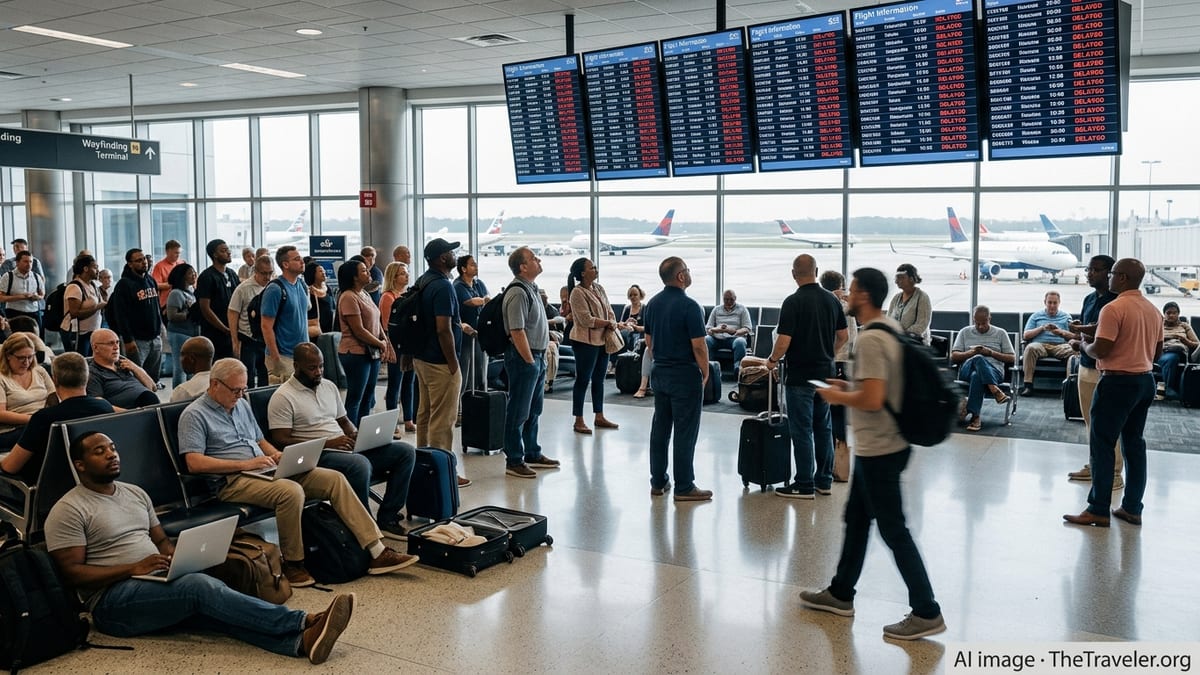
Delays Mount Over a Turbulent 24 Hours
Publicly available flight-tracking data and published coverage indicate that more than 200 arrivals and departures linked to Phoenix Sky Harbor were delayed between Wednesday evening and Thursday evening, with disruption peaking on Thursday, June 4. The largest clusters built during the afternoon and evening periods, when heavy traffic volumes meant that even modest slowdowns quickly cascaded into longer queues for takeoff and landing.
Average delays during the most intense stretch were reported in the 45 to 60 minute range for many services, though some flights waited significantly longer as aircraft and crews fell out of position. Late-arriving inbound aircraft pushed back departure times for outbound legs, leading to knock-on schedule issues for flights both into and out of Phoenix.
While conditions had improved by Sunday, with federal airport status tools showing Phoenix operating without a formal ground delay program, travelers continued to encounter lingering schedule unevenness as airlines worked through the remaining effects of the disruption and repositioned aircraft around their networks.
Staffing, Traffic Management and Weather Combine
Reports summarizing the episode point to a combination of factors behind the surge in delays. An advisory cited by aviation industry outlets described a federal ground-delay program at Phoenix Sky Harbor on Thursday attributed to air traffic control staffing constraints at the regional approach control facility. Such programs meter flights into busy airspace, spacing arrivals more widely and inevitably slowing operations during peak hours.
At the same time, national traffic management initiatives responding to thunderstorms and shifting jet-stream patterns at other major hubs reduced overall flexibility in the system. When flights bound for or departing from Phoenix encountered restrictions elsewhere, the resulting schedule changes further complicated efforts to keep operations on time at Sky Harbor.
High early-season heat provided an additional backdrop. Forecasts for Phoenix this week called for afternoon temperatures in the 100s, with readings at Sky Harbor edging toward the upper end of that range. While heat alone was not identified as the primary trigger for the delay surge, aviation analyses note that extreme temperatures narrow performance margins for aircraft and ground crews, slowing some procedures and leaving airlines with less room to absorb other disruptions.
Construction Work Adds Pressure on the Ground
The June delays arrived just as infrastructure projects at Phoenix Sky Harbor move into a more active phase. A recent airport construction impact report from federal planners lists ground operations work at the airport running from June through September 2026, with a notation that the projects will result in significant changes to ground movements.
Such work can temporarily reduce the number of available taxiways or alter normal traffic patterns, adding minutes to taxi times in busy periods and reducing how many aircraft can move through the system at once. When layered on top of staffing constraints and national traffic programs, these local bottlenecks can contribute to the kind of rapid buildup in delays seen this week.
Airport statistics show that Phoenix Sky Harbor handled tens of millions of passengers over the past year, placing it among the busiest airports in the United States. At facilities with that level of throughput, relatively small operational changes can have outsized impacts, particularly when they coincide with peak travel days and complex weather elsewhere in the country.
Ripple Effects for Travelers Across the Network
Because Phoenix functions as a major connecting hub for several airlines, the disruption extended well beyond Arizona. Passengers on domestic and international itineraries reported missed connections and extended layovers as delayed arrivals upended carefully timed transfer windows. In some cases, travelers were rebooked through alternate hubs or shifted onto later flights as airlines reconfigured schedules on short notice.
Published accounts from flight-tracking services show individual flights into Phoenix arriving more than two hours behind schedule during the height of the disruption, which in turn delayed onward departures. Even after operations normalized at Sky Harbor over the weekend, some itineraries continued to reflect residual delays as aircraft and crews returned to regular rotations.
The episode highlights the tightly interconnected nature of the modern U.S. air travel system. A ground-delay program or staffing bottleneck at a single approach control facility can affect flights hundreds or even thousands of miles away, especially when that facility serves a high-volume hub like Phoenix.
What Travelers Can Do During Major Delay Events
Recent guidance from travel publications and aviation analysts emphasizes that passengers have limited ability to avoid large weather or traffic-management driven delays, but can take practical steps to reduce their own risk. Monitoring flight status frequently in the 24 hours before departure, using airline apps or text alerts, remains one of the most effective ways to spot early signs of trouble and adjust plans when possible.
Some travel outlets recommend booking longer connection windows through high-traffic hubs such as Phoenix during the peak summer months, particularly for itineraries that involve the late afternoon and evening hours when storms and congestion are more common. Travelers with critical same-day arrivals sometimes opt for earlier departures or even overnight stays at hub cities to build in extra buffer time.
Experts also note that when widespread delays occur, alternatives such as rebooking through different hubs, requesting routing changes from airline customer service, or shifting to nearby airports may be available in limited cases. However, those options are often constrained when the underlying causes involve national traffic programs or regional airspace staffing issues affecting multiple carriers at once.