


Choosing between HanseMerkur and Allianz for travel insurance is less about picking a “best” company and more about finding the one that fits your exact trip, destination, and risk tolerance. Both brands are major players with solid reputations and a confusing menu of plans, riders, and small print. This guide walks through how they really compare in 2025 and 2026, using concrete examples to show where each one tends to work better for different kinds of travelers.
Get the latest updates straight to your inbox!
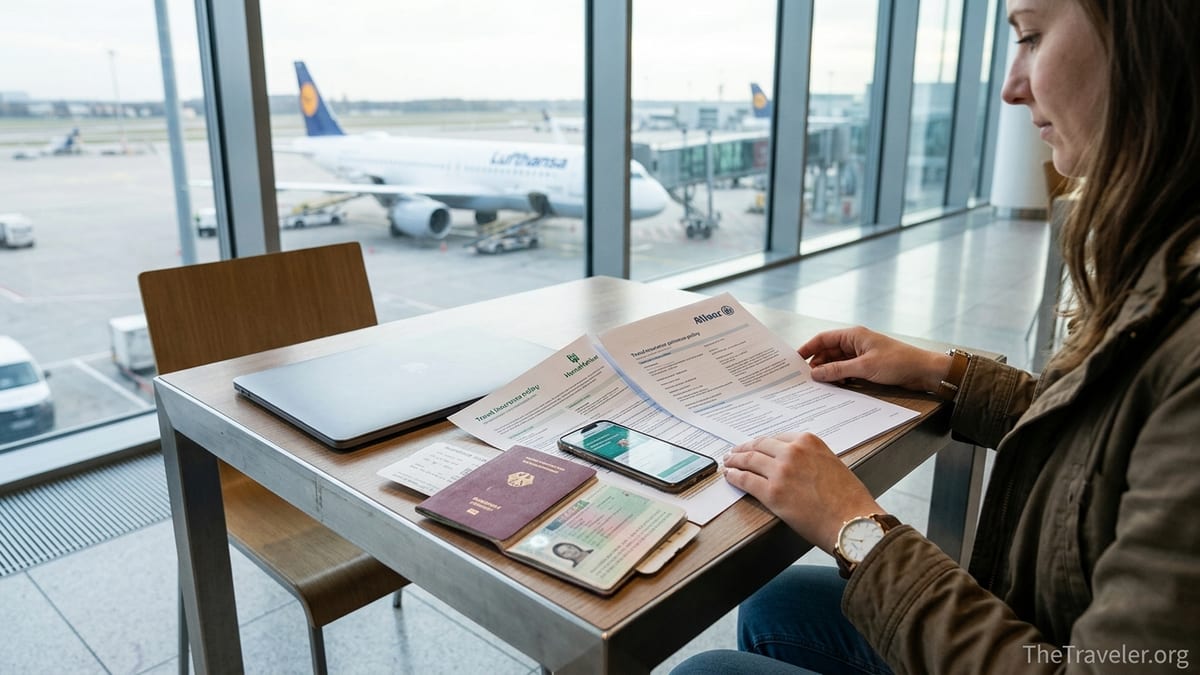
HanseMerkur and Allianz in a nutshell
HanseMerkur is a Germany based insurer that has become a specialist in travel and international health insurance across Europe. You will see it frequently recommended for Schengen visa policies, student insurance in countries like Germany and the Netherlands, and comprehensive vacation packages sold by European tour operators. Its products are particularly popular with EU based travelers and non EU visitors who need proof of medical cover for visas or long stays.
Allianz, by contrast, is a global insurance giant with consumer travel brands in the United States, Canada, and many other markets. In the US you will often see “Allianz Travel Insurance” offered at the checkout page when you book a flight, cruise, or package trip. It sells single trip plans, annual multi trip plans, and medical only policies, with coverage levels that scale up from basic cancellation and delay protection to high limit medical and evacuation benefits.
In practice, many travelers end up choosing between the two when planning multi country trips. For example, a family from Chicago booking a summer tour of Italy and Greece might be offered an Allianz plan through their airline, while their Italian tour company suggests a HanseMerkur package. Similarly, a Brazilian student heading to a German university might weigh a HanseMerkur “Young Travel” health policy against an Allianz worldwide health plan.
Because both companies sell through intermediaries and partner brands, it is important to look past the logos and compare the underlying benefits. The strengths of each insurer tend to show up in different trip types and traveler profiles, which is where concrete scenarios are helpful.
Coverage basics: what both insurers usually include
Although every policy is slightly different, HanseMerkur and Allianz share a common backbone of standard travel insurance protections. Most mainstream plans from both providers include trip cancellation, trip interruption, emergency medical treatment abroad, emergency evacuation, and some level of baggage and delay cover. The details and limits are what make a plan generous or bare bones.
Take medical coverage as an example. A typical HanseMerkur international health insurance for short trips within Europe is marketed as covering “extensive medical costs with no deductible,” and sample pricing for Schengen visa compliant policies starts around a few euros per day for younger travelers. In many cases the limit is high enough to satisfy visa requirements and to cover hospital treatment in expensive destinations like France or Switzerland. For US residents traveling to Europe, Allianz’s mid tier or premium single trip plans usually include emergency medical limits in the tens of thousands to low hundreds of thousands of dollars, which is adequate for most non US healthcare systems and for moderate emergencies.
Trip cancellation works similarly. For a seven day, 2,500 dollar trip for a 30 year old US traveler, one recent analysis of Allianz pricing showed a basic plan premium around just under one hundred dollars, with higher tier plans costing more but raising the cancellation limit to match the full trip cost. HanseMerkur packages for European residents often show price examples like 64 euros per trip for a “Gold” vacation package covering a trip value of 1,000 euros up to age 65. The structure is comparable: you pay a percentage of the trip cost in exchange for cancellation coverage tied to specific reasons such as serious illness, accident, or death in the family.
Both companies have adapted their wordings to address COVID 19 and other epidemic illnesses. The broad pattern is that if you personally fall ill with COVID 19 after booking and must cancel or interrupt, there is usually cover as though it were any other serious illness. Neither company generally covers fear of travel or government bans, and quarantine costs are only covered under specific add ons or riders. The exact treatment of pandemics is policy specific, so it is not enough to assume that a brand “covers COVID” without reading the current terms.
Where HanseMerkur tends to shine
HanseMerkur’s sweet spot is structured European travel, long stays, and visa related insurance. For example, its Schengen visa products are designed to meet the minimum requirements for visitors to Europe, including at least 30,000 euros of medical coverage and repatriation. A traveler from India planning a 15 day trip through Germany and Austria could buy a HanseMerkur Schengen policy directly or through a visa agency and know that the documentation will be recognized by consulates and border officials.
Another core strength is overseas health insurance for students, au pairs, and young professionals. In the Netherlands, for instance, HanseMerkur markets an “International Student Insurance” accepted by immigration authorities and universities. Sample prices are advertised from just over one euro per day for people up to age 34, with extensive medical cover and no deductible. That combination of regulatory acceptance and predictable pricing makes HanseMerkur attractive for people staying abroad for six months to several years who do not yet qualify for the local public health system.
For European residents, HanseMerkur’s bundled vacation packages can also be strong value. The “Reiseschutz Gold” and “Reiseschutz Platin” products bundle trip cancellation, curtailment, baggage, assistance, and optional overseas health insurance into a single contract. Marketing examples show a Gold package from 64 euros per trip for a 1,000 euro journey, and the benefits include a 24 hour emergency hotline, best price guarantee for certain package tours, and coverage for common cancellation reasons such as unexpected serious illness, pregnancy complications, or worsening of an existing condition.
Independent consumer tests in German speaking markets have rated some of HanseMerkur’s pure travel health products highly. For example, a short term international health policy for trips up to eight weeks was recently awarded a top mark of “very good” in a well known financial magazine’s 2025 review for both individuals and families. While such ratings are based on specific product configurations and may not apply to every plan, they reinforce HanseMerkur’s reputation for strong medical benefits within Europe and for outbound European travelers.
Where Allianz usually has the edge
Allianz’s biggest advantage for many readers is its global footprint and especially its deep presence in the United States and Canada. If you are a US resident booking a cruise from Florida to the Caribbean, the “Allianz Trip Protection” offer that appears on the cruise line’s checkout page is often one of the simplest ways to secure mainstream travel insurance. Claims can be filed online or through a mobile app, customer service operates on US business hours, and medical assistance partners are used to coordinating with US style health systems.
Annual multi trip coverage is another strong point. US travelers who take several international or domestic trips a year often find Allianz’s annual plans more economical than buying separate single trip policies. Real world examples shared by travelers show annual medical only policies for two adults, covering any number of trips up to around 70 days each, priced in the mid hundreds of dollars per year. Others report that a full annual multi trip package from Allianz can cost only slightly more than the cruise line’s own per trip insurance but will extend protection to flights, hotels, and independent land arrangements for the entire year.
Allianz also offers some features that appeal to frequent or business travelers. For instance, certain plans include “SmartBenefits” that can pay a flat amount for covered delays once specific conditions are met, sometimes without requiring a full stack of receipts. Higher tier policies can include robust emergency evacuation limits and higher caps on baggage and trip interruption, which may matter if you are carrying expensive equipment or booking complex itineraries across several continents.
Service quality is always mixed in the insurance world because people tend to post negative experiences more often than positive ones. That said, Allianz’s financial strength ratings and its size mean that it has the resources to pay large claims and maintain global assistance networks. Independent reviews in financial and insurance publications have scored it highly for stability and overall service, although individual claim outcomes naturally depend on the specifics of each case and how well the traveler documented the issue.
Pricing snapshots: what real travelers might pay
Pricing for both HanseMerkur and Allianz depends on variables such as traveler age, trip cost, destination, and coverage length, so concrete numbers can only be examples rather than promises. Still, looking at current sample pricing gives a sense of where each provider tends to sit.
Consider a 30 year old solo traveler from New York planning a 7 day, 2,500 dollar trip to Spain. A common Allianz quote for a basic single trip plan might be in the neighborhood of just under 100 dollars, with a mid tier plan around 200 dollars and a more comprehensive premier tier higher still. The basic plan would usually cover trip cancellation up to the insured amount, emergency medical treatment, evacuation, and some baggage protection, while the premier option would add higher limits and richer delay and interruption benefits.
Now look at a different scenario. A 45 year old German resident booking a one week package tour to Egypt priced at 1,000 euros might be offered HanseMerkur’s Reiseschutz Gold at the sample rate of 64 euros for that trip, assuming they are under 65 and booking a flight or cruise. If they wanted medical coverage included, they could step up to the Platin version for a higher premium. For repeat travelers, an annual HanseMerkur policy that covers all vacations up to a set trip length often works out cheaper than buying single trip packages repeatedly.
For long stays and visa purposes, HanseMerkur’s daily rate model becomes clearer. A non EU student moving to the Netherlands for a 10 month master’s program might choose HanseMerkur’s International Student Insurance at roughly 1.25 euros per day for people under 34, which would work out to around 375 euros for the full period. An equivalent worldwide expat style health plan from Allianz or another global provider could be significantly more expensive, although it might carry higher limits or broader geographic coverage.
COVID 19 and epidemic cover in practice
Both insurers now explicitly discuss COVID 19 and epidemic coverage in their online FAQs and product information, but the details differ by plan and country. Understanding how this works in real situations is important for travelers heading to regions where health rules can change quickly.
With HanseMerkur, the general pattern across European products is that unexpected illness is covered, including COVID 19, under medical expenses insurance while you are abroad. If you fall ill with COVID 19 during your trip and require treatment, your hospital costs should be covered up to the policy limits in the same way as treatment for a broken leg or appendicitis. Some travel cancellation and interruption policies also state that if you or a close relative actually becomes ill with COVID 19, that can be a valid reason for canceling or cutting short a trip.
Where cover usually stops is around general pandemic disruption. For instance, if the World Health Organization has declared a pandemic or your government has issued a travel warning for the destination before you book, HanseMerkur may not cover cancellations that result from that known risk. Quarantine costs, denied boarding due to suspicion of infection, or refusal of access to a rental property often require an additional rider such as HanseMerkur’s separate “Pandemic Protection Plus,” which is sold as an add on for people who already have a base travel or annual policy.
Allianz’s position is broadly similar but articulated through its own “epidemic coverage” language. Many of its US market plans now list additional covered reasons for trip cancellation or interruption related to epidemic illness, such as you or a travel companion contracting COVID 19 or being ordered by a doctor to quarantine. At the same time, government travel bans, border closures, or generalized fear of travel are typically excluded. This means a traveler whose Caribbean cruise is canceled because the cruise line stops operating may receive compensation from the cruise line directly, but their Allianz policy may only respond if the cancellation falls within one of the specifically covered reasons.
For both companies, the key is to match your expectations to the policy wording. A traveler who is mainly worried about severe illness during a trip should focus on strong emergency medical and evacuation limits. Someone who is more concerned about constantly changing rules or needing maximum flexibility may want to add a “cancel anytime” style upgrade where available, or accept that no standard policy will fully eliminate pandemic related risk.
Claims and customer experience
No travel insurance comparison is complete without looking at how claims tend to play out. Here again, the picture is nuanced. Both Allianz and HanseMerkur handle very large volumes of claims every year, and there are plenty of stories of smooth reimbursements alongside complaints of delays or denials.
For HanseMerkur, positive experiences are often reported around straightforward medical claims and clearly documented cancellations. A traveler who breaks an ankle while skiing in Austria may have their clinic bills settled directly through HanseMerkur’s assistance partner, with minimal out of pocket cost beyond phone calls and paperwork. Students and visa holders using long term HanseMerkur health plans also report that routine doctor visits and prescriptions abroad are handled much like a local insurance policy, as long as they stay within the rules of the contract.
Negative reports tend to involve more ambiguous situations, such as trying to claim for cancellation when a government travel advisory is issued after booking but the policy language ties coverage to earlier dates, or claiming for quarantine costs without having purchased the relevant pandemic add on. These patterns underline the importance of reading the list of insured events and exclusions carefully at the time you buy, not when you are already in trouble.
Allianz’s claims reputation varies by region. In North America, some travelers praise the convenience of its online claims portal, fast payment for minor issues like lost baggage or short medical visits, and responsive 24 hour assistance when they needed hospital admission abroad. Others report frustration when claims tied to complex airline disruptions, multi leg itineraries, or loosely documented delays are partially paid or denied because they did not fit the precise wording of the policy.
One practical difference is that Allianz is often integrated directly into airline and cruise booking systems, which can simplify documentation. If your Allianz plan was purchased at the same time as your flight through a major US airline, the insurer can usually see the official schedule and record of delays or cancellations. With HanseMerkur, you are more likely to have bought your policy separately, so you will need to submit booking confirmations, receipts, and carrier notices yourself.
How to decide which fits your trip
Because both HanseMerkur and Allianz are reputable insurers with broadly similar core benefits, the decision often comes down to three questions: where you live, what kind of trip you are taking, and which specific product is on offer at a reasonable price.
If you are a US or Canadian resident taking multiple trips per year, Allianz’s annual multi trip plans are often easier to access and manage. For example, a couple from Denver who plan three international trips and several domestic flights each year might pay around four to five hundred dollars for an Allianz annual medical only plan with evacuation, which would cover all their journeys up to a certain trip length. They would benefit from US based customer service, claim payments in dollars, and integration with airlines and cruise lines they already use.
If you are a non EU visitor applying for a Schengen visa, or a student heading to Germany or the Netherlands, HanseMerkur’s specialized visa and student policies are usually the more straightforward option. A traveler from South Africa needing proof of cover for a 20 day Europe trip could purchase a HanseMerkur Schengen plan at roughly a couple of euros per day, receive documentation that consulates recognize, and satisfy the medical requirements without navigating global expat health products.
For European residents booking package holidays through local tour operators, both brands may be available, but HanseMerkur often appears as the default recommendation. In that context, comparing the small print and limits of the operator’s in house HanseMerkur policy with a direct purchase from Allianz or another competitor can be worthwhile. For instance, you might find that the tour operator’s bundled policy has relatively low baggage limits, while an independently purchased Allianz plan offers higher coverage for valuable electronics at a similar or slightly higher premium.
Ultimately, practical considerations such as language of the policy, claim filing process, and comfort with the currency of reimbursement also matter. A US traveler whose entire trip was booked in dollars may find it simpler to claim with an Allianz US policy than with a euro based contract. A German or Dutch traveler, on the other hand, may prefer the familiarity of HanseMerkur’s local documentation and support hotlines.
The Takeaway
HanseMerkur and Allianz both occupy the top tier of mainstream travel insurers, but they excel in different niches. HanseMerkur is particularly strong for Europe focused travel, Schengen visa and student cover, and comprehensive vacation packages for residents of EU countries. Allianz stands out for US and Canadian travelers, for annual multi trip plans, and for its integration with airlines, cruise lines, and large travel agencies.
When choosing between them, focus less on brand prestige and more on the specific policy offered for your trip. Look closely at emergency medical and evacuation limits, the list of covered reasons for cancellation and interruption, pandemic and quarantine rules, and the claim process. Use real world price examples as a guide, but always obtain your own quote because age, destination, and trip cost can change the premium significantly.
If you need visa compliant medical proof or long term student health insurance in Europe, HanseMerkur will often be the more tailored and economical choice. If you are a North American frequent traveler who wants consistent protection across dozens of flights and hotel stays each year, an Allianz annual plan is likely to be more convenient. In many situations, either provider can be a solid choice as long as you buy a plan that truly matches how and where you travel.
FAQ
Q1. Is HanseMerkur or Allianz better for a short vacation in Europe?
For a one to two week vacation in Europe, either can work, but the better choice depends on your residence. European residents often find HanseMerkur vacation packages competitively priced with strong medical cover, while US residents may prefer an Allianz single trip plan purchased in dollars with US based service.
Q2. Which company is better for Schengen visa insurance?
HanseMerkur is usually the more straightforward choice for Schengen visa insurance because it specifically designs products to meet visa rules, provides recognized confirmation letters, and prices coverage per day. Allianz can also offer suitable plans, but its branding is less focused on short term Schengen specific policies.
Q3. Do both HanseMerkur and Allianz cover COVID 19?
Most current plans from both companies treat COVID 19 like any other covered illness for emergency medical treatment, and many cancellation or interruption policies accept a confirmed COVID 19 diagnosis as a valid reason to claim. However, general pandemic disruption, border closures, and fear of travel are often excluded, so it is important to read each policy’s epidemic wording carefully.
Q4. Which is cheaper, HanseMerkur or Allianz?
There is no universal winner on price. For a 1,000 euro package holiday booked by a middle aged European traveler, a HanseMerkur bundle might cost around a few dozen euros. For a 2,500 dollar trip from the US, an Allianz basic plan might be under one hundred dollars. Age, destination, trip cost, and the exact product make more difference than the brand name.
Q5. Which insurer is better for annual multi trip coverage?
Allianz generally has the advantage for annual multi trip policies aimed at US and Canadian residents, with widely available plans that cover unlimited trips up to a set duration per journey. HanseMerkur also sells annual products, but they are more commonly marketed to European residents and may be harder to access or interpret for overseas travelers.
Q6. How do I choose the right medical coverage limit?
If you are traveling outside your home healthcare system, look for emergency medical limits high enough to handle hospitalization and possible evacuation. For trips to Europe from the US, many travelers target at least tens of thousands of dollars of medical cover and separate high evacuation limits, which both HanseMerkur and Allianz can provide on their stronger plans.
Q7. Are pre existing conditions covered by HanseMerkur or Allianz?
Coverage for pre existing conditions is tightly defined at both companies. Some Allianz plans offer limited cover if conditions have been stable for a set period, while many HanseMerkur products exclude pre existing illnesses unless certain criteria are met. Anyone with a significant medical history should call the insurer and read the clauses on existing conditions before buying.
Q8. Which company is better for students studying abroad?
For students heading to Europe, especially Germany or the Netherlands, HanseMerkur’s dedicated international student and young traveler policies are often accepted by immigration and universities and can be cost effective. For students going to multiple regions or seeking broader worldwide coverage, Allianz or another global health insurer may be worth comparing.
Q9. How do claim processes differ between HanseMerkur and Allianz?
Allianz tends to emphasize online claims portals and mobile apps, especially in North America, and often integrates with airline and cruise booking data. HanseMerkur’s process is more traditional, with forms and documentation submitted directly to the insurer or through partners. In both cases, keeping detailed receipts, medical reports, and carrier notices is crucial.
Q10. Can I rely on my credit card instead of buying HanseMerkur or Allianz?
Premium travel credit cards sometimes include trip cancellation or delay benefits and limited medical coverage, but these often have strict conditions, lower limits, and exclusions for long trips or high cost itineraries. Many frequent travelers still buy a dedicated policy from HanseMerkur, Allianz, or another specialist when taking expensive international trips or when they need visa compliant medical insurance.