


More news on this day
Rail infrastructure technology group Vossloh has secured a new framework agreement in Sweden to supply pre-assembled turnouts for the national rail network, a contract estimated at about 70 million euros and highlighting the country’s accelerating investment in modern, higher-capacity tracks.
Get the latest news straight to your inbox!
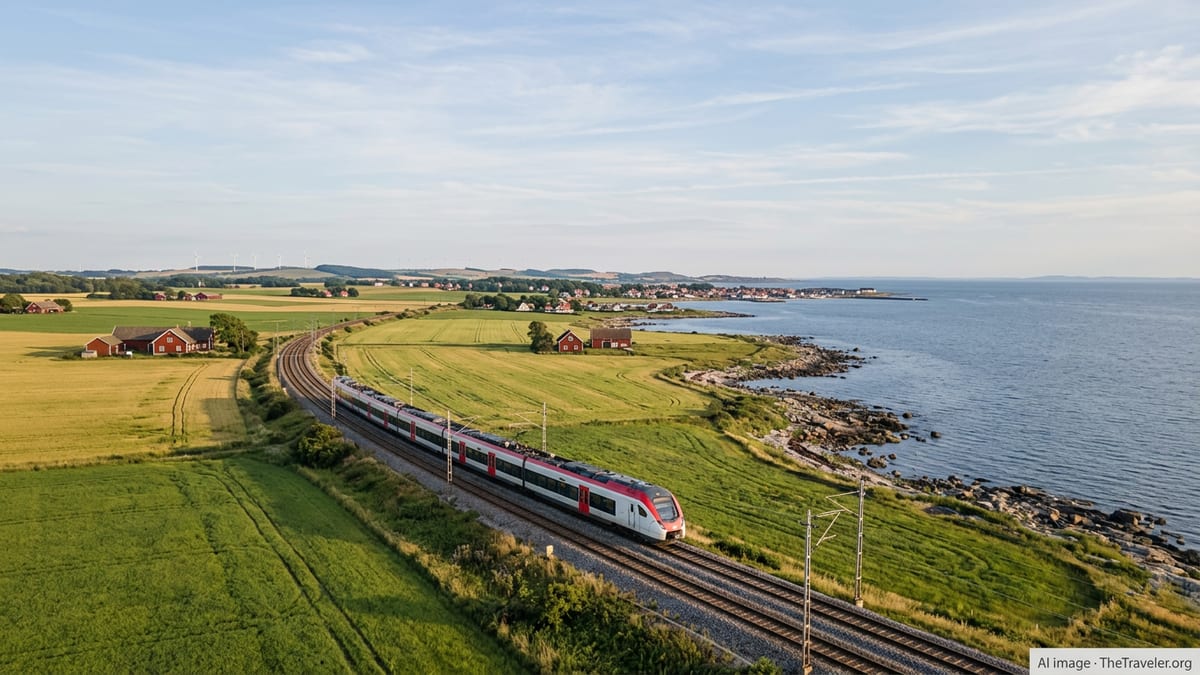
Five-year framework deal underpins Swedish rail upgrades
According to publicly available company information and financial market notices, Vossloh’s new agreement was concluded with Trafikverket, the authority responsible for the management and development of Sweden’s national rail infrastructure. The framework runs for an initial five-year term and is based on anticipated volumes of turnouts, the key pieces of track equipment that guide trains from one line to another.
Reports indicate that the total value of the contract is expected to reach roughly 70 million euros over its life, making it one of Vossloh’s more substantial recent orders in Northern Europe. The deal includes pre-assembled turnouts that will be delivered ready for installation, a model that aims to shorten on-site construction periods and reduce the time tracks need to be taken out of service.
The agreement also contains an option for Trafikverket to extend cooperation by up to three additional years. If exercised, that extension would position Vossloh for a longer presence in Sweden’s rail renewal cycle and potentially lift the overall order volume beyond the current estimate.
The new contract contributes directly to Vossloh’s already elevated order backlog, which recent company updates describe as being at record levels, reflecting strong demand for rail infrastructure products in Europe and other regions.
Strategic timing as Sweden accelerates rail investment
The timing of the Vossloh framework aligns with Sweden’s long-term push to expand and modernize its railway network. Public documents and sector analyses describe an ambitious national investment plan that foresees tens of billions of euros in rail spending through the mid-2030s, covering both new lines and the renewal of existing corridors.
Turnouts are a relatively small part of total rail infrastructure budgets but are considered critical for operational flexibility and capacity. Modern, high-performance switches allow more trains to run safely on the same infrastructure by enabling smoother routing, higher permissible speeds through junctions, and more resilient operations during maintenance or disruptions.
In Sweden, this renewed focus on network performance comes as passenger volumes and freight demand continue to place pressure on key routes, particularly around major hubs and freight corridors. By securing a long-term supplier for turnouts, Trafikverket gains predictability for a component that often defines the pace and complexity of construction projects.
Industry observers note that such multi-year agreements also help rail infrastructure agencies lock in industrial capacity ahead of peak construction phases, reducing the risk of bottlenecks and price volatility in a tight global supply chain for specialized rail equipment.
New Sannahed plant triples turnout capacity
Vossloh has been repositioning its Nordic production footprint in anticipation of rising regional demand. Earlier this year, the group inaugurated a new turnout manufacturing facility in Sannahed, central Sweden, replacing an older plant in nearby Örebro that had been in operation for more than a century.
Company information indicates that the Sannahed plant is highly automated and capable of producing around 900 turnouts per year, roughly three times the output of the previous site. This increased capacity is designed to serve both the Swedish market and neighboring Nordic countries, providing a regional hub for advanced turnout technology.
The new Swedish facility has been presented as part of a broader industrial strategy to locate production close to major customers, reducing logistics routes and lead times while also enabling closer technical cooperation on country-specific standards and climate conditions. For Sweden, which operates a mixed network of heavy freight and passenger traffic in demanding winter environments, local engineering and testing capabilities are seen as particularly important.
The framework agreement with Trafikverket is expected to utilize a significant portion of the plant’s capacity in the coming years, reinforcing Sannahed’s role within Vossloh’s global manufacturing network and underscoring the company’s long-term commitment to the Nordic region.
Implications for Vossloh’s growth and positioning
Publicly available financial disclosures show that Vossloh has been reporting strong momentum in recent years, with record order intake and a growing share of sales generated in Europe. Large framework contracts in core markets, including Sweden, are central to this trajectory because they underpin revenue visibility and support ongoing investment in production and digital technologies.
The Swedish turnout contract contributes to the company’s strategy of focusing on rail infrastructure components and services, following earlier portfolio adjustments that saw Vossloh exit rolling stock manufacturing and concentrate on switches, fastenings, sleepers, and maintenance services. Turnouts remain one of the most technically complex and margin-relevant products in that portfolio.
From a competitive standpoint, securing a long-term agreement with Trafikverket strengthens Vossloh’s reference base in a market that is regarded as technologically demanding and focused on sustainability. Success in Sweden may support the company’s case in future tenders in other countries that are planning to expand or renew their own rail networks, particularly in Northern and Western Europe.
Market commentary around the announcement highlights that the deal, while moderate in absolute terms, fits into a broader pattern of repeat business and multi-year frameworks that collectively underpin the company’s order book and earnings guidance for the coming years.
Significance for Sweden’s travelers and freight corridors
For travelers and freight operators in Sweden, the long-term turnout supply agreement is one piece of a wider push to increase reliability and capacity on the rail network. Upgraded turnouts make it easier to implement new timetables, add services on busy routes, and improve punctuality on both regional and long-distance lines.
Pre-assembled units, which are delivered ready to be installed in the track, are expected to reduce work-site time and limit the periods during which routes must be closed or operated at reduced speed. That approach can lessen disruption for passengers while still allowing essential renewal projects to move forward at scale.
Improved junctions and branching points can also support freight by enabling longer or heavier trains to be routed more flexibly, particularly around marshalling yards, ports, and industrial sidings. In a country where rail is seen as a key tool for cutting transport emissions and shifting cargo away from roads, such incremental capacity gains are regarded as strategically important.
While the benefits for end users will unfold gradually over the life of the framework, the decision to secure a specialized supplier for a crucial piece of infrastructure indicates how Sweden is seeking to align technical modernization with its broader climate and mobility objectives.