


More news on this day
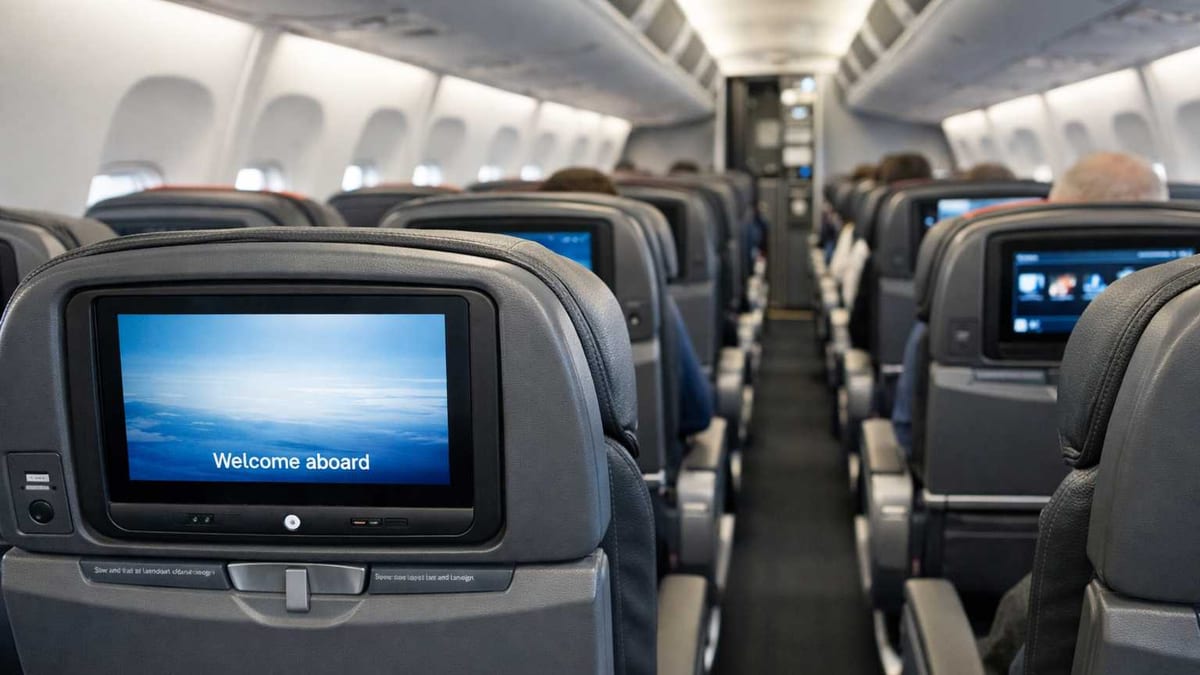
American Airlines is preparing a major reversal of its in-flight entertainment strategy, unveiling plans for a fleetwide retrofit that will install seatback screens at every seat across its domestic narrowbody aircraft starting in 2028.
Get the latest news straight to your inbox!
A Strategic Pivot After Years of Removing Screens
The move marks a striking change in direction for American, which spent much of the past decade removing built-in entertainment systems from many domestic aircraft in favor of streaming to passengers’ own devices. Industry coverage and customer reports have long highlighted that most of the airline’s Boeing 737 and Airbus A320-family jets were flying without traditional seatback displays, apart from a shrinking number of older Airbus A319 aircraft.
Instead, American invested heavily in high-speed Wi-Fi and personal device streaming, positioning that approach as more flexible and modern. Company materials emphasized that passengers could access a large content library on phones, tablets, or laptops, while newer cabins gained device holders and extra charging options.
However, as competitors such as Delta Air Lines and United Airlines leaned into “screens at every seat” as a signature amenity, American increasingly faced criticism from frequent flyers who preferred not to watch long-haul content on small personal screens. The latest fleet announcement signals that the carrier now sees physical seatback screens as a differentiating feature it can no longer afford to forgo.
Public documents and reporting suggest the decision is also part of a broader effort by American’s leadership to narrow a profitability and product gap with rivals by investing in onboard comfort, premium seating, and more consistent cabin standards.
4K Screens, Bluetooth Audio and Power at Every Seat
According to newly released materials describing the overhaul, American intends to outfit its narrowbody jets with what it characterizes as state-of-the-art seatback entertainment. Plans call for large-format 4K-resolution displays at every seat, including in standard economy, positioning the airline to offer some of the largest screens available on single-aisle aircraft in North America.
The screens are slated to support Bluetooth connectivity so customers can pair their own wireless headphones, eliminating the need for wired headsets or airline-provided earbuds. The cabins will also feature upgraded power options, with a combination of AC outlets and USB-C ports at each seat to keep personal devices charged throughout the flight.
These hardware investments build on American’s existing focus on connectivity. The airline has already highlighted fleetwide access to streaming-capable Wi-Fi on mainline aircraft, and the new screens are expected to integrate tightly with that network, offering an expanded catalog of films, series, live programming and flight information, alongside the option to continue streaming on personal devices.
Bringing the technology to every seat is intended to create a much more consistent customer experience, addressing long-standing complaints that American’s cabins and amenities varied significantly from aircraft to aircraft, even on similar routes and schedules.
Rollout Tied to New Aircraft and Major Retrofits
The seatback entertainment push is tied to a broader narrowbody fleet plan that includes large orders for new Airbus and Boeing jets and significant interior upgrades to existing aircraft. Recent filings and industry analyses describe orders for Boeing 737 MAX 10 and additional Airbus A321neo aircraft, which will arrive from the factory with the new entertainment systems pre-installed.
At the same time, American is preparing a retrofit program for much of its in-service narrowbody fleet. The project is expected to refresh cabins with new seating, larger overhead bins and standardized power outlets, while adding the new screens to each row. This work will take place over several years, with a phased schedule that aligns with planned maintenance checks and other interior modifications.
The airline has already begun a parallel refresh of its regional fleet, focusing on upgraded interiors and more consistent amenities. While these regional jets will not all receive seatback systems immediately, American’s broader onboard strategy is increasingly framed around narrowing the comfort gap between regional and mainline flights.
Once the narrowbody retrofit is complete, American aims for a product where nearly all mainline aircraft, whether used on long-haul international or shorter domestic services, feature built-in entertainment, high-speed Wi-Fi, and access to power at every seat.
Keeping Pace With Delta and United in the Cabin Race
American’s new program also reflects intensifying competition among large U.S. airlines to differentiate on the passenger experience rather than price alone. Delta has long promoted seatback screens as a hallmark of its brand, and United’s multi-year “United Next” initiative is centered on delivering larger seatback displays, fast Wi-Fi and additional power outlets on new and retrofitted narrowbody aircraft.
Industry commentary in recent years has frequently contrasted these strategies with American’s earlier choice to strip out many legacy screens. Travelers on domestic routes often shared that they went months or years flying American without encountering a single seatback-equipped cabin, while similar routes on competitors routinely offered built-in systems.
By committing to 4K seatback screens and Bluetooth audio across its narrowbody fleet, American is signaling that it intends to meet, and in some respects exceed, the in-flight entertainment amenities advertised by its two largest rivals. The airline is also banking on the idea that families, leisure travelers and frequent flyers will value the convenience and clarity of large-format screens enough to notice the change, particularly on longer domestic flights.
The investment may also support American’s push for more premium revenue. As cabins are reconfigured with more first-class and extra-legroom seats on select aircraft, the presence of advanced in-flight entertainment, paired with upgraded connectivity, provides another lever to market those seats to higher-yield customers.
What Passengers Can Expect in the Coming Years
For travelers, the most immediate impact will not be felt overnight. The new seatback systems are scheduled to debut on new aircraft deliveries beginning in 2028, with retrofits on existing planes following a staged timeline. That means customers will likely encounter a mix of cabins for several years, with some flights still relying on personal device streaming while others showcase the new hardware.
As more aircraft enter service or complete refurbishment, passengers booking with American on major domestic routes can expect to see amenity information for seatback entertainment listed more frequently in online schedules and seat maps. Over time, the airline’s goal is that a typical traveler will have a high likelihood of encountering a screen-equipped seat on most mainline flights.
The shift also reinforces a broader trend in commercial aviation, where carriers that once moved away from embedded screens are now reconsidering their value. For American, the latest announcement suggests that matching customer expectations for comfort and convenience in the cabin has become as central to its competitive strategy as network breadth and fare sales.
As the rollout progresses through the late 2020s, travelers will be watching closely to see how quickly the new seats and screens appear across American’s network, and whether the renewed focus on in-flight entertainment translates into a more consistent and satisfying experience in the air.